
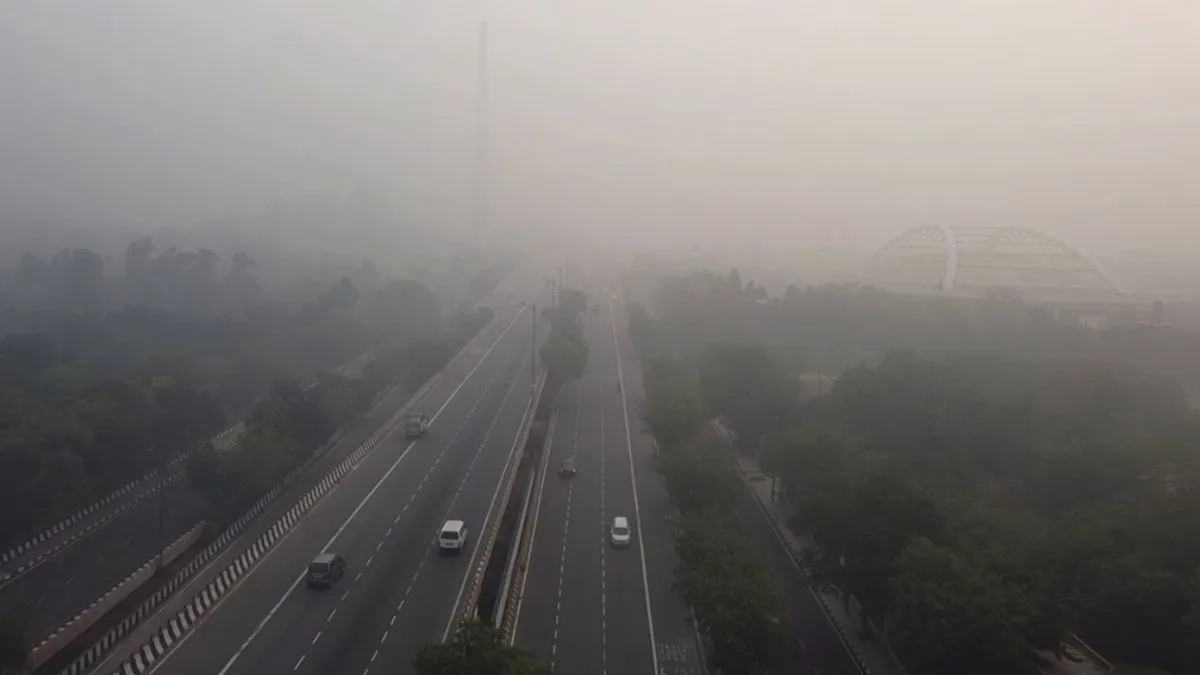
Delhi Pollution: Pollution levels in the National Capital Region (NCR) spiked on Sunday, primarily due to dense smog and very low wind speeds. As a result, the air quality in major cities, including Delhi, fell into the "poor" category, with the air quality index (AQI) surpassing 300 by evening, marking it as "very poor."
The Central Pollution Control Board (CPCB) has warned that the weather conditions are likely to keep Delhi's air quality in the "very poor" range for the next three days, from Monday to Wednesday. This situation poses additional challenges for residents as they contend with both air pollution and cold weather.
Rising Pollution Levels
On Sunday, Delhi's average AQI was reported at 294, placing it at the higher end of the "poor" category. This was a significant jump from Saturday's AQI of 193, which was classified as "moderate." The increase of 101 points indicates a concerning trend as the air quality deteriorates.
Recommended For You
So far this month, Delhi has experienced poor air quality for eight days, with one day classified as "very poor" and six days in the "moderate" range. The lack of wind during the day, with speeds only ranging between 4 to 8 kilometres per hour, further exacerbated the issue. By 6 PM, the AQI had climbed to 303, confirming the shift to the "very poor" category.
Delhi Pollution: Disparities In Air Quality Measurements
According to a report from the Swiss company IQAir, Delhi's AQI was recorded at 228 on Sunday, also indicating poor air quality based on CPCB standards. By 6 PM, 25 out of 35 pollution monitoring centres in Delhi reported AQI levels exceeding 300. The maximum concentration of PM-10 particles was measured at 219.3 micrograms per cubic metre, more than double the normal standard. Similarly, PM-2.5 levels reached 120.6 micrograms per cubic metre, also exceeding acceptable limits.
Sources Of Pollution
The Decision Support System (DSS) from IIIT Pune has identified vehicle emissions as the primary contributor to pollution in Delhi, accounting for 18 per cent of total emissions. Factory smoke contributed 8.89 per cent, while pollutants from nearby areas, such as Jhajjar (14.20 per cent), Rohtak (5.89 per cent) and Sonipat (5.36 per cent), added to the region's air quality woes.
Other cities in the NCR also reported poor air quality, with the exception of Faridabad, which remained in the "moderate" category.
ALSO READ: 'Emergency-Like Situation In India': Vinesh Phogat Criticises PM Modi For Ignoring Farmers’ Protest
Delhi Areas With Highest Pollution Levels
Several areas in Delhi recorded high AQI levels at 5 PM, including:
Nehru Nagar: 371
Mundka: 361
Jahangipuri: 359
Burari: 355
Rohini: 352
Bawana: 349
As the pollution levels rise and the air quality worsens, residents are urged to take precautions and stay informed about the changing conditions.