
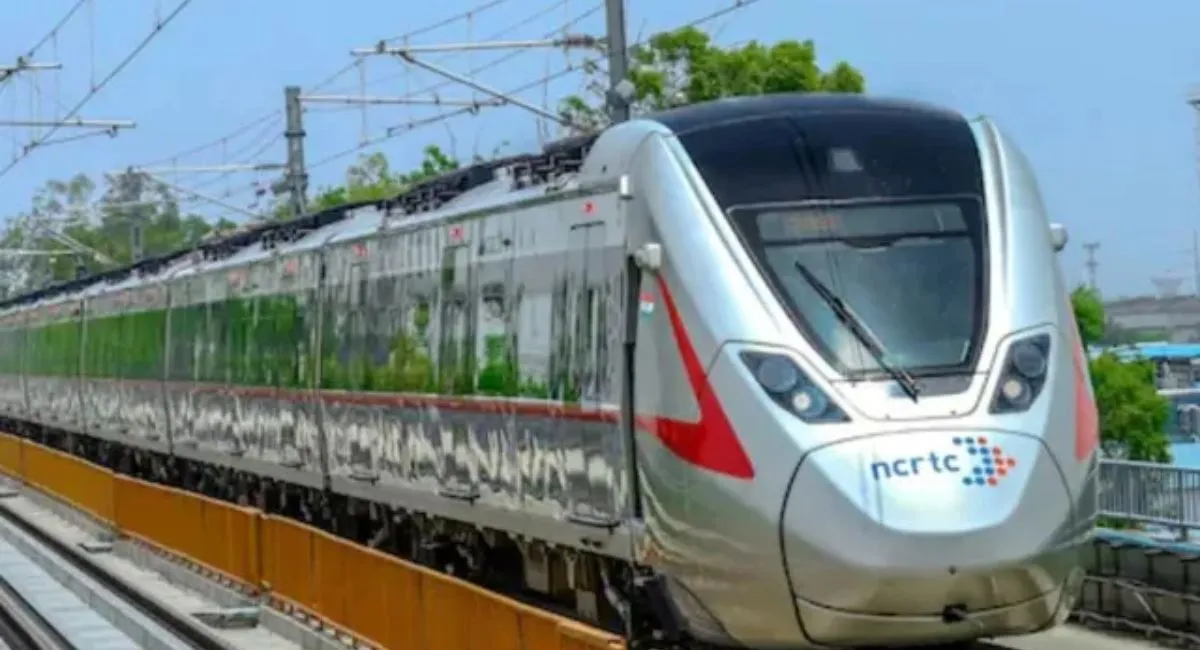
- Centre approves Namo Bharat extension to Haridwar, Rishikesh.
- Travel time Delhi to Rishikesh cut to 2.5-3 hours.
- Boosts Western UP, Uttarakhand economies and tourism.
The Centre has given in-principle approval for extending the Delhi-Meerut Regional Rapid Transit System (RRTS) from Modinagar in Meerut to Haridwar and Rishikesh, expanding the reach of the Namo Bharat network beyond Delhi-NCR to the Himalayan foothills.
The planned 150 km corridor could serve to link the country’s ambitious high-speed regional rail corridor to the two destinations of religious significance and dramatically reshape the journey between the Delhi National Capital Region (NCR), western Uttar Pradesh and Uttarakhand.
Proposed Route To Connect UP And Uttarakhand
The project is likely to start from Modipuram, which is the northern terminus of the Delhi-Meerut Namo Bharat corridor. It is likely to run through Daurala, Khatauli, Muzaffarnagar and Purkazi in Uttar Pradesh before entering Uttarakhand.
The corridor is envisioned to stretch from the existing route to Roorkee, Haridwar, and Rishikesh and is likely to culminate near Laxman Jhula. Approximately 72 km of the corridor would be in Uttar Pradesh, and about 78 km would be in Uttarakhand.
Recommended For You
Travel Time To Reduce
The road travel between Delhi and Rishikesh takes up to 5 to 6 hours of journey considering the traffic situation on NH-58. However, with Namo Bharat trains capable of running at a speed of up to 160 kmph, the travel time may fall to two and a half to three hours.
This faster connectivity is expected to enable business travellers, day commuters and tourists with seamless and faster journeys to and from Uttarakhand.
The proposed corridor is expected to provide a major boost to the economies of western Uttar Pradesh and Uttarakhand by improving connectivity, supporting industries, encouraging real estate growth and strengthening tourism.
Haridwar and Rishikesh, which attract millions of pilgrims, yoga enthusiasts and adventure tourists every year, could benefit significantly from improved rail connectivity.
The project could also help reduce traffic pressure on highways during peak periods such as the Kumbh Mela and Char Dham Yatra seasons.
DPR Preparation Underway
The proposal is currently in the planning phase, with surveys being conducted for the preparation of a Detailed Project Report (DPR). The final cost of the project will be decided after the DPR is completed.
Officials believe the corridor could become a major economic link between Delhi-NCR and cities along the Ganga, potentially emerging as part of the region’s proposed ‘Ganga Growth Corridor’.
New Growth Hubs Likely To Emerge
Improved connectivity may lead to new investment opportunities along the route. Modipuram could develop as a major transport hub, while Muzaffarnagar may see growth in industrial and logistics activities.
Roorkee, known for IIT Roorkee, could witness increased demand for housing and rentals, while Haridwar and Rishikesh may attract more investment in hotels, holiday homes and service apartments.