
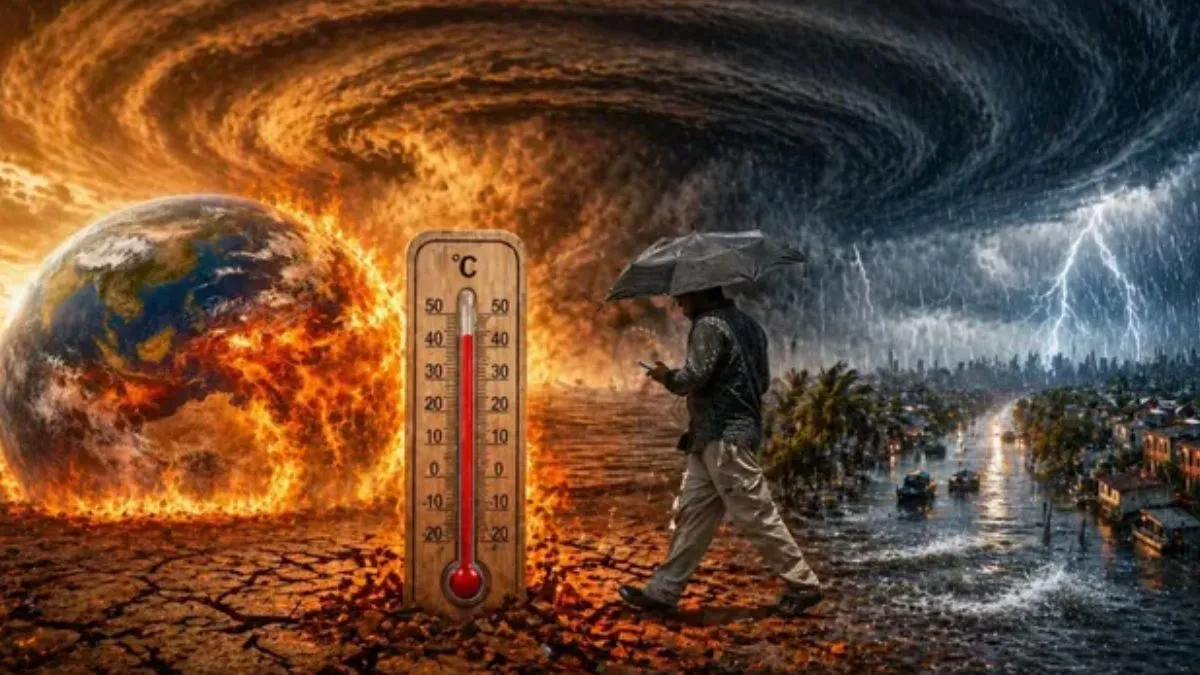
The World Meteorological Organization (WMO) has stated that El Niño conditions are expected to develop between May and July, leading to a significant change in weather patterns in several countries, including India. Earlier, the weather department had expected that the El Niño conditions would develop around August; however, it is likely to arrive early. El Niño is a climatic phenomenon that occurs every two to seven years and typically persists for a duration of 9 to 12 months.
The phenomenon alters temperature and rain patterns across the world and usually leads to a surge in global temperatures. Earlier in March, the India Meteorological Department (IMD) stated that several states of India are likely to witness below-normal rainfall this monsoon. As per the WMO, sea surface temperatures in the equatorial Pacific Ocean are rising rapidly, signaling the development of El Niño conditions next month.
As per the weather department, temperatures across the states are likely to remain above normal during the months of May, June, and July. It further stated that the forecast is crucial for several sectors, including agriculture, water management, energy, and health. The department stated that the early forecast will give sufficient time for the stakeholders to make necessary arrangements.
Recommended For You
As per the reports, the snow volume in the Hindu Kush Himalayan region this year was 27.8 per cent lower than normal, the lowest in two decades. The weather department stated that the lower snow volume is likely to affect water flow in the key rivers, affecting the lives of nearly two billion people.
ALSO READ: ‘No Meeting Planned, Will Communicate Via Pak’: Iran Rules Out Direct Talks With US
The WMO stated that drought conditions typically occur in Australia, Indonesia, and parts of India during El Niño conditions. However, the phenomenon leads to rainfall in South America, the southern parts of the United States, certain regions of Africa, and Central Asia.