
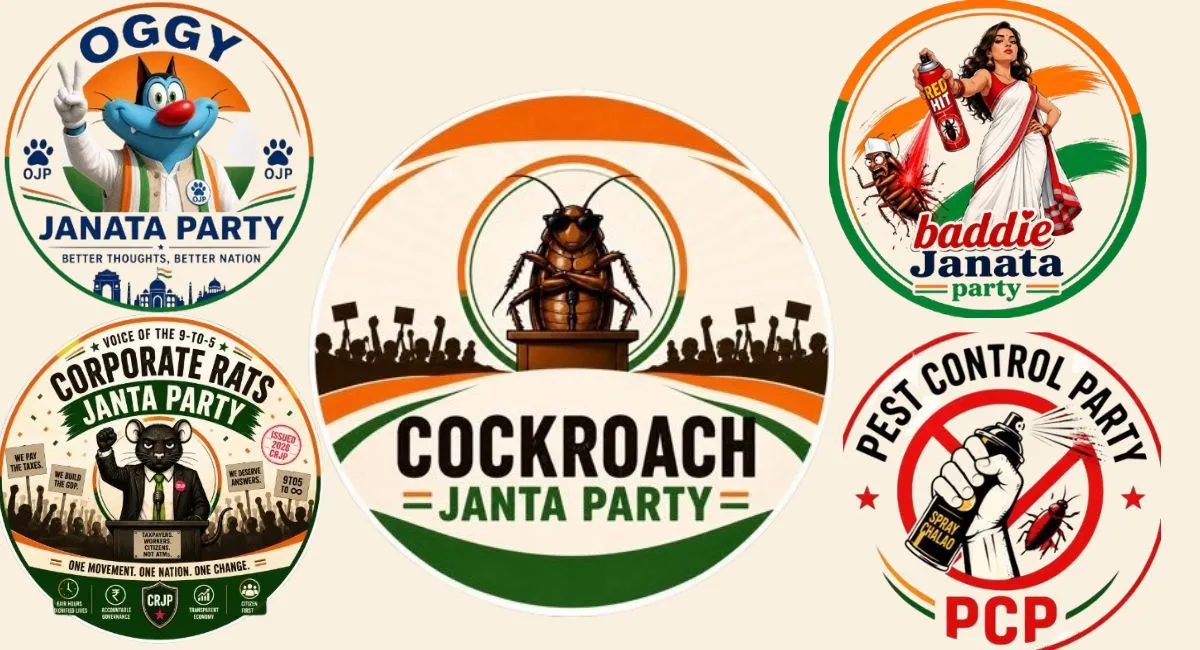
What started as a sarcastic internet response to remarks by Chief Justice of India Surya Kant has rapidly snowballed into a viral online movement powered by memes, satire and youth frustration.
At the centre of the frenzy is the “Cockroach Janta Party” (CJP), a meme-based digital outfit launched by Boston University graduate Abhijeet Dipke shortly after the CJI’s comments during a May 15 hearing triggered backlash online.
During the hearing, Justice Surya Kant had remarked that “there are youngsters like cockroaches” while referring to people entering professions with fraudulent degrees.
"There are youngsters like cockroaches, who don't get any employment or have any place in the profession. Some of them become media, some of them become social media, RTI activists and other activists, and they start attacking everyone," the CJI said.
Although he later clarified that the remarks were being “misquoted” and were directed only at individuals using fake qualifications, clips and screenshots from the hearing had already exploded across social media.
"What I had specifically criticised were those who have entered professions like the Bar (legal profession) with the aid of fake and bogus degrees. Similar persons have sneaked into the media, social media, and other noble professions as well, and hence, they are like parasites," he clarified.
Instead of rejecting the label, sections of Gen Z users embraced it. Within a day of the remarks, Dipke created social media handles and a website for the Cockroach Janta Party. The response was staggering. Before its X account was withheld in India on Thursday, CJP’s Instagram page had reportedly crossed 18 million followers, overtaking even the BJP’s official Instagram following.
Recommended For You
What began as a meme page soon evolved into a broader internet-led protest space where unemployment, layoffs, exam leaks, workplace culture and inflation became recurring themes wrapped in humour and satire.
The online momentum also inspired a series of “parties”, each targeting a different frustration of young Indians.
The Rise Of 'Meme' Parties
One such spin-off, the “Corporate Janta Party,” used corporate satire to tap into employee frustrations. Its mock manifesto joked about “dress code for chaatu employees,” changing the MS Teams ringtone and even proposed legalising “gundo se manager ko pitwana.” The page also mocked poor appraisals and toxic office culture through memes and parody campaign promises.
View this post on Instagram
Another outfit, the “Oggy Janta Party,” shifted the focus to animal welfare. Calling itself independent of “USA-based CJP,” the group promoted stray animal protection, stricter cruelty laws and free healthcare for animals through its social media campaigns.
Meanwhile, the “National Parasitic Front” emerged as a self-described opposition to CJP, turning the “parasite” insult into its own political satire. Its website stated: “We are serious about a crime-free Parliament. Serious about educated representatives. Serious about roads that don't become rivers and Wi-Fi that doesn't require an eleven-fire-hydrant CAPTCHA to pay an electricity bill.”
ALSO READ: Not US, Not Saudi: THIS Country Emerges As India's Third-Largest Oil Supplier In May
The trend has since expanded into dozens of parody collectives online, including names such as “Baddie Party” and “Pest Control Party,” with users creating mock manifestos around dating culture, bureaucracy, inflation and internet politics.
While many see the movement as meme-driven comedy, authorities appear to be treating it more seriously. The X account of Cockroach Janta Party was withheld in India following directions from the Centre after intelligence inputs reportedly flagged “national security concerns.”
According to reports, the Ministry of Electronics and Information Technology invoked Section 69(A) of the IT Act after receiving inputs from the Intelligence Bureau.
The controversy has now evolved far beyond a single courtroom remark. What emerged as an internet joke has turned into a wider digital expression of anger, sarcasm and political commentary from young users, using humour as both protest and participation.