
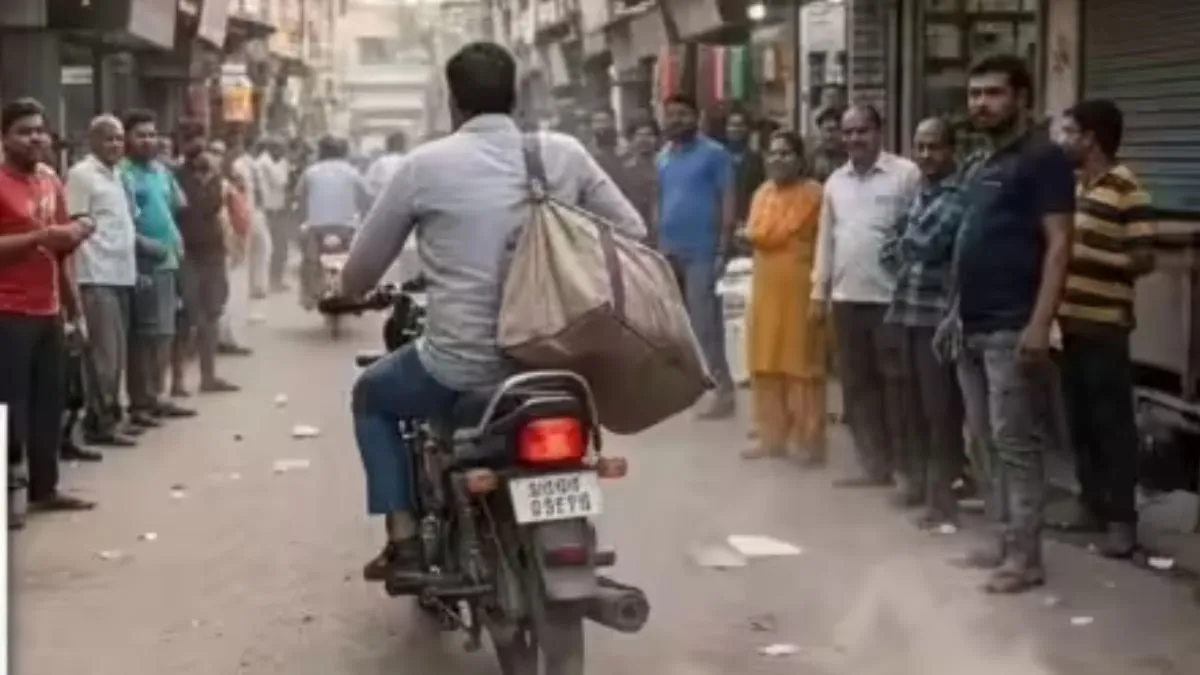
The Indian folk are still obsessed with big robberies, involving fear, fights, and intimidation. Even after staying in a world where cashless payments have become a poignant part of our lives, people are opting to carry out daylight robberies, resembling movies. In the recent months, India has witnessed a number of robberies where people were seen targeting hard money, and these heists will never become obsolete.
A Look into The Robberies
Three armed men in Delhi's Chandni Chowk area attacked a textile businessman's office in the Katra Neel building. The three looted at least Rs 35 lakh. The attack was no less than a movie scene; the attackers fired gunshots at the windows and forced open the office. The third accomplice was waiting outside.
In North West Delhi's Model Town area, a 22-year-old shopkeeper was robbed of Rs 14 lakh by three unidentified men. One of them locked the gun, the other pointed a gun towards the owner, and the third placed a knife to threaten.
Recommended For You
In another unusual case, the robbers used a different tactic. The victim was travelling with Rs 15 lakh in cash and 22 packed Apple iPhones priced around Rs 30 lakh. When he got off the bus, the gang followed him in an auto-rickshaw. They surrounded the man and accused him of molestation and assault. While the woman created a scene, her accomplices fled with the victim's bag. Police then arrested five people, including three women, in connection to the case.
In Gurgaon's Sector 23, a private school teacher and his family were targeted inside their house. Three men threatened the family and looted cash and jewelry. Police registered a complaint of robbery, housebreaking, and criminal intimidation.
In Mumbai's Crawford Market, robbers looted around Rs 50 lakh from a businessman. The robbers posed as law enforcement officers and forcefully entered his car. The people then assaulted the businessman and stole the cash. They escaped using a car with a fake number plate. The four were then arrested in a coordinated operation.
In Bihar's Samastipur, three masked men entered the shop of a tobacco wholesaler and looted Rs 4.5 lakh along with a laptop. One confined the owner while the other threatened his brother with a pistol. Police later seized CCTV footage and launched a search operation.
In Gujarat's Surat, two brothers traveling in an SUV were robbed of Rs 35 lakh. Two men broke the glass of the SUV and grabbed the bag containing cash.
In Bengaluru, criminals posing as officials looted Rs 7.2 crore from an armored van. The robbers blocked the van on a busy road and approached the staff alleging violations of financial regulation. The thieves then separated the staff from the vehicle and transferred the cash boxes to another car, fleeing the scene.
These robberies, reported in distinct parts of India, follow a similar pattern of organized and opportunistic crimes. They monitor cash movements and businesses. Even as the digital transition serves as a major part of financial transactions, physical robberies are a wake-up call for the commoners that they are being monitored everywhere.
The legal officials have launched several investigations involving CCTV analysis, technical surveillance, and multi-state operations to crack down on the suspects.
The frequent robberies highlight that even in the digital era, real-life heists will persist.