
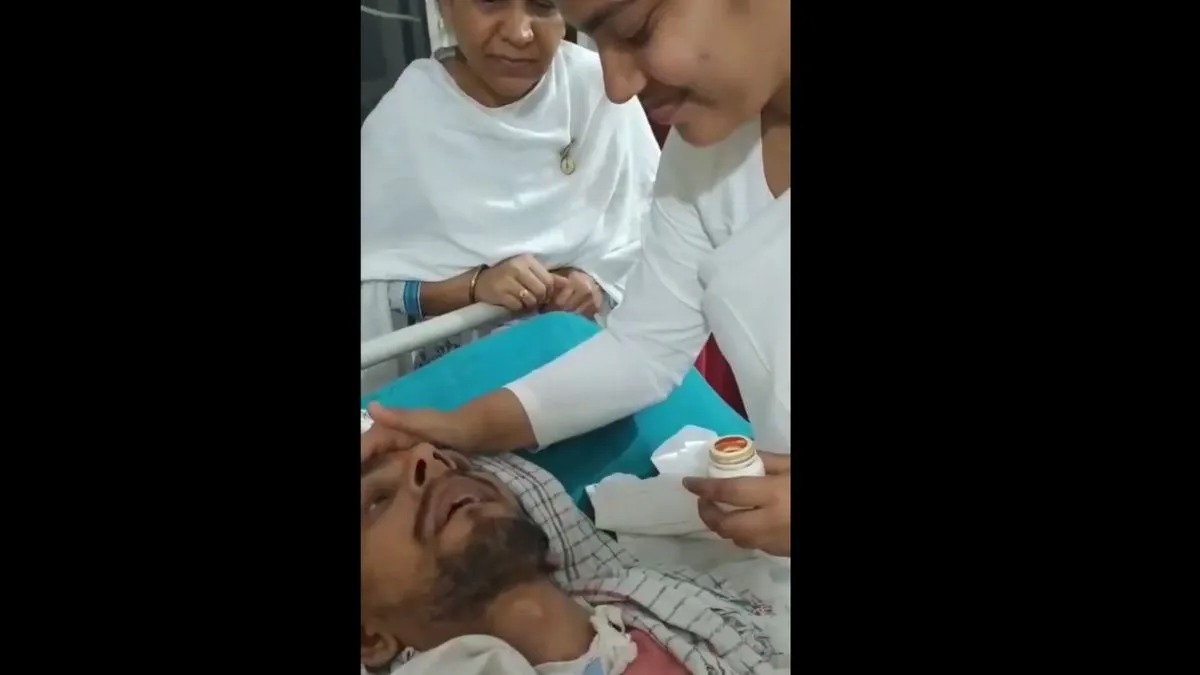
Harish Rana (32), a resident of Ghaziabad, has been in a vegetative state for the past 13 years. Following a directive from the Supreme Court, he has now been admitted to the Palliative Care Centre at the All India Institute of Medical Sciences (AIIMS), Delhi, for passive euthanasia. This is the first case in India in which the top court has granted permission for passive euthanasia for an individual. Before he was moved to the hospital, Rana’s family shared an emotional farewell with him; a video capturing their final moments together has since gone viral.
"Forgive everyone, apologise to everyone. It's time to go now, okay?" a Brahma Kumaris sister told Harish Rana in the 22-second clip going viral. She is also seen applying 'tilak' on his forehead as he lies on the bed. Harish’s mother is also seen beside him.
"Forgive everyone… apologize to everyone… it’s time to go now, okay?"
— BALA (@erbmjha) March 15, 2026
Harish Rana has been brought to AIIMS, Delhi. His life support will now be removed.
13 yrs of a family’s hope, prayers and sacrifice ending today 💔 pic.twitter.com/qZt4RYtA3x
The family of Harish Rana is associated with the Brahma Kumaris, a socio-cultural organisation that assisted them in arranging legal support to pursue his euthanasia plea.
Recommended For You
What Is Passive Euthanasia?
Passive euthanasia is a process of allowing a person to die naturally by withholding or withdrawing life-sustaining treatment. Patients or their families may choose to refuse treatments such as cardiopulmonary resuscitation (CPR), ventilator support, chemotherapy, radiotherapy, dialysis, or specialised nutritional support, The Indian Express reported.
What Is Harish Rana's Case?
Harish Rana has remained in a persistent vegetative state for over 13 years after an accidental fall from the fourth floor of a building in Chandigarh in 2013. For the past 13 years, he has been unconscious, bedridden, and dependent on life support. Harish's parents filed a petition in the Supreme Court seeking withdrawal of his life-sustaining treatment, and the court permitted it.