
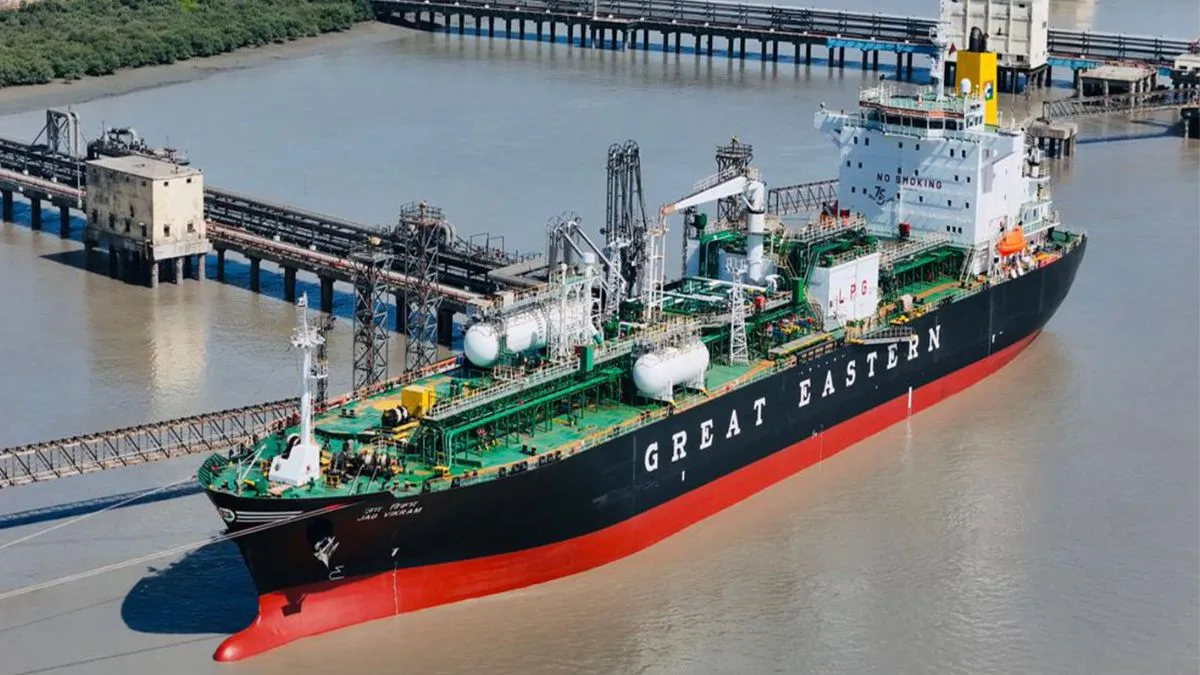
Amid escalating tensions in the Middle East that has largely affected the security around the Strait of Hormuz, Indian-flagged ships are increasingly in focus. These vessels, part of India’s merchant fleet, are operating through one of the world’s most sensitive sea routes at present.
Indian-Flagged Ships Continue Operations
Despite Iran’s blockade, oil tankers like Jag Prakash, Jag Vikram, Shivalik, and Nanda Devi successfully crossed the strait to reach Indian ports. The movement of these vessels near or through the Strait of Hormuz during periods of heightened tension, highlight how Indian-flagged ships operate despite crise\s. Following high-level talks between India and Iran in March, Tehran agreed to allow Indian-flagged tankers and ships safe passage through the Hormuz amid a broader maritime blockade. This came as relief as India heavily depends on imports to meet its energy needs.
ALSO READ: West Asia Crisis To Worsen? Iran Warns Of Closing Strait Of Hormuz If US Blockade Continues
How Are They Navigating High-Risk Waters?
An Indian-flagged vessel is a commercial ship that is registered in India and flies the Indian national flag. This means it is legally governed by Indian maritime laws and comes under the control of the Directorate General of Shipping (DG Shipping). These vessels are required to follow Indian safety, labour, and environmental rules. They are treated as under India’s control and laws even when they are sailing in international waters like the Strait of Hormuz. One big advantage of Indian-flagged ships is that they receive government and naval support when operating in high-risk regions.
Recommended For You
The ships are navigating high-risk waters by following strict safety protocols, adjusting routes based on real-time security alerts. They are also receiving naval support. For example, MT Shivalik and MT Nanda Devi, and Jag Vasant were successfully escorted by the Indian Navy after they exited the strait. So far, no attacks have been reported on Indian-flagged vessels passing through the Strait of Hormuz.
Visuals of Pine Gas LPG Carrier, which crossed the Strait of Hormuz
— ANI (@ANI) March 24, 2026
Two Indian LPG carriers, Jag Vasant and Pine Gas, carrying 92,612.59 MT of LPG, have transited through the Strait of Hormuz. The vessels have 33 and 27 Indian seafarers onboard, respectively. These vessels are… pic.twitter.com/nkc12f3Tnh
While these vessels may benefit from lower port charges at Indian ports, they face stricter compliance rules compared to “Flags of Convenience” countries like Panama, with less regulations. India is also gradually expanding its merchant fleet. As of 2026, the Indian-flagged fleet has grown to about 14.2 million Gross Tonnage, with nearly 1,500 registered ships. Amid concerns over safety and military activity in the region, India-registered ships are effectively navigating through high-risk waters.
ALSO READ: Indian Crude Tanker Desh Garima Crosses Hormuz As Renewed US-Iran Tensions Leave Strait Closed Again