
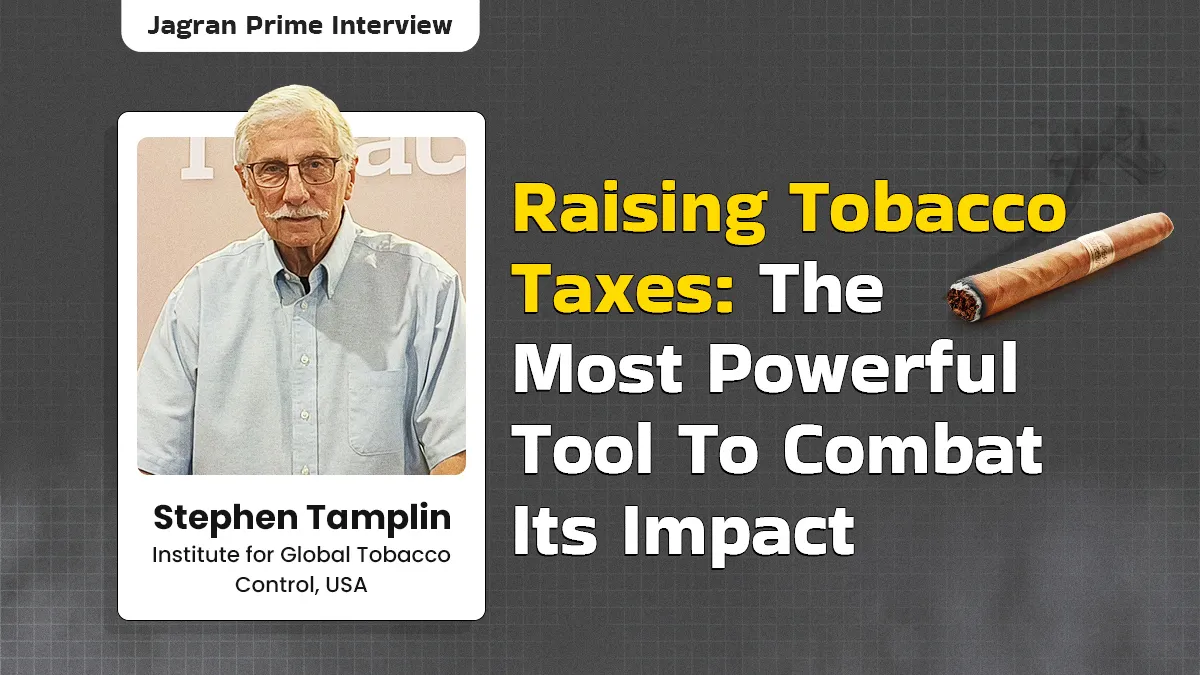
Despite a global decrease in tobacco consumption, tobacco remains a significant public health challenge. India is the second-largest consumer of tobacco worldwide, with 28.6% of Indians above 15 and 8.5% of students aged 13 to 15 using tobacco in some form. Alarmingly, over 3,500 deaths occur daily in the country due to tobacco use.
The Institute for Global Tobacco Control at Johns Hopkins University, USA, focuses on research and policy support to reduce global tobacco consumption. During the 2024 South Asia Tobacco Leadership Program organised in Colomboby the Institute, Jagran Prime's Senior Editor, Skand Vivek Dhar, interviewed Stephen Tamplin, a scientist at the Institute for Global Tobacco Control. Here are key excerpts from the discussion:
Why do we need a tobacco control program?
Tobacco use and related products pose significant public health issues, but they are among the few major problems that can be effectively addressed. If people stop using tobacco products, their health impacts can be significantly reduced. Over the past 30-plus years, considerable progress has been made globally in reducing smoking. However, the tobacco industry continues to introduce new products, many of which also present serious health risks.
What is the best strategy to tackle tobacco and related products like cigarettes?
The most effective measure is to increase taxes on these products, making them less affordable. While the industry argues that tobacco taxes contribute significantly to government revenue, the healthcare costs caused by tobacco use far exceed the revenue generated.

What are the major tactics used by the tobacco industry to undermine tobacco control programs?
The tobacco industry employs various strategies to resist anti-tobacco policies. One is emphasizing their tax contributions to government revenue. However, the healthcare costs incurred by individuals and the healthcare system are much higher.
Another tactic involves diverting attention from the harmful effects of tobacco products by associating their brands with aspirational lifestyles. Decades ago, advertisements focused on the flavor or quality of cigarettes. As health data revealed their dangers, the industry began linking their products to success and luxury - depicting young people driving expensive cars, living in upscale apartments, or wearing stylish clothes, suggesting that smoking enhances one's status.
A number of measures have been taken in India, including 85% pictorial warnings, the ban on cigarettes, and the extension of the CoTPA Act to OTT platforms. Please provide your thoughts on India's tobacco control journey and suggestions for the government.
India has been progressive in developing tobacco control policies, with measures like 85% pictorial warnings, cigarette bans, and the extension of the CoTPA Act to OTT platforms. However, implementation and compliance remain challenges.
In India, smokeless tobacco poses a greater issue than smoking. To address this, policymakers should create alternative livelihood opportunities for those employed in the smokeless tobacco industry. Additionally, farmers cultivating tobacco should be incentivized to grow alternative crops.
How can governments protect young people from vaping and other alternative nicotine delivery systems?
E-cigarettes and similar products are not less harmful. Emerging studies show they can be equally or even more harmful. The industry's claims of these products being "less harmful" are often designed to attract younger users. E-cigarettes deliver nicotine, and users are often exposed to higher levels of nicotine than traditional cigarettes.
How does evidence-based research drive policy decisions in tobacco control?
Evidence-based research has been instrumental in shaping anti-tobacco policies. Early studies linking cigarette smoking to cancer faced pushback from the industry, but by the late 1990s and early 2000s, overwhelming evidence forced acknowledgment of smoking's harmful effects.
A similar trend is likely with e-cigarettes and heated tobacco products. Despite being marketed as “less harmful,” growing evidence indicates otherwise. Such research will likely influence future legislation.
How does tobacco impact the environment?
Tobacco also has significant environmental consequences. Cigarette filters and waste often litter sidewalks, streets, and beaches, especially in tourism-focused areas, increasing cleanup costs.
Tobacco smoke is also invasive. For example, hotels spend large amounts on cleaning drapes, carpets, and furnishings to remove smoke odors, which many customers dislike or are affected by.
What is the ideal way to support smoking cessation?
Nicotine replacement therapy (NRT) products are effective tools for smoking cessation, as they gradually reduce nicotine dependence. However, making them widely accessible remains a challenge. Nicotine addiction, while not as disruptive as certain hard drugs, still makes quitting difficult.
Are there any current research projects on tobacco control?
Johns Hopkins University, in collaboration with local partners in India, plans to conduct a study next year to assess compliance with India's ban on e-cigarettes and heated tobacco products. The study will examine whether vendors are adhering to the law, providing insights into implementation and compliance challenges.

How can leadership play a role in tobacco control?
Leadership is essential for addressing complex public health challenges like tobacco control. Developing leadership skills in individuals and organizations is critical for driving policy changes and ensuring effective implementation.