
- By Nikhil Singh
- Thu, 02 Mar 2023 08:40 AM (IST)
- Source:JND
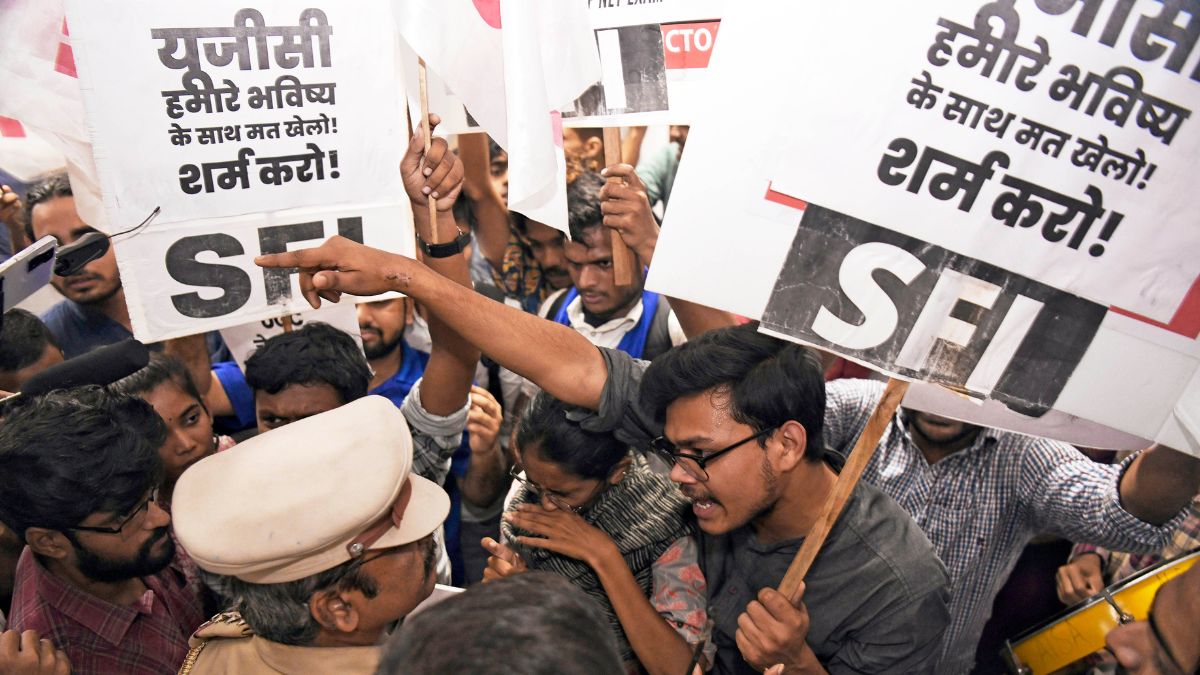
STUDENTS of India’s premier institute Jawaharlal Nehru University may have to pay hefty fines of Rs 20,000 for participating in ‘Dharnas’, ‘Gheraoes’, Sit-ins, and other similar demonstrations, according to new rules formulated by the top executive council. For acts of violence, that now encompass many things that weren’t previously there, students may face rustication or Rs 30,000 in fine.
Also Watch:
The Executive Council has prepared and passed a 10-page ‘Rules of Discipline and proper conduct of students of JNU’. The document lays out punishments for the different kinds of acts like protests and forgery and also procedures for the proctorial enquiry and recording of statements.
These rules have already come into effect from February 3, according to the document, and are applicable on all students whether admitted to the institute before or after the formulation of these rules. These rules have conspicuously followed the attempts of screening the controversial BBC documentary on Prime Minister Modi.
Vikas Patel, Akhil Bharatiya Vidyarthi Parishad (RSS’s student wing) JNU Secretary, said, “There is no need for this new authoritarian ('tuglaki') code of conduct. The old code of conduct was sufficiently effective”, according to PTI. He further demanded, “Instead of focusing on improvement of safety security and order, the JNU admin has imposed this draconian code of conduct, without any discussion with the stakeholders, especially the student community. We demand its rollback”.
An Executive Council member said without disclosing their identity, “we were told that the rules have been created for court matters” and not discussed at length in the meeting. There are 17 ‘crimes’ that will now attract punitive actions. These include blocking of entrances, indulging in gambling, occupying hostel rooms without authorisation, using abusive language, and committing forgery. Copies of complaints against students will also reach their parents, the rules state.
Cases that involve teachers along with students will be referred to the Grievance Redressal Committee. While sexual abuse, eve-teasing, ragging, and causing communal disharmony will be under the purview of the Chief Proctor’s office.
Chief Proctor Rajnish Mishra told PTI, "There were rules mentioned in the statute. However, the new rules have been formulated after a proctorial enquiry."
“The new rules have been formulated after a proctorial enquiry,” Chief Proctor Rajnish Mishra informed. However, he did not say when this enquiry was conducted. In cases that are sub-judice, the Chief Proctor’s office will take action according to the directions of the court.
As per the new rules, hunger strikes, dharnas, group bargaining, and any other form of protest that blocks entrances or exits of any academic or administrative complex or disrupts movement of nay member of the University community are now punishable offences and will be considered as violent acts.
"The university might have planned to streamline the process and prepare a full document but it should have been discussed in the EC meeting properly," another Executive Council member Brahma Prakash Singh said.
(With agency inputs)