

- By Priyanka Koul
- Fri, 27 Feb 2026 11:55 AM (IST)
- Source:JND
JNU Protest: The Patiala House Court on Friday granted bail to all the 14 accused students and directed each of them to furnish a bail bond of Rs 25,000. The court also ordered verification of the bail bonds. The development follows clashes between Delhi Police personnel and students of Jawaharlal Nehru University during a march organised by the students’ union on Thursday. Both police officers and students sustained injuries in the confrontation.
Delhi Police alleged that their personnel were assaulted during the protest. However, the protesters many of whom were detained and have now been released on bail claimed that the police used excessive force against them.
The incident occurred after JNU student protesters, led by the Jawaharlal Nehru University Students' Union (JNUSU), staged a demonstration against Vice-Chancellor Santishree D Pandit. According to reports, tensions escalated after police shut the university gates and stopped protesters from crossing barricades, leading to a scuffle and the subsequent detention of several students.
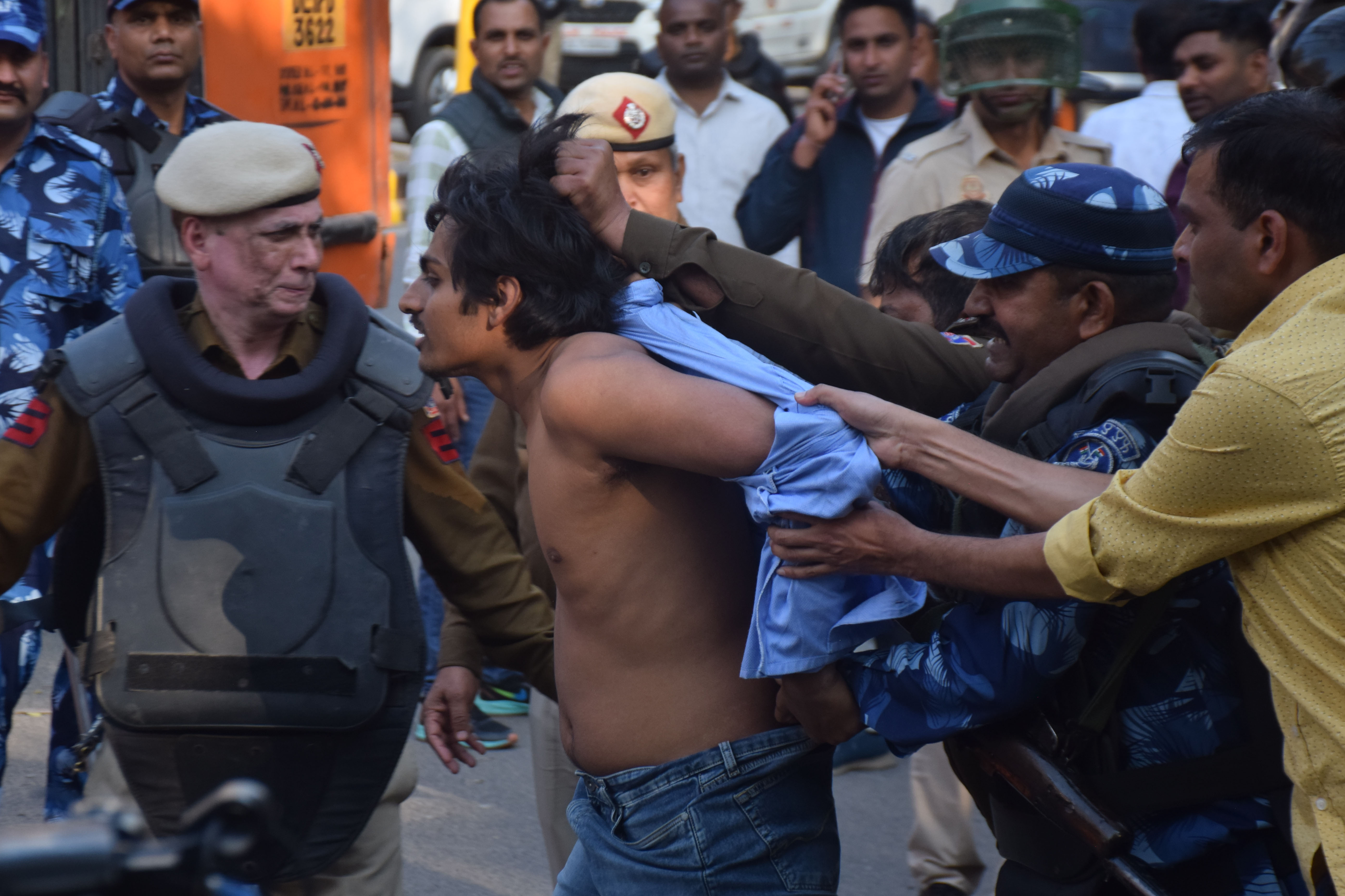
The protest, called by the JNUSU against Vice-Chancellor Santishree Dhulipudi Pandit over her alleged casteist remarks, escalated into a nearly two-hour confrontation. The situation turned tense after students broke open the triple-locked main gate and attempted to march towards the Ministry of Education, leading to multiple detentions and injuries.
#WATCH | Delhi | Morning visuals from JNU Campus.
JNU Student Union staged a protest late last night, demanding UGC regulations to be implemented. Delhi Police had set up barricades to contain the students inside the campus. pic.twitter.com/771SFu5TGA
— ANI (@ANI) February 27, 2026
JNU Protest: Key Developments
- The Patiala House Court on Friday granted bail to all the 14 accused students. The court directed that each of the accused furnish a bail bond of Rs. 25,000.The court has also ordered verification of the bail bonds.
- The march was part of ongoing protests against the Vice-Chancellor’s recent podcast remarks regarding the implementation of University Grants Commission (UGC) norms, the rustication of JNUSU office bearers, and the proposed Rohith Act.
- Delhi Police accused the protesting students of physically attacking security personnel during the demonstration.
- According to police, permission had not been granted for the march outside the campus. They alleged that the situation became violent when protesters attempted to move beyond university premises, resulting in injuries to several officers.
- The protest began around 3:30 pm, when students assembled at the Sabarmati T-point on campus and marched towards the main gate carrying placards and banners, raising slogans such as “Jai Bhim” and “Ambedkar.” The mobilisation was part of a “Long March” call by the union, demanding an apology and resignation from the VC over her podcast remarks.
- Upon reaching the main gate, students began breaking the locks using stones and screwdrivers. Police repeatedly announced that no permission had been granted for a march outside the campus and urged the students to disperse. After the locks were broken and the gate unchained, students attempted to proceed, but police blocked their path, triggering a confrontation.
- Police alleged that several protesters threw sticks and shoes and engaged in physical assault, injuring multiple officers. They also claimed that some personnel were “bitten” during the scuffle. An FIR has been registered against the students.
- JNUSU president Aditi Mishra and former president Nitish Kumar were among 51 protesters detained after clashes erupted at the main gate when students tried to take the rally outside campus.
- The JNUSU further alleged that a portrait of B. R. Ambedkar was damaged during the police action. Videos purportedly showing the clash surfaced on social media, including one in which an Ambedkar portrait appeared to be snatched from protesters. PTI said it could not independently verify the authenticity of the footage.
- Police stated that the JNU administration had informed students in advance that no permission had been granted for protests outside the campus and advised them to confine their demonstration within university premises.
- Despite this, officials said around 400–500 students gathered and proceeded with the march. At approximately 3:20 pm, protesters moved towards the main gate and attempted to head towards the Ministry of Education.
- “Barricades placed outside the campus were damaged as the situation escalated. The protesters pelted banners and sticks, threw shoes and resorted to physical assault. Some police personnel were bitten during the scuffle, resulting in injuries to several officers deployed at the spot,” a senior police officer told PTI.
- In a statement, the JNU Teachers Association (JNUTA) condemned what it described as “brutal use of force” by police. It alleged that several students, including women, were injured and expressed concern about those detained, claiming some were taken to “unconfirmed locations.”
- JNUTA further alleged that the police action aimed to prevent students from exercising their democratic right to protest and demanded the immediate release of all detainees.
- The JNUSU issued an urgent appeal calling on supporters to gather at the JNU main gate in the evening, stating that many students had been detained.
- Police have registered an FIR under sections 221 (obstructing a public servant in discharge of public function), 121(1) (voluntarily causing hurt or grievous hurt to deter a public servant from duty), 132 (assault or criminal force to deter a public servant from discharge of duty), and 3(5) (common intention) of the BNS at Vasant Kunj North police station.
ALSO READ: Pakistan-Afghanistan Tensions: Islamabad Releases Video Of Airstrike On Kabul; Watch