

Indian farmers have sown a total area of 1088.50 lakh hectares with various crops for the current Kharif season, as of September 8, according to the Department of Agriculture and Farmers’ Welfare. This is higher than the 1085.81 lakh hectares covered in the same period last year.
Rice and sugarcane are the two crops that have shown remarkable growth in sowing area, indicating their importance for the country’s food security and economy. Rice, which is a staple food, has covered an area of 403.41 lakh hectares, up from 392.81 lakh hectares last year. The government has estimated a procurement of 521.27 lakh tonnes of rice during the forthcoming Kharif marketing season reflecting the significance of rice production in the country.
ALSO READ: Punjab Farmers To Receive Subsidies For Stubble Management Machinery In Rs 350-Cr Initiative
Sugarcane, which is regarded as a cash crop, has expanded its area to 59.91 lakh hectares, compared to 55.65 lakh hectares in the previous year. Other crops have shown mixed results, with pulses, oilseeds, jute, mesta and cotton witnessing a slight decline in sowing area, while coarse cereals maintained a steady level.
Despite challenges faced in the pulses category the total area sown with pulses reached 119.91 lakh hectares, although slightly lower than the 131.17 lakh hectares recorded in the same period last year, read the press release.
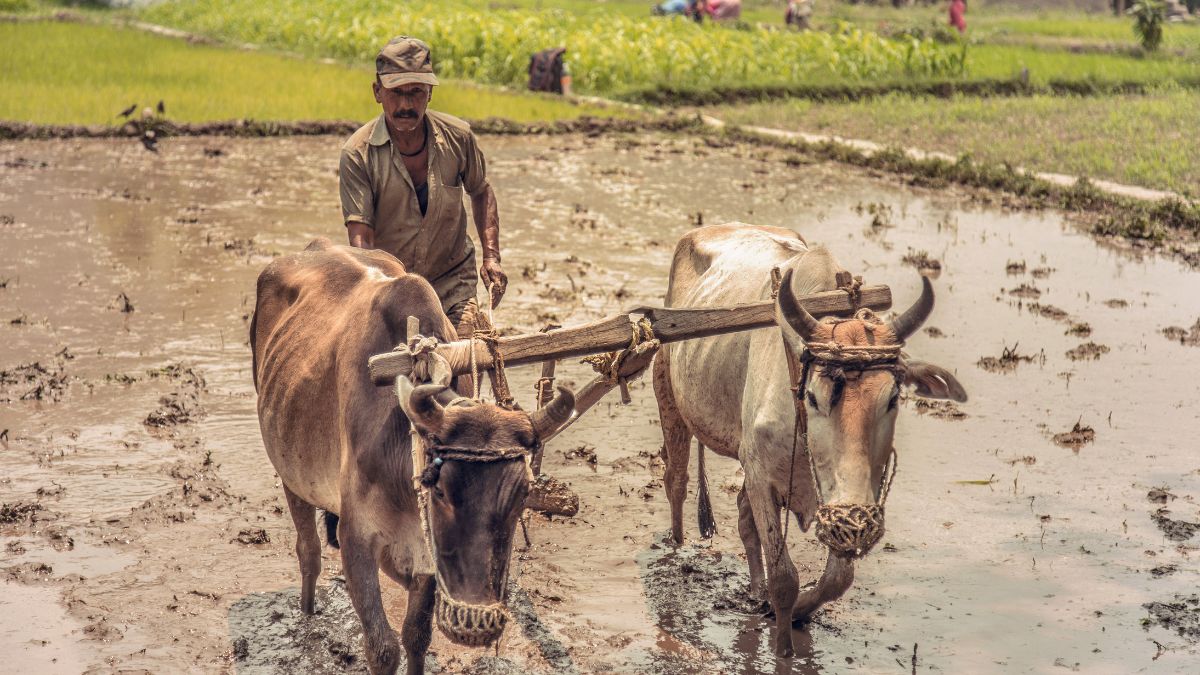
Kharif crops are sown during June-July, dependent on monsoon rains (Image: Canva)
Department of Agriculture and Farmers’ Welfare informed that Shri Anna cum Coarse cereals, encompassing crops like Jowar, Bajra, Ragi, Small millets and Maize, maintained steady planting with a combined area of 182.21 lakh hectares, compared to 181.24 lakh hectares in the previous year.
The category of Oilseeds including Groundnut, Soybean, Sunflower, Sesamum, Niger, Castor and others accounted for an area of 191.49 lakh hectares, slightly down from 193.30 lakh hectares during the same period last year.
Kharif crops are sown during June-July, dependent on monsoon rains and typically harvested in October-November. Agriculture remains a cornerstone of India’s economy and the progress in sowing areas indicates the commitment of farmers to maintain agricultural productivity.