
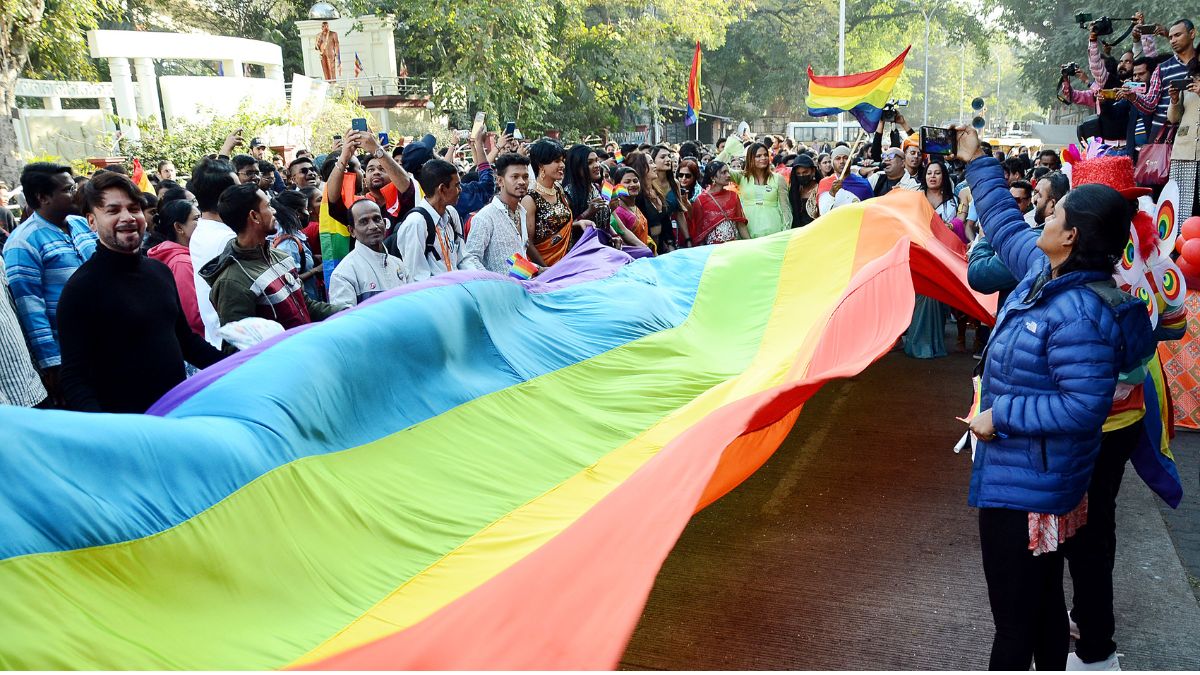
ALTHOUGH same-s*x marriage remains unlawful in most of the countries in the world, more and more nations are having to consider whether it should be given legal sanction or not. India is one of those nations where this debate is raging and it has now reached the Supreme Court too. The top court has began hearing the bunched up petitions that seek legal recognition of same-s*x marriage from April 18.
Petitioners have argued in the court that giving legal recognition to marriages of same-s*x couples will make their lives easy as several acts such as opening a joint bank account, getting insurances, adopting children, etc will be allowed for them. The Centre, represented by Solicitor General Tushar Mehta, has argued that only the Parliament, which is the representative of the people, can make laws in this matter and therefore the court should leave this matter to them.
Amid this backdrop, it could do some good to know which other countries give legal sanctity to the marriages of gay couples. Taiwan is the first and only Asian nation where same-s*x marriages have legal recognition. This island nation’s legislation to legalise same-s*x marriage was prompted by a 2017 decision of its constitutional court, which struck down a law that defined marriage can only be between a man or a woman.
Recommended For You
Here are the countries where same-s*x marriages are legal (according to Pew Research Centre):
Netherlands (2000) - Netherlands became the first country in the world to legalise same-s*x marriages in December 2000 when the country’s Parliament gave same-s*x couples the right to marry, adopt children, and divorce. The bill was passed with an overwhelming majority with only conservative Christian Democratic Party opposing it.
Belgium (2003): This northern European country had actually given several rights to gay couples to enter civil unions beginning in 1998. Then it brought the LGBTQ+ community on equal pedestal with heterosexual couples in 2003.
Canada (2005): This North American nation had also allowed several equal benefits of marriage for same-s*x couples in 1999. However, the process was completed by 2005 through a series of court cases.
Spain (2005): This Western European nation gave legal recognition to same-s*x marriages in 2005 by act of Parliament which had passed by a narrow margin.
South Africa (2006): This is the only African nation that gives legal recognition to same-s*x marriages. The country gave legal sanctity to gay marriages after its Supreme Court ruled that not doing so violates the Constitution’s guarantee of equal rights.
Norway (2008): Norway allowed civil unions for all irrespective of gender and s*x since 1993. In 2008, it legalised same-s*x marriages. The law came into force in 2009.
Sweden (2009): Like in other countries, civil unions of gay couples were allowed since 1995 and marriage and adoption rights were allowed for them in 2009 by an overwhelming majority in the Parliament.
Iceland (2010): Iceland’s Parliament voted to legalise same-s*x marriage in June of 2010 and not a single member of their Parliament voted against doing so.
Portugal (2010): Parliament had passed a law legalising same-s*x marriage in early 2010 but its then President, Anibal Cavaco Silva asked the constitutional court to allow to review this decision. The court ruled in favor of legalising same-s*x marriage.
Argentina (2010): Argentina became the first Latin American country to legalise same-s*x marriage in 2010.
Denmark (2012): Denmark, which was actually the first nation to allow civil unions for gay couples in 1989, also passed a law legalising same-s*x marriages.
Uruguay (2013): In June 2013, Uruguay became the second Latin American country to legakise same-s*x marriages.
New Zealand (2013): New Zealand was the first country in the Asia-pacific region to give legal recognition to gays and lesbians.
France (2013): 2013 was big year for LGBTQ+ rights, as five countries legalised same-s*x marriages in this year. France being one of them. France’s conservative party then challenged this law and the country’s highest court decided it is indeed constitutional.
Brazil (2013): The picture for LGBTQ+ rights is not so rosy here. Brazil’s National Council of Justice had ruled equal marriage rights cannot denied to same-s*x couples in May 2013. Conservatives challenged this in the Supreme Court and the country’s legislature may still weigh in on the issue.
England and Wales (2013): The Parliament had debated legalising same-s*x marriages for months before passing it into law.
Scotland (2014): Scotland’s legislature has passed the law legalsing same-s*x marriage in 2014.
Luxembourg (2014): On June 18, Luxembourg’s parliament, the Chamber of Deputies, overwhelmingly approved legislation to allow gay and lesbian couples to wed and to adopt children.
Finland (2015): Same-s*x marriage became legal in Finland starting in 2017. The Finnish Parliament approved a bill legalizing same-s*x unions in November 2014
Ireland (2015): On May 22, 2015, Catholic-majority Ireland became the first country to legalize same-s*x marriage through a popular referendum
Greenland (2015): Greenland, an autonomous territory of Denmark, was not subject to Denmark’s same-s*x marriage law, which was enacted in 2012.
United States (2015): Eleven years after same-s*x marriage was first made legal in Massachusetts, the U.S. Supreme Court ruled that the Constitution guarantees it throughout the country.
Colombia (2016): On April 28, 2016, Colombia became the fourth country in Catholic-majority South America to legalize same-s*x marriage, following Argentina, Uruguay and Brazil.
Germany (2017): On June 30, 2017, Germany became the 15th European country to enact legislation allowing same-s*x couples to wed.
Malta (2017): Malta’s parliament almost unanimously voted to legalize same-s*x marriage in July 2017
Australia (2017): On Dec. 7, 2017, the Australian Parliament passed legislation allowing gay and lesbian couples to legally wed.
Austria (2019): On Jan. 1, 2019, Austria joined the vast majority of Western European countries in legalizing same-s*x marriage.
Taiwan (2019): On May 17, 2019, Taiwan’s legislature passed a bill legalizing same-s*x marriage and making the island nation the first country in Asia to permit gays and lesbians to wed.
Ecuador (2019): On June 12, Ecuador’s Constitutional Court ruled that that same-s*x couples have a right to marry.
Northern Ireland (2019): In October 2019, same-s*x marriage became legal in Northern Ireland. Although Northern Island is a constituent of the United Kingdom, with its own parliament at Stormont, the change in its marriage laws ultimately came about due to action by the UK’s Parliament in London.
Costa Rica (2020): In May 2020, Costa Rica became the first Central American country to legalize same-s*x marriage.