
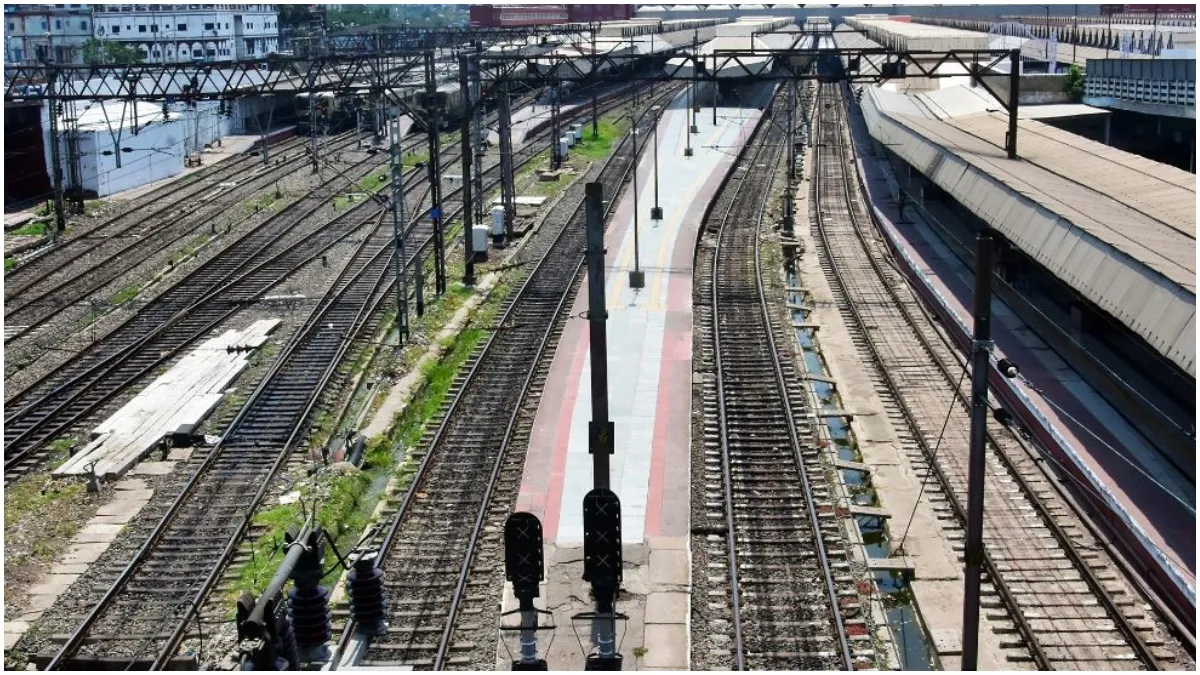
- CCEA approves 7 high-density railway corridors for quadrupling.
- Corridors handle 40% of Indian Railways' total traffic.
- Infrastructure upgrade planned for future traffic pressure.
The Cabinet Committee on Economic Affairs (CCEA), headed by Prime Minister Narendra Modi, on Wednesday approved 7 high-density railway corridors for four-lane or quadruple-track operation. Union Minister Ashwini Vaishnaw, during a press conference, briefed about the Cabinet decisions.
He said that out of the country's 11,000-km-long high-density network, there are 7 major corridors on which about 40 per cent of Indian Railways' traffic depends.
Given the anticipated increase in traffic pressure in the future, the government has planned to convert all these seven high-density corridors into quadruple tracks.
What are the 7 high-density corridors?
The seven high-density corridors include:
- Delhi-Mumbai
- Mumbai-Chennai
- Chennai-Kolkata
- Kolkata-Delhi
- Delhi-Chennai
- Mumbai-Kolkata
- Delhi-Guwahati
Of the entire railway network, work on about 2,000 km has been completed, while it is underway or approved on 5,000 km and detailed project reports (DPRs) are being prepared for the remaining 4,000 km.
Five multi-tracking projects in South India
The government has also approved five railway multi-tracking projects with an estimated cost of Rs 10,021 crore.
The projects are planned to be completed by 2030 and will add 540 km to the existing network across 17 districts of four states- Andhra Pradesh, Karnataka, Tamil Nadu and Telangana.
These projects include:
- Arakkonam – Renigunta 3rd and 4th Line – 77 kms
- Whitefield – Bangarapet 3rd and 4th Line – 47 kms
- Hosur – Omalur Doubling – 147 kms
- Salem – Karur – Dindigul Doubling – 159 kms
- Multitracking of Secunderabad (Ghatkesar) – Kazipet – 110 kms
ALSO READ: Diwali 2026: Railways To Run More Special Trains From Lucknow To Delhi Amid Surge In Waiting List
The government has planned the projects under the PM Gati Shakti National Master Plan. The projects are focused on improving multimodal connectivity and logistics efficiency through integrated infrastructure planning.
The government said that these projects will improve rail connectivity to around 2,121 villages, benefitting a combined population of about 52 lakh.