
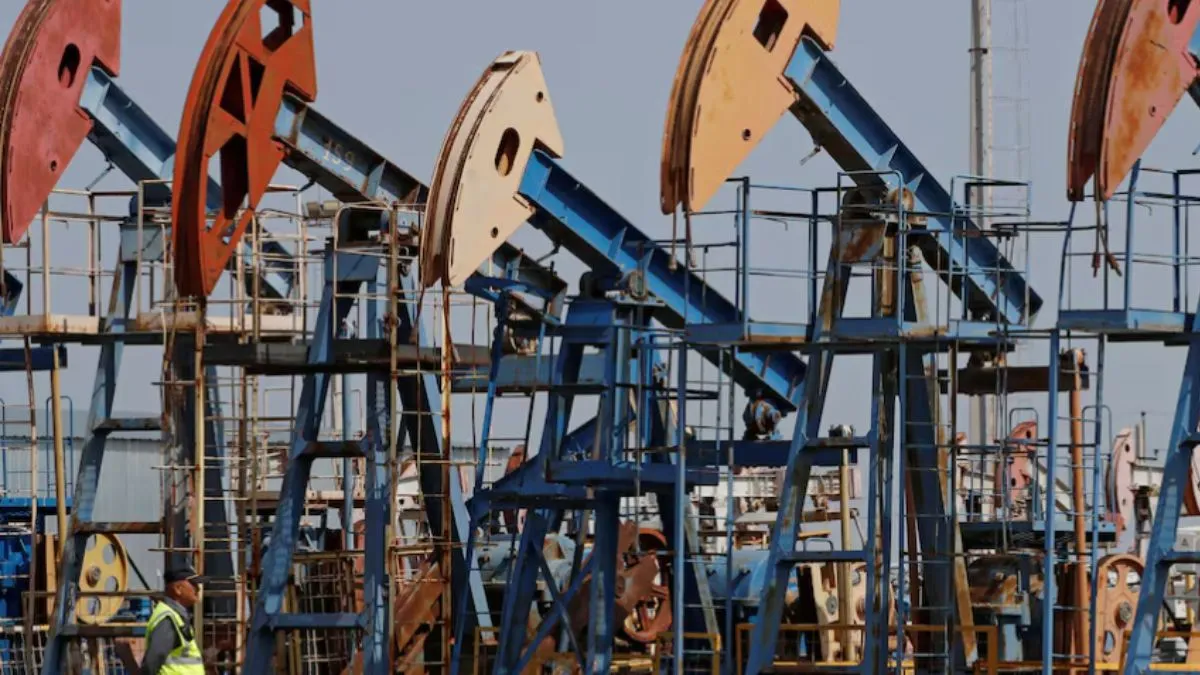
- Brent crude oil prices exceeded $100/barrel due to Middle East conflict.
- Iran-backed Houthi attacks on Saudi facilities disrupted oil supply.
- India faces higher import bills, inflation risk from rising crude prices.
The price of Brent crude has breached the $100 per barrel mark for the second time in one and a half months. The threshold was breached on Wednesday and continued to remain above throughout Thursday.
International crude oil prices jumped 4.36 per cent, pushing the price above $100. Brent oil rose 4.08 per cent to trade above $105.
Why are prices on the rise again?
The crude oil prices rose again due to a renewed conflict in the Middle East, affecting the already damaged supply chain. On September 8, Iran-backed Houthis targeted Saudi Arabia's civilian, economic and energy facilities in four southwestern cities.
The drone and missile attacks caused fires at oil facilities, leading to a temporary halt. The activation of Houthis has put the Red Sea route at risk, which has helped move oil out of the region amid the blocked Strait of Hormuz.
Besides, the biggest impact on prices was the resumption of exchange of strikes between Iran and the US. On Wednesday, both Brent futures and West Texas Intermediate (WTI) closed at their highest price since May 22.
The oil benchmarks have mostly traded below $100 since late May, when the two countries reached a consensus on halting attacks and coming to the table.
However, the equation has started to shift again towards a fresh conflict. On Wednesday, Tehran said that it attacked 10 ships near the Hormuz. A US naval warship also came under IRGC attack in the Strait while the US had sunk five Iranian oil tankers.
Recommended For You
"The move towards and back above $100 Brent is reflecting a market that increasingly has to change its view on how long the Middle East crisis will continue to curb supply from the region," Ole Hansen, head of commodity strategy at Saxo Bank, was quoted by Reuters as saying.
Effect on India
Anuj Gupta, a SEBI-registered market and commodity expert, said India imports about 85 per cent of its crude oil consumption. Apart from Brent, Murban crude, a key commodity in India's basket of crude oil, jumped 4% to above $110.
Accordingly, India's crude basket has breached the $100 mark after nearly four months. Compared to July, when India's crude oil basket was priced at $82 per barrel, the current price is nearly 28 per cent higher.
With higher basket prices, India’s import bill is set to take a toll. It puts extra pressure on the country's current account deficit and increases concerns of inflation.
The state-owned companies, which revise the prices of petrol and diesel daily, would have to either bear the losses to keep prices under check or pass them on to the consumers in their fuel bills.
If the companies decide to increase the fuel prices, which remains an open option, it could risk a rise in inflation, which is already above the Reserve Bank of India's target of 4 per cent. Apart from the indirect impact, an increase in fuel prices could make common people's pocket more heavy as the prices are already higher than pre-war levels.