
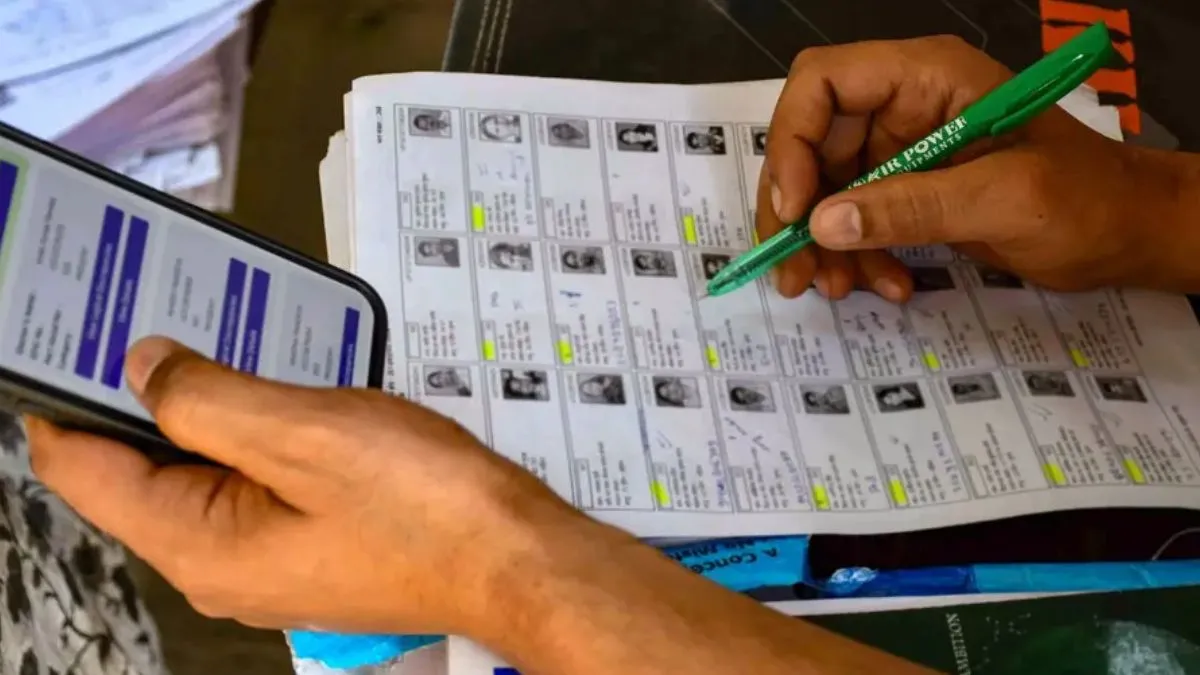
- ECI declines to reveal electoral roll software details.
- Concerns raised over auto-deletions and centralised control.
- Congress alleges ECI lacks transparency, conceals information.
The controversy around the special intensive revision of the electoral rolls continues to deepen further as auto-deletions, centralised control and form generations have raised concerns among voters and political parties alike. Amid the growing buzz, the Election Commission has declined to provide name and version of software used to detect anomalies in the rolls during SIR citing "commercial confidence", "trade secrets" and "intellectual property rights."
While repsonding to an RTI filed by MA Mujeeb Ayyub on July 27, the poll body on October 16 said that the software was exempt from disclosure under Section 8(1)(d) of the RTI Act, 2005.
However, the poll body said that it has not developed any new software for the exercise. Congress has targeted the poll body over its refusal alleging lack of transparency was intended to conceal the information.
In a post on X, Congress general secretary in-charge Jairam Ramesh alleged that the ECI was withholding details of the ECINET software, which he claimed had been used to centralise manipulation of electoral rolls.
Software scrutiny and fallout thereafter
The software issued first came to light after a report by The Indian Express claimed that the two Election Commissioners had alleged the IT system restricted the Electoral Registration Officials (EROs) to make changes or monitor them in the voter lists. The commissioners' concern raised question over poll body's claims of decentralised control of the software.
As days passed, cases of mass deletions and form generations raised further eyebrows on the software. In Uttar Pradesh, the CEO admitted that the software auto-generated 87,127 forms to delete voters without any valid reason.
According to a report by The Wire, names of over 5.38 lakh voters were delete from the West Bengal final electoral rolls through Form 7 objections without any filings by any person.
The report quoted CEO's March 6 statement which read, "The figure of deletion due to Form 7 as mentioned, includes the auto generated Form 7 generated due to rejection of Enumeration Forms (EFs) as electors not found eligible for Final Roll. This Figure which was received from ECI (Election Commission of India) by mail on 28.02.26 in 5,38,320."
Recommended For You
The software issues were also raised at the institutional levels as Maharashtra CEO formally wrote to the ECI to make four changes in the software for the EROs.
ALSO READ: Delhi SIR: 4.76 Million Voters Deleted, 250,000 Apply To Enrol; Check District-Wise Data
These changes included option of exempt hearing, allowing voters to submit documents beyond 13 fixed categories, greater authority to EROs and removal of mandatory uploading of an extract from the previous SIR rolls.
Last month, the ECI also ordered a review of its voter-roll software along with the SIR exercise over large-scale voter deletion.