
- By Priyanka Koul
- Sun, 13 Sep 2026 08:29 PM (IST)
- Source:JND
- Residential properties illegally converted into commercial PG accommodations.
- Widespread violations in building safety, fire norms, and taxation.
- PG operators often evade regulatory scrutiny and government oversight.
Jagran Correspondent, Delhi: Days after a multi-storey boys’ PG collapsed in Satya Niketan, killing seven people, fresh questions have emerged over how residential properties across Delhi are being converted into densely packed paying guest (PG) accommodations and how these operations continue despite questions over building safety, fire norms, electricity use and taxation.
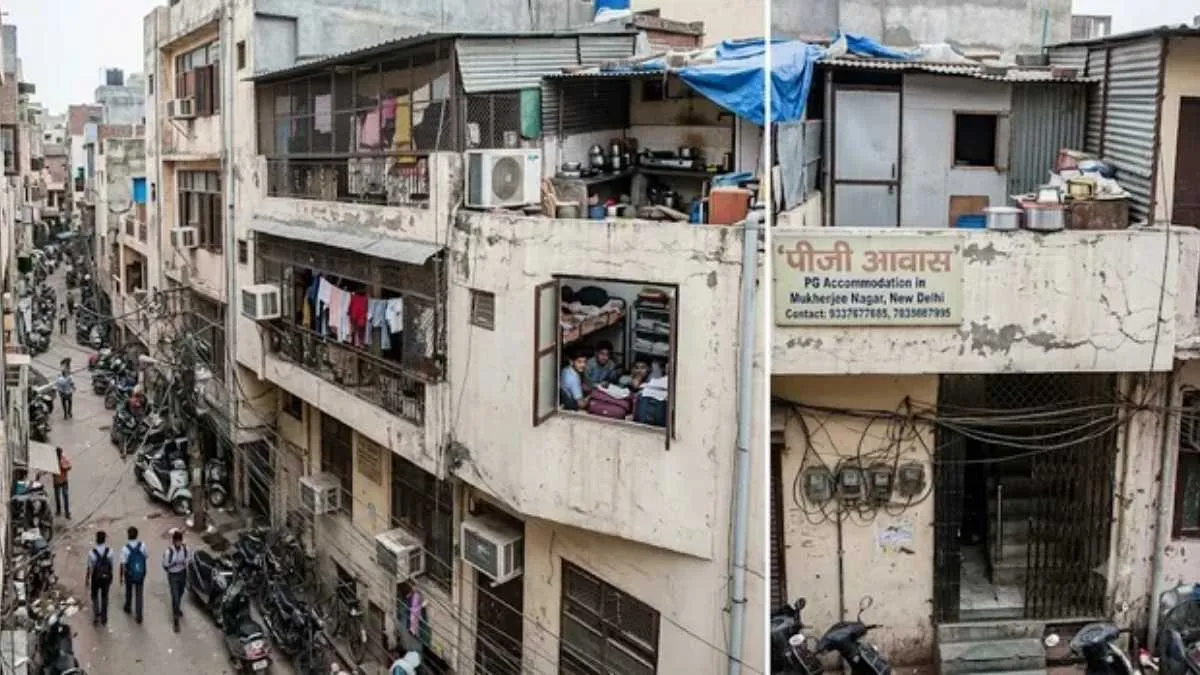
From the outside, many of these properties look like ordinary residential buildings with fresh paint, shiny exteriors. But inside, the reality can be very different. Small rooms are packed with students, while balconies and parking areas are converted into living spaces, with three or four boys or girls sometimes crammed into a single room.
Rents typically range from Rs 8,000 to Rs 15,000 per bed. A property originally designed for one family can therefore become a business accommodating dozens of students and generating lakhs of rupees every month.
For thousands of students who come to Delhi for college, competitive examinations and coaching, PGs are simply affordable accommodation. But behind the monthly rent is a large and largely informal business in which residential properties are often allegedly used for commercial purposes.
But are these buildings structurally safe? Do they have the required fire clearances? Are they being used in accordance with sanctioned building plans? Are the electricity connections right for the actual load? And is the income generated by these properties being properly reported? The answer is NO.
How Do PG Operators Avoid Regulatory Scrutiny?
PG operators may use different methods to escape government regulations and scrutiny. In some cases, questions have also been raised about alleged political or bureaucratic connections that may help certain properties continue operating despite violations.
In areas such as Mukherjee Nagar, Laxmi Nagar, Rajendra Nagar, Ber Sarai, Katwaria Sarai, Satya Niketan, Vivek Vihar, Hauz Khas and Model Town, the same pattern can be seen across numerous lanes.
MCD records may describe a property as a two-, three or four-storey residential building occupied by a single family. On the ground, however, some properties appear to have been changed with extra rooms and living spaces created to accommodate paying guests.
Parking areas can be converted into kitchens. Balconies can be enclosed or partitioned to create additional rooms. Rooftops can be covered with temporary or semi-permanent structures. The result is that a building sanctioned and designed for residential use can end up functioning more like a small hostel.
Such properties are also alleged to operate without the required fire clearances or structural-safety documentation. Some continue to use domestic electricity connections even though their actual consumption may be closer to that of a commercial establishment.
Single Property Can Generate Rs 60 Lakh a Year
A medium-sized PG with 25 rooms, two occupants per room and an average rent of Rs 10,000 per bed. The property would have 50 paying occupants, generating approximately Rs 5 lakh a month or Rs 60 lakh a year before expenses. And that may not be the entire revenue.
Students can also be charged separately for food, electricity, air conditioning, laundry, housekeeping, Wi-Fi and other services. The actual annual turnover of a property can therefore be significantly higher than the amount reflected as basic rent.
Tax Oversight?
One of the biggest questions is whether the income generated by these properties is being fully reported to tax authorities. In first case, PG owners may not enter into formal written rent agreements with students. Even where agreements exist, the rent declared on paper may be lower than the actual amount paid. The balance may be collected separately under the guise of charges for food, air conditioning, Wi-Fi, housekeeping or other facilities.
Digital payments do not necessarily make the entire business transparent either. If payments are distributed across multiple accounts belonging to employees, caretakers or relatives, establishing the total income generated by a single property could become more difficult.
Cash payments create an even larger challenge because they may not leave the same digital trail as bank transactions.
Only if such practices could be used to under-report income which could raise questions for the Income Tax Department and other regulatory agencies. However, establishing tax evasion would require examination of bank records, agreements, receipts, property ownership and other financial evidence.
What About Electricity Consumption?
Electricity use is another area that could lead to scrutiny. A PG housing around 30 students can have higher electricity consumption than a typical residential household because of air conditioners, geysers, refrigerators, induction cooktops, washing machines and other appliances.
Yet some properties may continue to operate on domestic connections with relatively low sanctioned loads.
For example, a connection sanctioned for around 2 kW could be handling higher actual consumption. Where electricity is being consumed beyond the sanctioned load or through unauthorised connections, the matter could potentially amount to a violation of electricity regulations.
The electricity bill itself could therefore provide an important indicator of how a property is actually being used.
Where Are the Gaps in Government Enforcement and MCD Oversight?
In areas such as Mukherjee Nagar, Rajendra Nagar and Laxmi Nagar, residential properties have allegedly been converted into PGs and hostels on a large scale.
Local authorities including the MCD, police and other departments have knowledge of such properties. Yet many properties allegedly continue to operate despite questions over fire safety, building bylaws and structural compliance.
There have also been allegations of illegal payments or “facilitation fees” being demanded or paid to allow such establishments to operate.
Another major problem is that the PG accommodation sector remains largely part of the unorganised economy. There is no single, comprehensive and uniformly enforced registration system specifically designed to regulate all PG accommodations across Delhi.
Students may also be charged separately for food, electricity, laundry and internet services, raising questions about whether applicable tax and GST obligations are being properly met.
Finally, students and their families often do not complain. Many fear getting caught up in police or administrative proceedings, while others simply need affordable accommodation close to colleges, coaching centres and examination hubs.
This leaves students with limited options and have to live in overcrowded or unsafe conditions.
( With inputs from Rakesh Kumar Singh )