
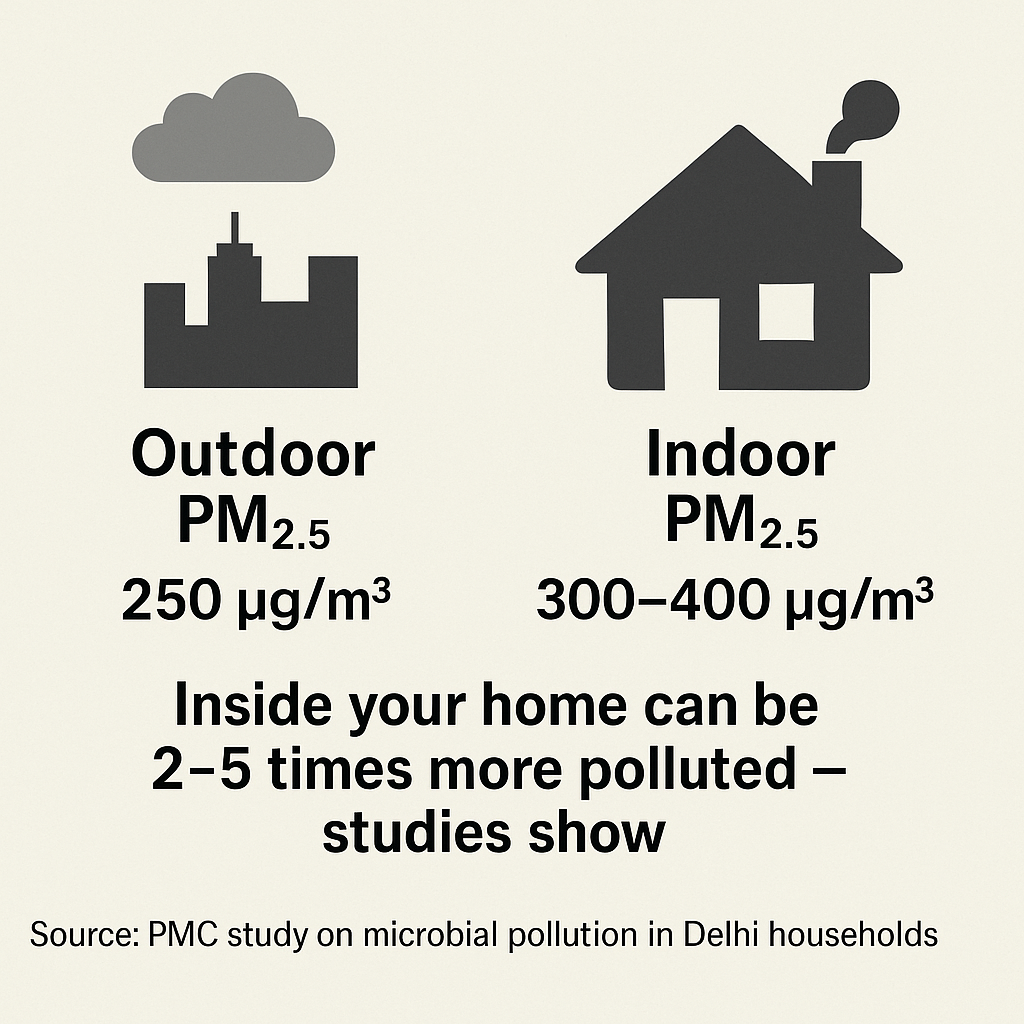
Smog Stories: Delhi’s worsening air pollution often pushes people indoors in search of cleaner air, but new scientific research shows that this sense of safety may not be entirely true. Multiple Indian studies now suggest that the air inside homes can be two to five times more polluted than the air outside, particularly in dense urban areas and during winter. The launch of India’s first indoor air quality (IAQ) index by researchers from BITS Pilani, NIT Warangal and IIT Jodhpur highlights how serious and overlooked this problem has become.
Manoj Kumar, analyst at the Centre for Research on Energy and Clean Air (CREA), highlighted how this issue has been overlooked. Speaking to The Daily Jagran, he said, “Indoor air quality has stayed outside India’s policy radar for far too long, even though multiple studies show that pollution inside our homes routinely matches or even exceeds outdoor levels. This is a major blind spot in our air-quality management."
ALSO READ: Smog Stories: How Much Green Cover Does Delhi Have? Is The Greenery Enough To Beat The ‘Toxic’ Air?
 Why Indoor Air Turns Toxic
 Why Indoor Air Turns Toxic
Homes tend to trap pollutants because indoor environments lack the wind movement and sunlight that help dilute particles outdoors. As winter sets in, residents shut windows and doors, preventing fresh air from entering and allowing pollutants from cooking, cleaning products and heating appliances to linger. Polluted outdoor air can also seep in through small openings around windows and structural gaps, steadily increasing indoor concentrations of PM2.5 and PM10.
Recommended For You
A study published by PubMed Central, focusing on microbial pollution in Delhi households, found that indoor PM2.5 levels frequently exceeded measurements taken at the nearest government outdoor station, especially during winter and cooking periods. The same research recorded fungal and bacterial contamination several times above WHO safety limits, indicating that people inside their homes inhale a mix of harmful particulate matter and microbial pollutants.
What Makes Indoor Air So Polluted?
 Cooking And Inadequate Ventilation: Cooking is one of the biggest sources of indoor PM2.5. High-temperature frying and everyday meal preparation release fine particles and gases that spread into adjacent rooms when ventilation is insufficient.
Incense, Mosquito Coils And Candles: Burning incense sticks, mosquito coils or aromatic candles generates smoke, benzene, PAHs and other chemical irritants. In rooms that lack airflow, these pollutants accumulate quickly.
Dust Build-Up And Resuspension: Dust that settles on beds, furniture and floors is easily disturbed. Routine activities like walking, sweeping, even making the bed can send these particles back into the air.
Emissions From Household Chemicals: Disinfectants, cleaning sprays, room fresheners, varnishes and paints emit volatile organic compounds (VOCs), which remain suspended indoors and can lead to the formation of secondary pollutants.
Outdoor Sources Entering Homes: Seasonal smog, festive fireworks and smoke from landfill fires or stubble burning enter homes through cracks and openings, particularly in neighbourhoods located near waste sites or congested urban zones.
What Happens To Your Health Indoors
PM2.5 particles, roughly 30 times thinner than human hair, can penetrate deep into the lungs and even enter the bloodstream. This exposure has been associated with heart disease, respiratory problems, stroke and increased risk of diabetes. Short-term effects include headaches, throat irritation, coughing, burning eyes and breathlessness. Long-term exposure raises the risk of asthma, reduced lung function and chronic respiratory infections. Children, senior citizens and pregnant women are particularly vulnerable due to higher indoor exposure.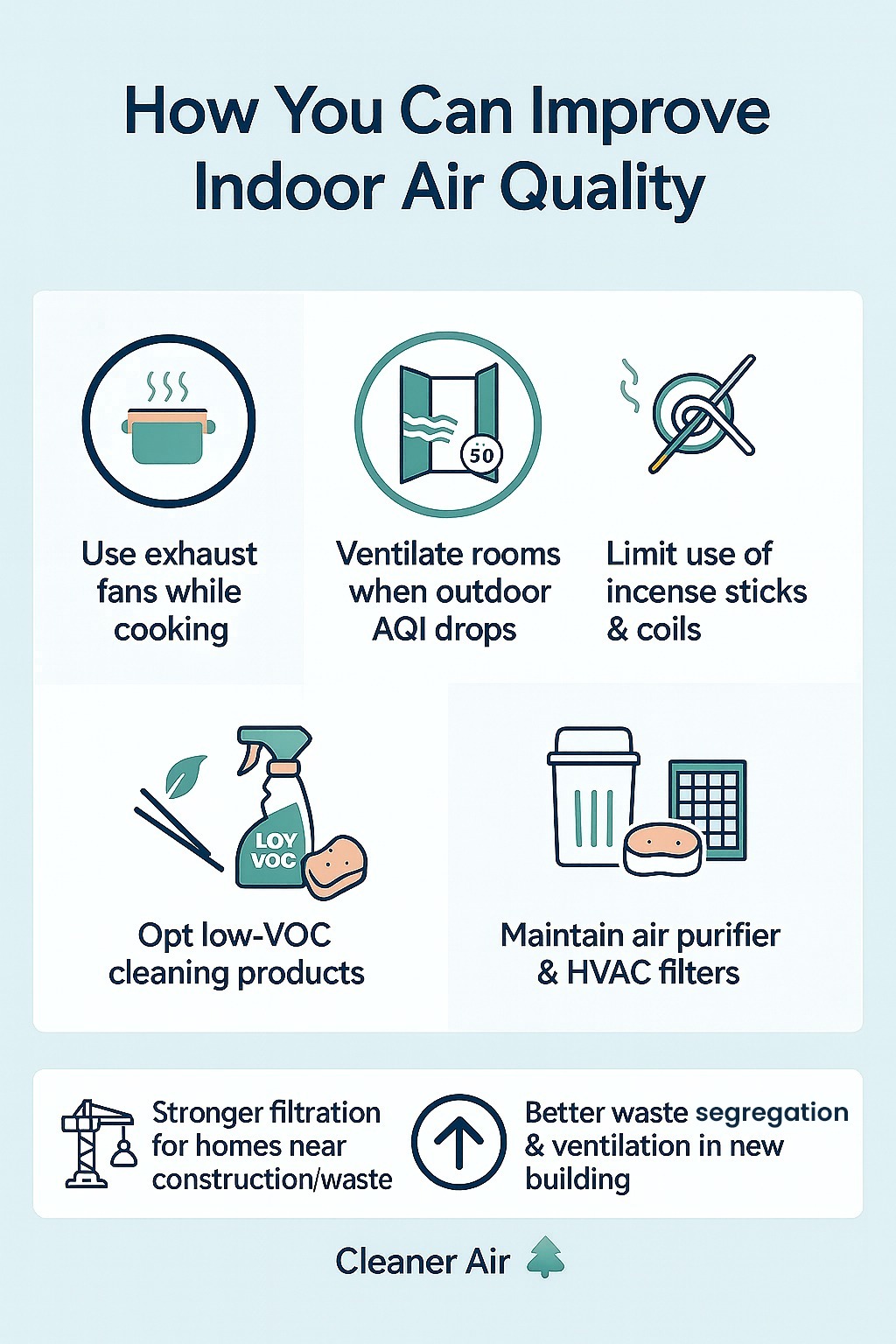
WHO’s latest air-quality guideline recommends an annual average PM2.5 limit of 5 micrograms per cubic metre and a 24-hour limit of 15 micrograms. India’s population-weighted average, however, remains above 80 micrograms per cubic metre, which is more than 16 times the WHO recommendation, with Delhi among the most severely affected regions.
Indoor Air Quality Index: What Researchers Say
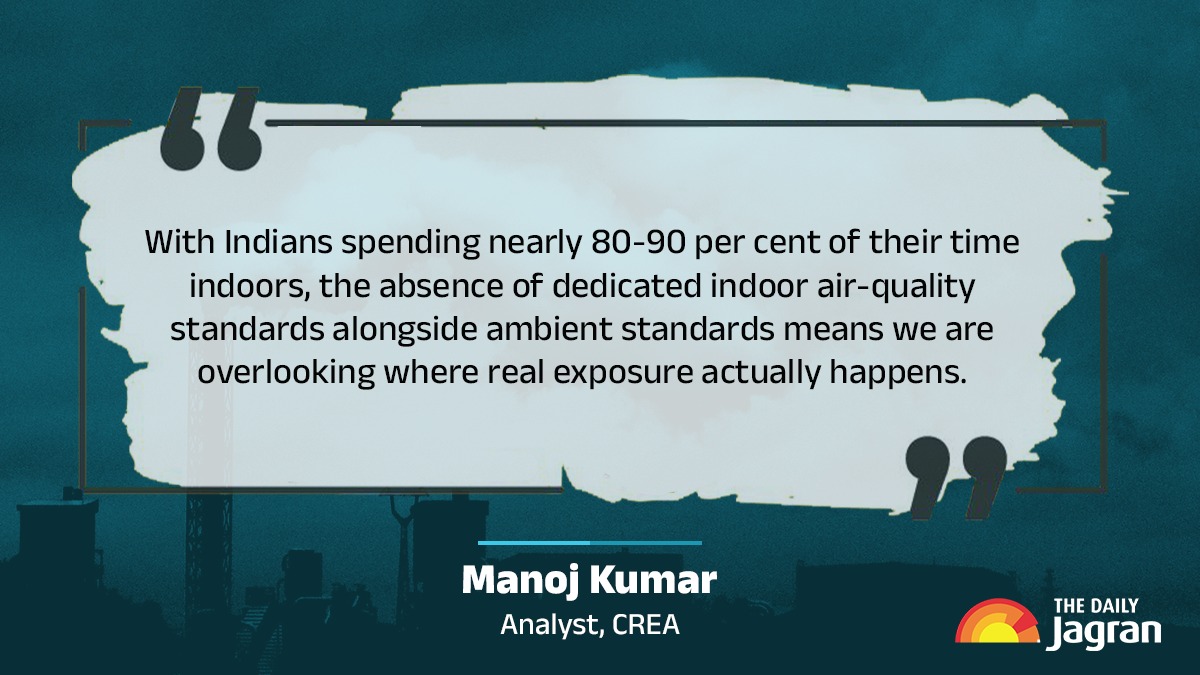 Scientists responsible for developing India’s first IAQ index told The Times of India that indoor pollution commonly surpasses outdoor concentrations. Lead researcher Atun Roy Choudhury noted that nearly 90 per cent of an individual’s day is spent indoors, making indoor exposure a central health challenge. The researchers further said that western IAQ standards cannot be directly applied to India due to unique differences in cooking habits, climate conditions and building designs.