

Smog Stories: India’s capital, Delhi, remains one of the most polluted cities in the world, with air quality levels during winter often exceeding the World Health Organization’s safe limits by more than fifteen times. Although the city has recorded a 15.7 per cent decline in its average annual Air Quality Index (AQI) since 2020, it continues to face extended periods of “very poor” and “severe” air pollution. Vehicle exhaust, industrial emissions, stubble burning and cold, stagnant weather combine to form a thick layer of smog between October and February.
While Delhi continues its uphill battle against hazardous air, cities such as London, Beijing and Mexico City have shown that determined policies, cleaner technologies and public participation can transform air quality. Their approaches offer valuable lessons for Delhi’s path toward cleaner skies. The Daily Jagran spoke to experts Sunil Dahiya, Founder and Lead Analyst of Envirocatalysts and Manoj Kumar, Analyst at Centre for Research on Energy and Clean Air (CREA) to get a better understanding on the issue.
ALSO READ: Smog Stories: How Delhi’s Construction Boom Fuels Its Pollution Crisis?
The Global Transition: Success Stories From London, Beijing
Cities around the world have faced similar crises and implemented innovative, often multifaceted measures to combat air pollution. They offer valuable lessons that Delhi can adapt.
London’s Transformation
London’s battle with air pollution began with the infamous Great Smog of 1952, which claimed thousands of lives and led to the Clean Air Act of 1956. Modern London, however, has focused primarily on vehicular emissions through targeted economic deterrents, most notably the Ultra Low Emission Zone (ULEZ). The scheme charges drivers of older, more polluting vehicles a daily fee to enter the city centre, effectively discouraging the use of high-emission cars.
In an exclusive conversation with The Daily Jagran, Sunil Dahiya, Founder and Lead Analyst at Envirocatalysts, noted that India has made “few attempts to move towards high parking or congestion fees,” such as increasing parking charges two to three times during high-pollution periods under the Graded Response Action Plan (GRAP). However, he added that adopting a permanent, zone-based system like London’s faces significant infrastructural challenges.
"We don’t have enough entry and exit point checks for such regions," Dahiya explained. Setting up barricades would only worsen congestion. The alternative, he suggested, lies in technology. "If India moves towards a GPS-based FASTag usage, such systems can be used for creating low-emission zones and restricting certain types of vehicles in specific areas at specific times," he said.
ALSO READ: Smog Stories: What Are Green Firecrackers? Can They Really Make Delhi's Diwali Less Polluted?
Beijing’s Transformation
Perhaps the most crucial lesson for Delhi comes from Beijing’s aggressive, decades-long clean air strategy, especially during the lead-up to the 2008 Olympics. Beijing recognised early on that its pollution problem was regional, not confined within city limits.
Dahiya said, "It was an acknowledgement of the fact that not all the problems of a city arise or originate within the city." Using data, Beijing understood the predominant wind direction and took action far beyond its municipal boundaries, going "300 to 400 km away from the city". They targeted steel clusters and power generation industries, forcing them to adopt better pollution control technologies and, during the Olympics, even demanding temporary shutdowns.
This realisation resonates strongly with Delhi’s situation. Manoj Kumar, Analyst at the Centre for Research on Energy and Clean Air (CREA), explained, “Delhi’s contribution to pollution is just 50 per cent; the other 50 per cent comes from neighbouring NCR districts, known as transboundary pollution.” He stated that addressing Delhi’s air crisis requires an “airshed-based” approach, coordinated action across the National Capital Region and neighbouring states.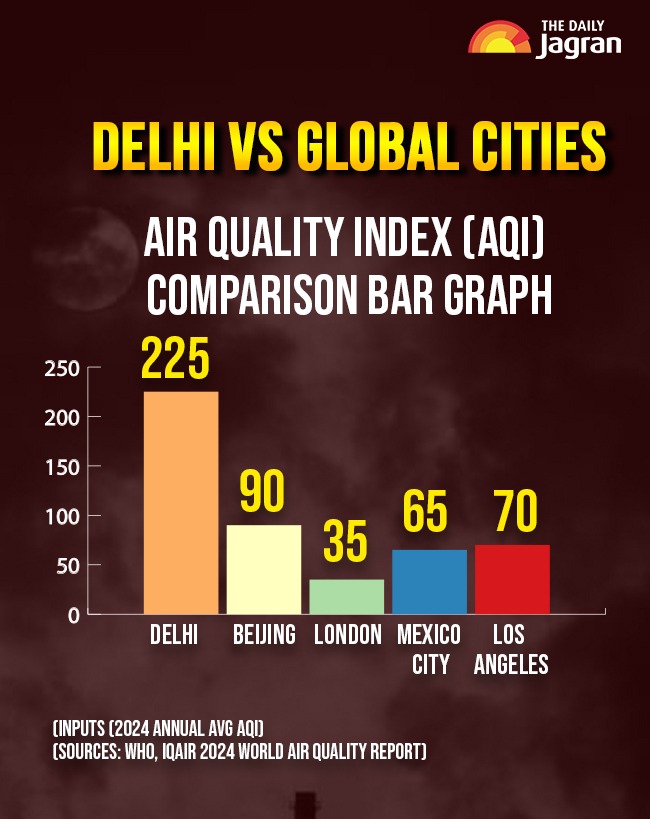
What Delhi Must Learn: Proactive, Absolute and Accountable Response
1. Shift to Absolute Emission Load Reduction
Delhi’s current strategy under GRAP is inherently reactive, kicking in only after pollution levels reach severe stages. As Manoj Kumar observes, GRAP is "always reactive and the way we should approach the pollution must be proactive, which means we must act before the pollution begins."
Dahiya stressed upon the need to move beyond short-term emergency responses. “We have to move towards an approach which targets absolute emission load reduction from all contributing sectors across geographies with fixed timelines and accountability,” he said. This includes transitioning power plants and industries to cleaner fuels or equipping them with advanced pollution control technologies.
2. Focus on the 'Lower Hanging Fruit': Power and Industry
Controlling emissions from millions of vehicles is complex and slow. The more manageable, high-impact targets are the large, fixed sources such as thermal power plants and clustered industries.
“It is very difficult to control vehicle pollution because the number is vast, but what can be controlled is power plant pollution because there are just 12,” Kumar pointed out. He criticised the recent policy rollback that exempted many power plants from installing flue-gas desulphurisation (FGD) systems to cut sulphur dioxide emissions. “"We should start with low hanging fruits like power plants and industries, along with vehicles,” he said. Beijing followed this exact path — tightening industrial norms before tackling transport.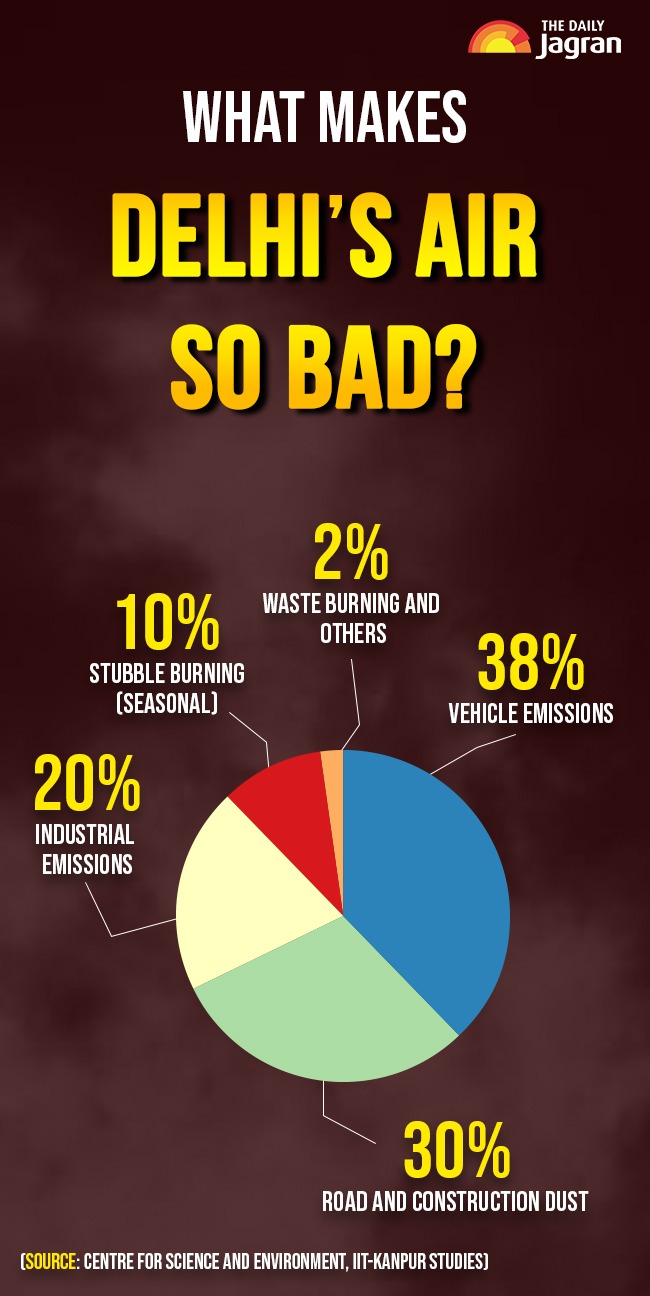
ALSO READ: Smog Stories: Why Farmers Burn Stubble Despite Strong Laws? What Are Their Demands?
3. Mandate Accountability and Use Data Efficiently
Global best practices require fixed accountability, something the National Clean Air Program (NCAP) currently lacks. Dahiya stressed, "You will never be able to reduce air pollution levels, until and unless accountability and timelines are fixed." He proposed linking the promotion and career progression of administrators, such as transport or municipal commissioners, to their success in reducing the growth of private vehicles and petrol consumption in their jurisdiction.
Delhi possesses the necessary tools, such as the Ministry of Earth Sciences’ decision support system, which can forecast pollution levels days in advance and identify sources. Dahiya argues this data is currently used mainly for "reactions to explain things" rather than proactive enforcement. This predictive data should be used to "direct the pollution sources in that upwind direction... so it's better that you invest in better technology so that you can keep operating."
The Road Ahead
While achieving WHO-recommended air quality levels by 2030 may be “too ambitious at the moment,” Dahiya believes that consistent, sector-wise emission reduction and proactive policymaking can still bring visible improvement. “We must take baby steps and move towards cleaner air,” he said.
(This article is part of the series 'Smog Stories'. To read more articles in the series, click here.)