
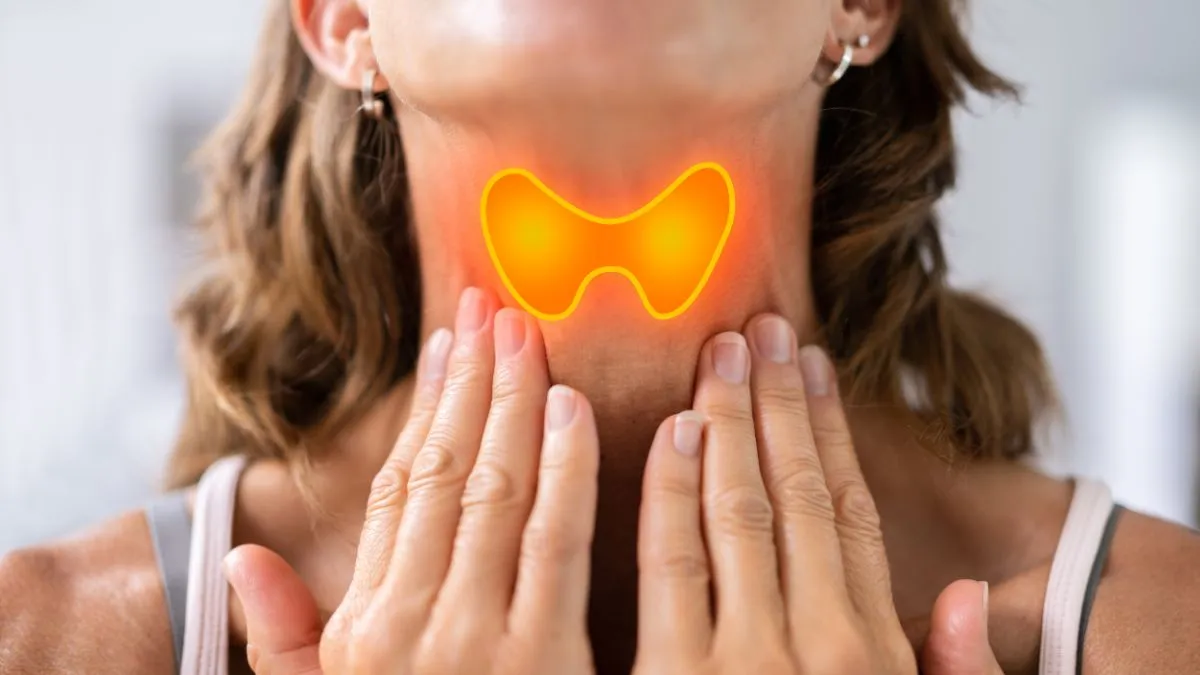
Your thyroid may be small in size, but it plays an outsized role in your overall health, regulating metabolism, energy levels, heart rate, and more. When something goes wrong with this butterfly-shaped gland in your neck, early signs often show up as subtle changes or visible swelling. Unfortunately, many people miss these initial clues until symptoms become more severe. Thus, learning how to perform a simple self-check at home can make a big difference in identifying thyroid issues before they progress.
When the thyroid functions abnormally, either producing too little or too much hormone, it leads to a condition known as thyroid imbalance. This imbalance can significantly affect various bodily systems, including heart rate, energy levels, mood and temperature regulation. There is no need of any special tools to perform the Swallowing Test. In conversation with The Daily Jagran, Dr. Mickey Mehta – Global Holistic Health Guru and Spiritual Life Coach, shares tips at home to check thyroid swelling.
Hypothyroidism
Hypothyroidism or an underactive thyroid, slows down bodily functions and may present with symptoms such as fatigue, weight gain, cold intolerance, dry skin, constipation and even depression.
ALSO READ: World Thyroid Day 2025: How Skipping Breakfast Can Affect Your Thyroid? Doctor Shares Insights
Hyperthyroidism
In contrast, hyperthyroidism or an overactive thyroid, speeds up metabolism and can lead to weight loss, rapid heartbeat (tachycardia), heat intolerance, anxiety, nervousness and sleep disturbances.
-1748703850865.jpg)
Thyroid Gland Swelling Test (Image Credits: Canva)
Tips To Perform Swallowing Test
Early signs of thyroid disorders often manifest as swelling in the neck region. A simple at-home self-check called “Swallowing Test” can help you detect any abnormalities.
Dr. Mickey Mehta states, “To do this, stand in front of a mirror with your neck exposed. Tilt your head back slightly, take a sip of water and swallow while observing the area between your collarbone and Adam’s apple.” Look for any unusual bulges, protrusions or asymmetry. Repeat the process a few times for accuracy and use your fingers to gently feel for any lumps or asymmetry.
Recommended For You
If you notice any swelling, lumps or irregular movement while swallowing, consult a healthcare professional for further evaluation.
ALSO READ: Having Excessive Hair Fall? Doctor Says Thyroid Issue Might Be The Hidden Cause
According to Ayurveda, an imbalance in the thyroid arises when the body's Ojas, the essence of health, is depleted. Evaluating thyroid function in Ayurveda is done by examining dosha imbalances, the health of dhatu (tissues), agni (digestive/metabolic fire), and associated lakshanas (symptoms).
Ayurveda acknowledges that every individual is distinct, possessing their own constitution and imbalances.
Thus, Treatments in Ayurveda are also customised, individualised for each person, taking into account their unique requirements, body type, and existing imbalances, and a more emphasis on addressing the root causes of thyroid disorders.
Though a self-check is not a diagnostic tool, it can be the first step toward identifying thyroid conditions early, when they’re most manageable.