

- By Raghav Gupta
- Fri, 11 Apr 2025 12:53 PM (IST)
- Source:JND
History of International Day of Human Space Flight
The first human-made Earth satellite, Sputnik I, was launched into outer space on 4th October 1957, which created the foundation for space exploration. Four years later, on 12th April 1961, a Soviet citizen named Yuri Gagarin became the first human to enter outer space and orbit the Earth aboard the Vostok 1 spacecraft. This achievement marked 12th April as the International Day of Human Space Flight, a hallmark achievement in human history that paved the way to space exploration for the benefit of humanity.
Who is Yuri Gagarin?
Yuri Alekseyevich Gagarin was the first ever Soviet cosmonaut and the first human to orbit the planet. He was born on 9 March 1934 in the village of Klushino near Gzhatsk (now in Smolensk Oblast, Russia). Yuri grew up on a collective farm with his parents and three siblings as the third child of the family. In his early years, he was an apprentice in a metalworks as a foundryman and was later selected for further training in at a technical high school in Saratov. While there, he picked up a hobby of flying light aircraft by joining the 'AeroClub’ and spent a large amount of his time in learning how to fly light aircraft. In 1955, after completing his technical schooling, he entered flight training at the Orenburg Military Pilot's School. This created the foundation that led him to become a senior lieutenant in November 1959. In 1960, his exceptional skills allowed him to be among the 20 pilots chosen through a secret nationwide selection process. He was further selected for an elite training group known as the 'Sochi Six', who would make up the first cosmonauts of the Vostok programme.
Importance of International Day of Human Space Flight
April 12th, 1961, is an important date in human history as it marks the first human space flight carried out by a Soviet citizen named Yuri Gagarin. This historic event became humanity's first step on a new frontier of exploration that would benefit the entirety of human civilization. Space exploration plays an important role in not only understanding the history of our Solar System but also understanding the possible dangers and resources scattered beyond our reach. Efforts in space exploration play an important role in developing and protecting the human civilization through the advancement of technology and mining resources. Various fields such as navigation, communication, weather forecasting, medicine, etc, have seen significant development in technology. An example of this can be seen from manmade satellites that are used for global communications as well as mapping and studying the planet’s atmosphere and surface. Space consists of various resources such as minerals, gasses, solar energy and water that can be utilized for various purposes, ranging from sustaining human life in outer space to mining and transferring such resources for further advancements in technology and livelihood on our planet. Advancements and data that are obtained from space exploration have led to many scientific breakthroughs which has applications across different industries. Technological products such as cell phone cameras, solar panels and emergency beacons that use satellite technology have seamlessly transitioned into everyday technologies commonly used by most of the world's population. A prime example of this is the Global Positioning System (GPS), which relies on satellite navigation to provide location information.
Space exploration also offers an opportunity to search for other habitable planets and colonise new areas. The rapid increase of global populations is leading to an increase in pollution and a decrease in our planet’s resources. For the future expansion and survival of human civilization, the search for other habitable planets holds hope for the potential solution for long-term survival of our species. The idea of colonization represents a new frontier that offers new living environments and opportunities that bring increased living space and resources. Colonization would give humanity an opportunity to establish their presence beyond their planet and obtain a possible path to evolution by adapting to various challenges of living in space environments.
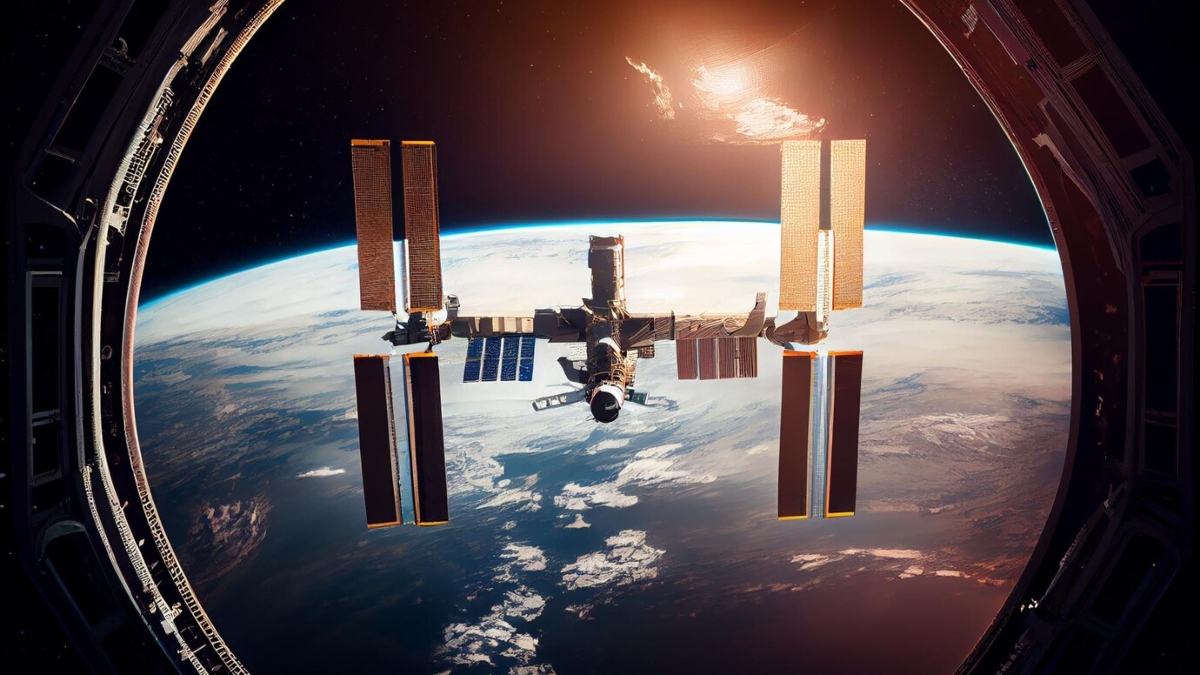
Space exploration offers an opportunity to search for other habitable planets and colonise new areas. (Image:Freepik)
UN and Space
Since the beginning of the Space Age, the United Nations recognised the importance of outer space as a new frontier for humanity. UN believes in the emphasises on the importance of space exploration and its use in peaceful purposes that benefits all countries while preventing an arms race.
To address matters related to outer space, United Nations Office for Outer Space Affairs (UNOOSA) was created as early as December 1958. Today, this office is responsible for promoting international cooperation in peaceful uses of outer space. UNOOSA is also responsible for implementing the Secretary-General's responsibilities under international space law.
In recognition of the common interests of humankind in outer space and seeking out way it can benefit people on Earth. The UN General Assembly had adopted its first resolution related to outer space on 17 October 1963, resolution 1348 entitled "Question of the Peaceful Use of Outer Space".
To further prevent conflicts in outer space exploration, on 10 October 1967, UN helped create the "Magna Carta of Space", a treaty that contained the principles of governing the activities of States in the exploration and use of outer space including the Moon and other celestial bodies.