

- By Bornika Das
- Wed, 03 Dec 2025 06:36 PM (IST)
- Source:JND
While tobacco use remains the leading cause, an important shift is emerging: a growing proportion of lung cancer cases are now being diagnosed in people who have never smoked. The Centres for Disease Control and Prevention [CDC] estimates that 10 to 20 per cent of all lung cancers occur in lifelong non-smokers. Other significant contributors include radon gas, an odourless, colourless carcinogen seeping into homes from soil, and fine particulate air pollution, such as PM2.5, which reaches deep into lung tissue to cause DNA mutations and inflammation, especially for those living in urban and polluted areas. This trend challenges conventional assumptions and highlights the importance of recognising additional environmental, occupational, and biological risk factors, particularly in India, where exposure to pollutants is widespread.
Genetic susceptibility has a surreptitious role, with inherited mutations or impaired DNA repair rendering lungs susceptible to carcinogens, whereas chronic conditions such as COPD, pulmonary fibrosis, or previous tuberculosis involve scarring of lung tissue, which may then become malignant. In conversation with The Daily Jagran, Dr. Mallika Dixit, Deputy Lab Director and Quality Head, CORE Diagnostics (Gurgaon), shares the hidden causes of lung cancer among non-smokers.
Pollution: A Critical Driver
Air pollution has become one of the most significant contributors to lung cancer in non-smokers. Dr. Mallika Dixit says, “Fine particulate matter, or PM2.5, can penetrate deeply into the lungs and even enter the bloodstream. Long-term exposure to PM2.5 emitted from vehicles, industries, power plants, and residential heating induces inflammation, oxidative stress, and DNA damage.” These mechanisms mirror the harmful biological effects triggered by tobacco smoke. Dr. Mallika Dixit adds, “Other pollutants, such as nitrogen dioxide, ground-level ozone and polycyclic aromatic hydrocarbons, carry similar carcinogenic potential.” The WHO and the International Agency for Research on Cancer classify outdoor air pollution and particulate matter as Group 1 carcinogens. In many Indian cities, where PM2.5 levels frequently exceed recommended limits, pollution-related carcinogenesis poses an escalating public health concern.
ALSO READ: Lung Cancer In Women: Doctor Explains Why Ignoring A Lingering Cough Could Be Dangerous
Causes Of Lung Cancer Among Non-Smokers
Epidemiological Patterns: They are also evolving. Increasingly, lung cancer is diagnosed in younger individuals and women, groups historically considered at lower risk. The ICMR-NCRP (2023) has reported a rise in lung cancer among urban residents and non-smoking women in India. Globally, similar patterns suggest that environmental exposures, lifestyle shifts, and better imaging technology are collectively contributing to the detection of lung cancer in people without a smoking history.
Indoor Air Pollution: This remains a crucial risk factor. In many Indian households, the use of biomass fuels for cooking and heating continues to expose individuals, especially women, to toxic emissions. Studies in Lung India have shown that chronic exposure to biomass smoke and cooking oil fumes increases lung cancer risk due to carcinogenic aldehydes and polycyclic aromatic hydrocarbons. Poor kitchen ventilation also amplifies this risk.
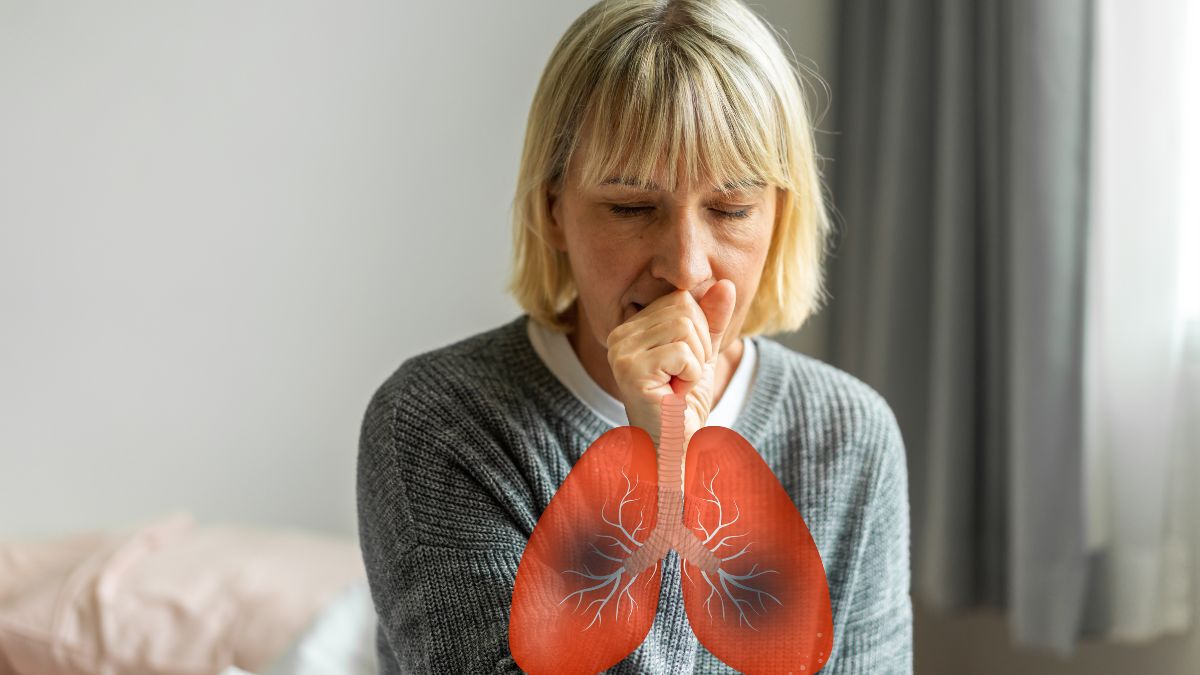
Causes Of Lung Cancer Among Non Smokers (Image Credits: Canva)
Occupational Exposures: This represents another important dimension. Workers in sectors such as mining, construction and manufacturing may encounter asbestos, silica dust, diesel exhaust and heavy metals, all linked to higher lung cancer risk regardless of smoking history. Weak enforcement of workplace safety regulations heightens vulnerability, particularly for daily wage labourers and informal sector workers.
Radon: It is a naturally occurring radioactive gas that seeps into buildings from soil and rock, is another recognised cause of lung cancer in non-smokers. Although well documented in Western countries, radon remains under-monitored in India, making its contribution likely underestimated.
Second And Third Hand Smoke: Non-smokers also remain susceptible to second-hand and third-hand smoke. Second-hand smoke exposure remains common in multi-generational households. Third-hand smoke chemical residues that settle on surfaces such as clothing, walls and furniture can persist for long durations and contribute to chronic low-level exposure.
Genetic And Molecular Insights
Biologically, lung cancers in non-smokers exhibit distinct molecular features. Most are adenocarcinomas that arise in the lung periphery and often carry genetic alterations such as EGFR, ALK, or ROS1 mutations. Dr. Mallika Dixit states, “These molecular signatures are clinically significant because they respond well to targeted therapies, including tyrosine kinase inhibitors.” For diagnostic laboratories, especially those operating under NABL or CAP accreditation, ensuring high-quality molecular testing through immunohistochemistry, FISH or next-generation sequencing is essential to guiding precise treatment.
Detection practices have improved due to the widespread use of CT and PET-CT scans, which help identify small lung nodules earlier. However, current screening guidelines still focus largely on heavy smokers. As a result, non-smokers often receive diagnoses at more advanced stages. Expanding screening protocols to include individuals with significant environmental or occupational exposures could improve early detection and outcomes.
ALSO READ: What Is Lung Cleansing And Can It Help Prevent Lung Cancer? Doctor Explains
The rising incidence of lung cancer among non-smokers reflects a complex interplay of environmental exposure, genetic predisposition, and improved diagnostics. While tobacco control remains essential, it is no longer sufficient. Air pollution, indoor emissions, occupational hazards, and hereditary factors represent emerging frontiers in lung cancer prevention and research.
For clinicians, pathologists, and policymakers, the message is clear: lung cancer is no longer just a smoker’s disease. Comprehensive prevention, early detection, and molecularly informed treatment strategies must evolve to meet this changing landscape.