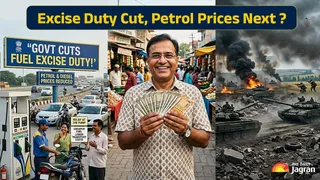
Today Petrol Price: The Indian government reduced excise duties on petrol and diesel by Rs 10 per litre today. The move by the central government brings down the excise duty on petrol to Rs 3 per litre, while making it nil for diesel. The move comes amid the ongoing US-Israel-Iran war that has resulted in a disruption in global fuel supply. However, the question remains whether the move by the Indian government will reduce the fuel prices in the country.
US-Iran-Israel War & Fuel Supply Chain
The US-Israel-Iran war began on February 28, 2026, and Brent Crude prices stood at 70 USD per barrel at that time. The war resulted in the blockade of the Strait of Hormuz, and the oil and gas supply from Western Asia was severely disrupted. The Brent crude oil price soon crossed the 100-dollar red line, and after almost a month of ongoing war between US-Israel and Iran, the Brent crude price today stood at 107.35 USD per barrel.
Also Read: 2026 Royal Enfield Guerrilla 450 Launch Today; Here’s What To Expect
Fuel In India & Price Deciding Factors
The fuel prices in India are decided by several factors, including international crude oil prices, USD-INR exchange rates, Central Excise Duty, VAT by State Governments, and Dealer Commissions. Due to the US-Iran-Israel war and the blockage of the Strait of Hormuz, the International crude prices skyrocketed. The USD-INR exchange rates were also hit, and the rupee slipped more than 94 against the US dollar. In this case, the central government had only two options- either slash the excise duty or let the other factors increase the fuel prices in the country.
Also Read: 2026 Renault Duster Mileage Revealed: 1.3-Litre Turbo DCT Delivers Up To 18.45 Km/l
Indian Government Reduces Excise Duty
The Indian government decided to reduce the central excise duty imposed on Petrol and Diesel. As mentioned earlier, the government has slashed the excise duty for petrol and diesel by Rs 10, which reduced the centre-imposed taxes on petrol to Rs 3 and made it zero for diesel. Union Minister for Petroleum and Natural Gases, Hardeep Singh Puri, said in a tweet, ‘Government has taken a huge hit on its taxation revenues to ensure very high losses of oil companies at this time of sky-high international prices are reduced.’ Notably, oil companies are facing stark losses of approximately Rs 24 per litre for petrol and Rs 30 per litre for diesel, and the move by the Indian government is expected to reduce this burden.
Also Read: 2026 Royal Enfield Guerrilla 450 Teased Ahead Of Launch Tomorrow; Check Features And Specs
Excise Duty Reduced, Will Prices Fall?
As mentioned earlier, the Central Excise Duty is one of the primary factors that decides the fuel prices in the country. The Indian government has slashed the excise duty, and thus, many might think that one of the consequences will be reduced fuel prices in the country. However, it is really important to understand that the excise duty has been reduced to minimize the losses of the oil companies that are currently losing a large portion of their revenue due to skyrocketing Brent crude prices. Therefore, the excise duty cut by the government will not reduce fuel prices for the customers.
Also Read: 2026 Volkswagen Taigun Facelift To Launch On April 9? Check Details, Features, And Specs
What If Fuel Disruption Continues?
The US-Iran-Israel war began on February 28, and while the diplomatic efforts and high-level talks are ongoing, the conflict shows no clear sign of slowing down. If the conflict between US-Israel and Iran continues, the fuel supply will likely remain disrupted. In such a situation, the Indian government might need to make some extra efforts to keep the fuel prices under control. Here are some of the measures that the government might take to mitigate the effect of fuel prices on customers:
Fuel Under GST: Currently, petrol and diesel fall outside of GST and attract taxes from the central government, along with state governments. Bringing fuel under GST might result in mitigating the skyrocketing international crude oil prices.
State Governments & VAT: The second vital factor affecting the fuel prices in the country is the VAT (Value-added Tax) imposed by the state governments. If the state governments agree with the central government, the VAT can be reduced further to keep the fuel prices under control. However, the VAT imposed by the state governments largely forms part of the state government’s revenue, and it is highly unlikely that the state and the central government will agree to reduce the taxes.
Reduction In Dealer Commissions: The dealer commission is a fee paid by Oil Marketing Companies (OMCs) to the retail pump owners for each litre of petrol and diesel. If the global fuel situation remains problematic, the government can reduce the dealer commission to further reduce the impact of fuel prices on customers.