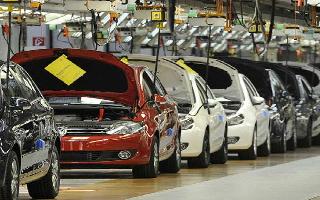
New Delhi | Abhinav Gupta: The Indian auto sector has been going through a prolonged slump. Passenger vehicle wholesales had declined for 11 consecutive months in September, only to rise marginally in October on the back of festive season purchases and new model launches.
While the government has announced several steps to boost the sagging auto sector, Vikas Yogi, co-founder of www.indiacarnews.com, says that while more efforts are needed from both the government and the industry, the availability of BS-VI fuel will prove to be a major challenge.
“First of all, the BS-VI fuel availability is going to be a big challenge. They (government) have set a timeline from April onwards, that you have to have the BS-VI both for the petrol and the diesel (vehicles). So manufacturers are already doing it. They are bound by the timeline and they are going to do it. They have already started rolling out the BS-VI in petrol,” said Mr Yogi in an exclusive interview to Jagran English.
“For diesel, they are already waiting and that thing depends entirely upon the government or the oil companies providing the (BS-VI graded) fuel. That is something the manufacturer can do is price their product slightly aggressive because it is almost certain that the prices for diesel are going to go up. So they can somehow manage it or the government helping them save some money with concession in taxes,” he added.
Earlier this year, the government had decided to "leapfrog directly from BS-IV to BS-VI grade by 1st April, 2020, skipping BS-V altogether." The major difference between the existing BS-IV and forthcoming BS-VI norm is the presence of sulphur in the fuel. These emission standards were set by the government to keep a check on the pollutant levels emitted by vehicles that use combustion engines.
Mr Yogi further opined that the effort to deal with the problem of BS-VI fuel and the slowdown in the auto sector will “have to happen both ways.”
“Manufacturers can try and offer the BS-VI vehicles as soon as possible because there are a lot of people who are waiting for BS-VI vehicle to come in and that’s why they are not purchasing the new vehicle. Also, people will have a price clarity as they are holding their decision due to uncertainty of price,” he said.
He said that the prices of BS-VI diesel vehicles are expected go up by Rs 1 lakh to Rs 1.5 lakh.
On a query over how the hike in fuel prices is also a reason for the auto sector slowdown and how it can be handled, Mr Yogi said: “If the fuel prices keep going up, that will most certainly effect the rural economy. It will effect both the four-wheeler and the two-wheeler industry, especially the two-wheeler industry.”
He said that the government can take steps like providing subsidy on buying fuel and try and contain the price hike for a few months to improve the growth in auto sector.
Answering a query over the increase in sale of SUV and MPV cars and dip in sale of hatchback vehicles, Mr Yogi said that people who were earlier investing Rs 20-25 lakh in buying a seven-seater car are now getting it in Rs 11-12 lakh, while citing the example of Maruti Ertiga.
Asked whether the used-car market (second hand car market) would help mobilise the auto sector, Mr Yogi said: “I think the used car market is going to be much bigger than the first hand. Globally, more than half of the vehicles on the road are the used cars. It was earlier an unorganised but now with several manufacturers stepping into it, now they are making it an organised sector.”
Last week, Finance Minister Nirmala Sitharaman had said the automobile industry's problems are essentially derived because of the Supreme Court's order to upgrade to BS-VI emission norms, thereby resulting into a churn in the sector.
The Supreme Court on October 24, last year, had ruled that no BS-IV vehicle will be sold across the country with effect from April 1, 2020. Instead, the BS-VI emission norm will come into force across the country.
Seeking GST reduction as a step from the government, the auto industry has cautioned that if the current slowdown in the sector continued, there would be further job losses that could have societal and social consequences.
The auto industry, through the Society of Indian Automobile Manufacturers (SIAM), has been asking the government to reduce GST on automobiles to 18 per cent from 28 per cent.
With the industry slated to move to BS-VI emission norms from April next year, automobile makers fear that price increase amid a slowdown would further compound the problem.
According to SIAM, vehicle manufacturers have laid off around 15,000 temporary workers, while dealers have witnessed around 2.8 lakh job losses with nearly 300 dealerships closing in the past three-four months.
Federation of Automobile Dealers Associations (FADA) has stated that nearly two lakh jobs have been cut in the last three months due to the slowdown.
Vikas Yogi is the co-founder of IndiaCarNews.com and and ICN Studio who has over a decade of automobile writing/journalism experience.