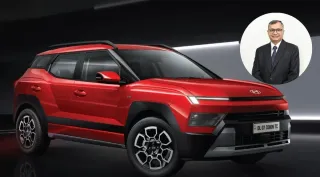
Hyundai Motor India is looking to strengthen its presence in the fast-growing mid-size SUV segment with the Bayon, its new technology-focused SUV positioned between the Venue and Creta. The upcoming model represents the company’s push towards intelligent mobility, combining advanced connectivity, artificial intelligence (AI) and enhanced safety features to appeal to India’s increasingly tech-savvy car buyers.
Speaking exclusively about Hyundai’s strategy, Tarun Garg, Managing Director and CEO of Hyundai Motor India, said the company sees technology as a key differentiator in the evolving SUV market. With the Bayon, Hyundai is looking to go beyond conventional product upgrades and offer an intelligent driving experience that could shape customer expectations in the coming years.
Mid-Size SUV Segment Rapidly Expanding
Garg believes the opportunity is particularly significant given the changing dynamics of India’s passenger vehicle market. SUVs currently account for a substantial share of domestic car sales, and their contribution is expected to increase further. According to the projections highlighted by him, SUVs will grow from around 57% of the overall market to 60% by 2032. Within this category, mid-size SUVs are emerging as one of the fastest-growing segments, accounting for approximately 28% of SUV sales in 2026, a share that is projected to rise to 36% by 2032.
Also Read: New Bajaj Pulsar NS160 Launch Soon: Here’s All That You Can Expect
Hyundai & SUV Sales
Hyundai is looking to capitalise on this shift by expanding its SUV portfolio across price points and customer requirements. The company now has seven SUVs across different segments, with SUVs contributing around 70% of its overall sales. The Bayon will play an important role in its mid-size SUV strategy, with Hyundai targeting combined annual sales of 2.5 lakh units for the Bayon and Creta next year.
Hyundai Bayon: Packed With Everything You Need?
On the product front, the Bayon brings together a distinctive design and a comprehensive technology package. It features dual 12.3-inch panoramic displays for the digital instrument cluster and infotainment system, along with Hyundai’s connected-car technology offering more than 70 Bluelink features. Its headline feature is a generative AI-powered voice assistant designed to enable more natural conversations between occupants and the vehicle. The SUV also gets over-the-air software update capability, multi-language support, advanced navigation, and Hyundai SmartSense Level 2 Pro advanced driver assistance systems (ADAS). Power comes from a 1.5-litre petrol engine producing 115 PS, paired with manual and intelligent variable transmission options. Hyundai plans to introduce a CNG variant in January 2027, according to the company’s roadmap outlined in the interview.
ALSO READ: Maruti Suzuki WagonR Facelift: Here’s What We Can Expect In Terms Of Features And Specs
Automotive Industry & AI
Garg’s emphasis on technology reflects a broader view of how the automotive industry is evolving. He believes AI will play an increasingly important role in the cars of the future, transforming how drivers interact with their vehicles and how mobility experiences are personalised. Hyundai, he said, wants to stay ahead of this transition rather than wait for technologies to become mainstream. He drew a parallel with the company’s earlier push towards automatic transmissions and sunroofs, features that have since become increasingly important to Indian buyers and more widely adopted across the industry.
ALSO READ: Maruti Suzuki Fronx Facelift Launch By End Of 2026? ADAS, AWD, And More Expected
The Bayon & Hyundai’s Plan
The Bayon also carries significance beyond the domestic market. Hyundai plans to export the SUV from India, reinforcing the country’s role in its global manufacturing and export strategy. The company has already crossed the milestone of four million cumulative vehicle exports from India, becoming the first automaker in the country to achieve the feat, according to the company.
With the Bayon, Hyundai is attempting to combine the growth potential of the mid-size SUV category with a technology-led product proposition. The challenge will be to translate its intelligent features into tangible everyday benefits for buyers. For Hyundai, however, the strategy is clear: as SUVs gain ground in India, technology could become as important a consideration as design, performance, and price.