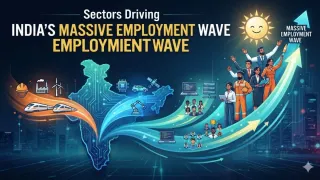
India's two key sectors– manufacturing and services– are projected to generate more than 35 crore new jobs in the next four years– by 2030. According to the latest estimates from multiple sector skill councils and industry bodies, this surge in potential employment opportunities will create an urgent need for accelerated skilling, practical training, and robust collaboration between industry and academia.
India Didactics Association (IDA) in a statement, in an statement said that Industry data from various councils and government sources highlights the scale and immediacy of the challenge. Additionally, officials at IDA believe that AI won’t affect skilled workers in future.
Textile, Automotive To Telecom: Sectors To Create Most Jobs By 2030
According to the report, textile, automotive, apparel, logistics, and telecommunications will lead in job creation from the manufacturing and service perspective in the next four years or by 2030.
The textile and apparel industry is expected to create a whopping 2 crore new jobs within the next three years.
As much as 20-25 lakh jobs are expected to be generated by the automotive sector by 2030.
India’s logistics sector will need an additional 47 lakh skilled workers by the same year.
The telecom sector is projected to add10 lakh new roles by the said year.
Meanwhile, India's clean energy transition will become one of the hotspots for new jobs, projected to add more than 44 lakh full-time jobs by 2030, the statement noted.
Why Skilling System Is Key Challenge For India’s Job Market
As an industry leader and an educational institution, the organisation not only recognises opportunities, but it has listed challenges on the road to job creation in India. They said that accelerating the process of shaping India's education and skills system should be in line with the changing needs of employers.
"The real challenge is not just creating jobs, but ensuring that our workforce has the skills to seize these opportunities. We must move from qualification-driven education to competency-driven learning, where practical skills, industry exposure and adaptability become central to employability."
According to Rahul Mehta, CEO, Furniture & Fittings Skill Council, "AI and technology will change how we design and produce, but they will not replace the need for skilled people who can create, make, install and solve real-world problems."
The professionals of the future will be those who combine digital skills with strong practical skills, said Varun Tandon, CEO, Water Management and Plumbing Skills Council.
IDA is the country’s apex body for the education and skills ecosystem. It brings together all stakeholders committed to transforming learning in India and beyond.
(This story is written with input from news agency PTI)