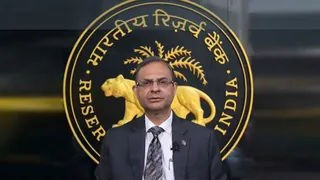
The Reserve Bank of India (RBI) on Thursday accepted bids worth Rs 50,000 crore in the first tranche of its open market operation (OMO) sale of government securities, as it stepped up efforts to absorb surplus liquidity from the banking system.
The RBI accepted Rs 7,005 crore of the 7.59 per cent government securities maturing in 2029 at a cut-off yield of 6.6007 per cent and Rs 7,255 crore of the 6.79 per cent GS 2029 at 6.7023 per cent, according to a release.
It accepted Rs 1,005 crore of the 7.61 per cent GS 2030 at 6.8191 per cent and Rs 12,645 crore of the 5.77 per cent GS 2030 at 6.8589 per cent. The central bank further accepted Rs 3,250 crore of the 6.68 per cent GS 2031 at 6.9080 per cent, while the largest acceptance of Rs 18,840 crore was for the 8.28 per cent GS 2032 at a cut-off yield of 7.0090 per cent.
The OMO sale comes amid a large liquidity surplus in the banking system. The liquidity surplus was estimated at around Rs 7.38 lakh crore as of September 16, according to RBI data.
Also Read: Multibagger Defence Stock: Why Apollo Micro Systems Shares Climbed 3.5%, Stock Soars 86% In 6 Months
Under an OMO sale, banks and other investors pay the RBI for the government securities, thereby draining rupee liquidity from the banking system. The central bank had announced OMO sales totalling Rs 1 lakh crore in three tranches to manage the prevailing liquidity conditions.
The remaining two tranches of Rs 25,000 crore each are scheduled for September 21 and September 28.
The banking system was flushed with liquidity due to heavy mobilisation of foreign currency non-resident or FCNR (B) deposits by banks, as the mobilisation brought overseas currency into the system, while subsequent swaps with the RBI provided rupee liquidity to banks.
Besides FCNR(B) inflows, month-end government expenditure, including payments toward salaries and pensions, also added to liquidity in the banking system.
Disclaimer: This story has been directly published from the agency feed (PTI). No changes have been made except the headline.