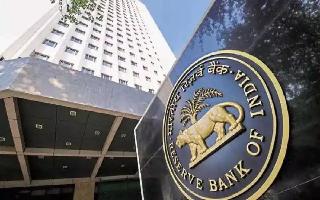
Reserve Bank Of India’s three-day Monetary Policy Committee (MPC) Meeting which began today (Tuesday) is expected to keep interest rates unchanged at 6.50%, according to experts.
RBI Governor Shaktikanta Das who heads the high-powered rate-setting panel MPC will announce the policy rate decision on Thursday (August 10).
The MPC meeting comes at a time when two important factors can likely impact the committee’s decision-making process. India has been witnessing a considerable surge in the price of essential commodities like cereals, vegetables and pulses. This inflationary trend is mainly attributed to unfavourable weather conditions including erratic monsoon and subsequent flooding in certain areas. Cereal shortages have further worsened the inflation situation pushing the rates even higher.
These factors have resulted in an increase in the Consumer Price Index (CPI), a key indicator of inflation, thus limiting RBI’s ability to lower interest rates.
Meanwhile, in July the US Federal Reserve resumed raising interest rates after a pause. In its last meeting, the Jerome Powell-led Federal Reserve raised interest rates by a quarter-percentage-point, the highest level since 2001 to tackle unabated inflation, and signalled the possibility of further rate hikes ahead.
The quarter-percentage-point increase, which points to the 11th Fed rate hike in its last 12 meetings, lifts the US Central Bank’s key lending rate to a range between 5.25% and 5.5%, a level last seen before the 2007 housing market crash. There is a possibility that Fed's decision could impact RBI's stance on interest rates.
If RBI continues to put the press button on interest rates, then this will be the third consecutive time that the central bank will keep the rates unchanged at 6.5%.
It is likely that the central bank may again continue with its policy stance of ‘withdrawal of accommodation’ amid surplus liquidity in the banking system.
The surplus liquidity in the banking system is due to the return of Rs 2,000 banknotes to the Indian banks. The RBI announced the withdrawal of Rs 2,000 notes from circulation in May this year. Recently the RBI said that as of July 31, Rs 3.14 lakh crore constituting 88% of the highest denomination notes were returned to the banking system.
The central bank has been entrusted with the responsibility to ensure retail inflation remains at 4% with a margin of 2% on either side. The RBI takes into account the CPI data to arrive at its bi-monthly monetary policy decision.
According to the Ministry of Labour & Employment, the All-India CPI-IW for June 2023 rose by 1.7 points and stood at 136.4. On 1-month percentage change, it increased by 1.26% with respect to the previous month against an increase of 0.16% recorded between corresponding months a year ago.
Year-on-year inflation for the month stood at 5.57% compared to 4.42% for the previous month and 6.16% during the corresponding month a year before. Similarly, Food inflation stood at 6.00% against 3.24% in the previous month and 6.73% during the corresponding month a year ago.