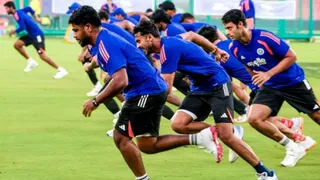
IND vs SA T20 World Cup 2026: The Men in Blue had qualified for the Super 8s on the back of a brilliant record. They had dominated the scoreboards, but the innings stats show huge concerns-batting collapses and providing finishes which sometimes looked as if it was a negotiation and not a team effort.
The Super 8s matches are quite different from those group stage matches. These matches don't really punish players for being slightly off, but rather, they are punished for being predictably off. Currently, the Suryakumar Yadav-led side will be playing with two predictable patterns against three different opponents on three different venues. Each opponent will come up with a different challenge, but their motive will be the same, i.e., to force India in their least comfortable overs.
Ahmedabad vs South Africa: When pace meets a fragile powerplay
The Narendra Modi stadium in Ahmedabad is known for big matches, huge crowds, big boundaries, and during the ongoing mega event, a pitch that will change within the 40 overs. During the first innings, it will produce enough bounce for the hard-length pace, and then in the second innings, it might flatten and also start to skid. This combination can form a very specific match, as the first six overs will reveal how the last six overs will turn out to be.
And this is where the Proteas might attack. Their pattern of performances in the group stage was simple-aim for the deck, take wickets continuously, and make sure that the target is gettable. India has played into their own pattern of the early wickets clump. If the host loses two wickets during the powerplay yet again, then the workload of the middle-order batters is increased-they first try to rebuild the innings and then maintain the scoring rate. On a pitch where a target of 190 runs isn't enough, it becomes exhausting.
The second challenge that the Men in Blue might face in Ahmedabad is quite subtle-wicket cost. The Men in Blue might have scored tons of runs during the group stage, but they often lose wickets quickly against a formidable bowling attack. The South African bowlers won't just stop them from scoring runs, but they will also force India to enter the 16th over with the wrong batters and equally wrong match-ups. This is where the nature of the late phase plays an important role. If there's dew in the second innings, then it becomes difficult to defend, and batting during the death overs can only be easier if there are set batters at the crease. If the Men in Blue had lost six wickets till the 15th over, a poor delivery won't help you, but it will force you to play low-percentage shots.
The other challenge that India will face here is the bowling match-ups. The Protea batters have proved that they can chase a target easily. If Bumrah or Varun Chakravarthy are not playing, then the opponents can turn one bad over into a 15-run fest, and that will change the tide of the match. The question isn't about whether India will take wickets, but it can stop South Africa from chasing the target.
Chennai vs Zimbabwe: A trap disguised as a mismatch
The M.A. Chidambaram is one venue where it's difficult to assume anything. It provides a slow pace to the spinners during the middle overs, but there are times when the pitch becomes flatter. The first challenge that India will face here is the uncertainty of the pitch.
Zimbabwe does look like a strong opponent, which has pace and a top-order batting attack that knows how to stay while chasing. But Chennai is known for providing raw pace. If it's a tricky pitch, then it might affect India's batting attack. India's weakness during the group stage wasn't the inability to score runs but the inability to score without losing wickets at regular intervals. At a slow pitch, the idea of having safe boundaries won't work. The hard balls won't force you to hurry, but make you play bigger shots.
And this is where Zimbabwe might give India a hard time. They will not try to outplay them in 20 overs, but they will try to win in India's ugly phases. If India lose quick wickets and are in a precarious situation in Chennai, then they will face the most irritating question of whether to rebuild the innings in Chennai or risk posting a paltry target or keep going. Either way, it will be a costly answer. And Zimbabwe has already proved that they can stay calm in tricky chases, and this is what happens in Chennai when the pitch is slow.
The challenge that the Indian bowlers will face in Chennai is to control the length instead of showing off. If the pitch is gripping, then the Indian spinners can dominate, and that will only happen if they don't allow Zimbabwe's set batter to take on a single bowler.