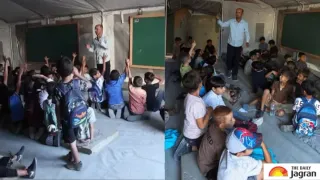
Gaza School Open Update: After three incredibly difficult years without any formal education, hundreds of thousands of children in Gaza have finally returned to the classroom. The local Ministry of Education, in collaboration with the United Nations International Children's Emergency Fund (UNICEF), has established temporary centers to resume the education of over 540,000 students.
Despite the loss of school buildings, books, and essential supplies, the children were overjoyed to return to class. Seated in tents made of wood and canvas, these brave students remain determined to rebuild their futures and fulfill their dreams, despite the persistent dangers.
ALSO READ: MP Schools Update: Madhya Pradesh Govt Announces 0% Dropout Rate In Primary Education
A Return to Learning After Three Years
Children across Gaza have stepped into classrooms for the very first time in three years. Education leaders and aid groups built temporary centers made of wood, sheet metal, and tents to help students start the new academic year.
For many children, the return to school brought a sense of joy and normalcy despite the difficult conditions. "The last time I have been to school was three years ago. Now, we are starting the school year; it is a year of joy, happiness and success," student Moayed Abu Mustafa said, according to Reuters.
He further added that students were determined to continue learning even inside tents. "Despite all of this, we will learn, we will learn even in a tent," he said. Mustafa said that he has no decent shoes, nor a notebook and pen, and lost friends during the war.
The war caused severe damage, destroying about 90 per cent of school buildings across the region. According to Officials report that, over 22,000 students and hundreds of teachers lost their lives, leaving classrooms empty and communities grieving.
Voice of Hope from Gaza's Children
Despite the harsh conditions, students remain eager to learn and chase their dreams. Children shared that returning to class gives them happiness and normalcy, proving that their desire for education is stronger than fear. Additionally, Education leaders are using both in-person makeshift classrooms and digital lessons to reach as many children as possible. This flexible system ensures that displaced students and those outside Gaza can continue their basic education.