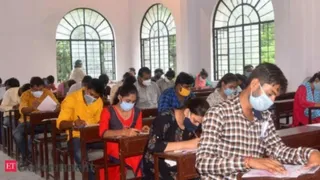
UPSC 2026 Success Tips: Every year, lakhs of children dream of becoming an IAS officer, yet many well-prepared candidates fail the civil services examination even after years of full-time study. Most of them have thoroughly studied the syllabus, practiced mock tests, and followed standard preparation advice. Despite this, their names don't appear on the final list.
This gap between effort and results exists because this examination is not designed simply to reward hard work with success. It is structured to test how well candidates understand the nature of the exam, how they manage limited time, and how they make sound decisions under pressure.
For many candidates, the reason for failure isn't a lack of intelligence or discipline, but rather a preparation method that doesn't align with how the exam is actually conducted and graded. Understanding these underlying reasons is crucial to avoiding repeating the same mistakes year after year.
UPSC Civil Services Exam: 5 Biggest Reasons for Failure
1. Weak Prelims Attempt Strategy:
The Prelims are a test of accuracy and restraint. Many candidates either attempt too many questions without managing negative marking or attempt too few due to fear.
A data-driven attempt strategy, built through mock tests, is crucial. Missing the cut-off by one or two marks is often a result of poor risk assessment, not a lack of knowledge.
Develop a personalized attempt range using mock test data, focusing on accuracy first and eliminating speculative attempts.
2. Poor Understanding of the Syllabus:
The syllabus is treated as a checklist to be completed rather than understood. candidates study topics in isolation, while the exam demands connections between governance, economy, ethics, and society. This disconnect leads to weak or superficial answers in the Mains.
Connect each topic to the syllabus keywords and revise them through integrated notes that link multiple subjects.
3. Ignoring Question Trends:
Simply reading previous years' questions is insufficient. Many fail to analyze how questions are framed and what they demand.
The shift towards opinion-based, application-driven questions is evident. Candidates who prepare without understanding these trends struggle to score well.
Analyze what is being asked in the questions and practice writing answers that directly address the demands.
4. Ineffective Answer Writing Practice:
Writing answers without structured feedback leads to repeated mistakes.
Common issues include weak introductions, lack of examples, and poor conclusions. High-scoring candidates continuously refine their answers, focusing on clarity, structure, and relevance rather than just volume.
Seek detailed feedback, rewrite weak answers, and focus on structure, clarity, and relevance over word count.
5. Optional Subject is dragging down the score:
The optional subject quietly plays a crucial role in determining the final ranking. Candidates often stick with an optional subject in which they consistently score low marks.
Official mark patterns show that poor performance in the optional subject is a major reason for failing to make the final list, especially for repeaters.
Honestly assess your optional subject score after each attempt and make a change quickly if your performance remains below average.
Failing the civil services exam rarely happens suddenly. It's usually due to small, strategic mistakes that go uncorrected. Those who recognize and rectify these mistakes in time give themselves the best chance of success.