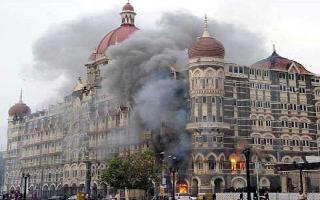
New Delhi | Jagran News Desk: 11 years gone, the scars of the dreaded terror attack that not only shook the economic capital of India but the entire world are still healing. The 26/11 Mumbai terror attacks had left 166 people dead and over 300 injured.
On this day in 2008, 10 Pakistan-sponsored terrorists had sneaked into Mumbai via sea route and opened indiscriminate firing at civilians across the city, killing 166 people, which included 18 police personnel.
The planned and coordinated shooting and bombing began on November 26 and lasted till November 29 and witnessed terrorists attacking city’s landmarks like Chhatrapati Shivaji Terminus, the Taj Hotel, Leopold Café, the Oberoi Trident, Cama Hospital, Nariman House among others.
Of the ten militants trained, equipped and financed by the banned Pakistan-based Lashkar-e-Taiba (LeT), nine terrorists – Ajmal Amir, Abu Ismail Dera, Hafiz Arshad, Babar Imran, Javed, Shoaib, Nazir Ahmed, Nasir, Abdul Rahman and Fahadullah – were shot dead during the attacks.
25-year-old Ajmal Kasab – the only militant captured alive – was hanged to death at Pune’s Yerwada Jail on November 21, 2012 in a swift and secret execution.
After entering the city under the cover of darkness, terrorists carried out the first attack at the crowded Chhatarapati Shivaji Maharaj Terminus (CSTM) railway station.
Terrorists Ajmal Kasab and Ismail Khan killed as many as 58 people and injured hundreds at the CSTM railway station, after which they attacked the Cama Hospital. The attack was, however, thwarted with the alertness of the hospital staff.
However, while leaving the hospital the duo came across police teams who were searching for the terrorists. The two opened fire at them, killing six policemen, including Mumbai Anti-Terrorism Squad (ATS) chief Hemant Karkare.
They then carried out attack on Nariman House business and residential complex, where they killed eight people, which included a Jewish religious leader, his wife and five Israeli citizens. The two-year-old child of the Jewish couple, named Moshe, survived the attack and later became the face of innocents suffering the brunt of terrorism.
Four of the terrorists then attacked the Leopold Cafe which was a hub for foreigners visiting the city. 10 people were killed in indiscriminate firing at the restaurant situated in the Colaba area.
The four terrorists then entered the iconic Taj Mahal Palace Hotel, where they killed as many as 31 people after laying a three-day siege at the hotel. The siege officially ended on the evening of November 28.
Though the terrorists were neutralised, Hafiz Saeed -- the mastermind of the dastrdly terror attacks and the founder of terror outfits like Lashkar-e-Taiba, Jamat-ud-Dawah and Milli Muslim League -- countinues to live a dominating life in Pakistan.
Pakistan has been orchestrating the drama of Saeed's house arrest since 2001, while security agencies claim that the LeT chief has the backing of the Pakistani Army and Islamabad's spy agency ISI.
New Delhi has, time and again, protested against Islamabad for harboring Saeed, who is wanted for allegedly plotting the 2008 attack. India's stand on Hafiz has been supported by many International personalities including a former Central Intelligence Agency (CIA) director and former Afghanistan President.
Former CIA Director David Howell Petraeus in January 2018, said that there is substantial evidence against Jamaat-ud-Dawah (JuD) chief and UN-designated global terrorist Hafiz Saeed for his role in 26/11 Mumbai terror attack.
A day after in the same month, former Afghanistan President Hamid Karzai also remarked that there is plenty of evidence against Saeed for his role in 26/11 Mumbai terror attack and everyone knows about it.
In May 2018, former Pakistan Prime Minister Nawaz Sharif also asserted that terrorists sent by Pakistan were responsible for the deadly 26/11 Mumbai terror attacks that claimed over 160 lives.
How Hafiz Saeed planned and executed the attacks
In July 2009, the Pakistani authorities admitted to the role of Lashkar-e-Taiba in financing and plotting the terror attacks. Diaries, training manuals, maps of India and operational instructions related to the attacks were seixed in raids conducted at Lashkar camps in Karachi and Thatta.
In February 2009, Pakistan's Interior Minister Rehman Malik agreed that "some part of the conspiracy" did take place in Pakistan.
It is believed that Hafiz Saeed supervised one of the many training sessions of the ten attackers and also wished them luck and waved them off before they set sail for Mumbai near Karachi.
Other LeT members who played key roles in the attacks
Daood Sayed Gilani alias David Coleman Headley is a Pakistan-born American terrorist and a close aide of Saeed who made five trips to Mumbai from 2007 to 2008 and did a prominent recce of prominent Mumbai spots.
Headley stayed at the Taj Hotel during his visits and did a detailed research about the building that helped the LeT in plotting the attack. He was arrested along with Tahawwur Rana, a Canadian citizen, and is currently lodged in a jail in the US.
Zaki-ur Rehman Lakhvi, a close relative of Saeed, played a central role in the planning and execution of the attacks. He is believed to have offered Ajmal Kasab’s family the sum of Rs 1,50,000 for his participation in the attacks. Lakhvi was arrested about a week after the Mumbai attacks when Pakistani soldiers raided a LeT camp on the outskirts of Muzaffarabad, the capital of Pakistan-occupied Kashmir.