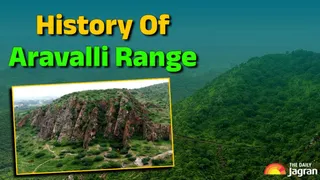
Aravalli Hills Row: The Supreme Court on Monday stayed its November 20 order on the new definition of Aravalli Hills, stating that certain clarifications were necessary. The apex court proposed forming a panel of domain experts to examine the recommendations made by a committee of the Ministry of Environment, Forest and Climate Change (MoEF&CC). The Chief Justice of India (CJI), Surya Kant, stated that the expert opinion must be considered before arriving at any final conclusion. The verdict came after the residents and environmentalists flagged a threat to the range by pointing out that the new definition might surge the mining and other wrong practices.
Aravalli Range History
The Aravalli Range is one of the world's oldest fold mountain ranges and was formed approximately three billion years ago. The mountain range was formed when the Earth's tectonic plates collided and life was in the initial phase of emerging from the oceans. The collision and partial subduction of these plates generated pressure and heat, leading to the formation of the mountain range. The Aravalli Range is approximately 692 kilometers long and is divided into three sections- the Jargha Range, the Harshnath Range, and the Delhi Range.
ALSO READ: Delhi: Dabri-Gurgaon Road Turns Into Accident Zone Amid Administrative Neglect
The average height of the mountain range is between 400 and 600 meters, and its highest peak is Guru Shikhar in Mount Abu at 1722 meters in height. The Aravalli Range passes through four states- Gujarat, Rajasthan, Haryana, and Delhi—with approximately 80 per cent of its share in Rajasthan. Its height gradually decreases by the time the mountain range reaches the national capital, leading to conflict on the definition of the range.
The Aravalli range is also home to several rare animals such as leopards, foxes, nilgai (blue bulls), and peacocks. Apart from this, the Ranthambore Tiger Reserve and National Park are also located within this range. The mountain range is rich in the natural resources, attracting mining since as early as the fifth century. The cases of illegal mining significantly surged in the 1960s and 70s, leading to outrage among the environmentalists.