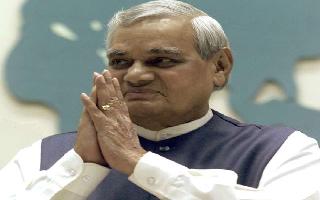
New Delhi | Jagran News Desk: Atal Bihar Vajpayee, who is known as ‘Bhishma Pitamah’ of the Indian politics, served as the Prime Minister of India thrice. First from May 16 to June 1, 1996 and then from March 19, 1998 to May 22, 2004. He was the first non-Congress Prime Minister to serve a full term of five years in the office.
As the Prime Minister of India, the BJP leader is credited for reviving the economy of the country. The Pokhran nuclear test in 1998 was also conducted under him. He took several other decisions that changed India. So on his 95th birth anniversary, here’s a look at some of decision Vajpayee took as PM that changed India:
Pokhran Nuclear test:
It was under his leadership when India decided to conduct nuclear tests in Pokhran. Despite being under the watch list of the US, India conducted five nuclear tests in Pokhran in May 1998. The tests were heavily criticised by the US, UK and Canada and heavy sanctions were imposed on India. However, most of these sanctions were lifted by 2001.
Vajpayee, however, declared India's nuclear capabilities to the world with no-first-use policy. “We have the capacity for a big bomb now. Ours will never be weapons of aggression,” Vajpayee had said.
Golden Quadrilateral:
The decision to connect the four big cities of India was taken in Vajpayee’s term as Prime Minister. The golden quadrilateral was a highway project that connected Delhi, Mumbai, Kolkata and Mumbai. The main objective of these super highways is to reduce the distance and time between the four mega cities of India. The project was launched in 1999 and was completed in 2012. It saw the construction of 5,846 kilometres of road.
Privatisation:
The Vajpayee government favoured privatisation and believed that the role of the government in business should be minimal and thus it set up a separate department for disinvestment in 1999. The government also privatised the insurance sector to allow corporates to set up insurance companies. The government also permitted the FDI of 26 per cent in the sector.
His government also announced steps to reduce the government expenditure and brought the Fiscal Responsibility and Budget Management Act.
Telecom reforms:
The Vajpayee government, in 1999, took the decision to end state monopolies for entities like Bharat Sanchar Nigam Limited (BSNL) and introduced a new Telecom Policy where a revenue-sharing regime was started. The government waived off a fixed fee that the companies were asked to pay for using spectrum.
Sarva Shiksha Abhiyan:
The Vajpayee government in 2001 launched the Sarva Shiksha Abhiyan (Universal Education campaign). The aim of this campaign was to educate all children between the ages 6 to 14 and achieve the goal of universal literacy in India.
The aim of this scheme was also to reduce dropouts and increase the net enrolment ratio at primary level. According to a data, the the rate of dropouts reduced from almost 40 percent in 2000 to less than 10 percent in 2005.