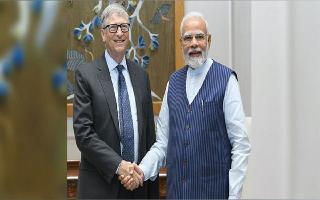
PRIME Minister Narendra Modi and Microsoft co-founder Bill Gates discussed the ‘innovative work’ being done in India in the field of climate change, the health sector, India’s G20 presidency, and other important issues when they met each other on Friday. Bill Gates shared this information on his official blog.
In his latest blog ‘GatesNotes’, he mentioned that India is showing what is possible while investing in the innovation sector.
The Microsoft co-founder said that his visit to India, which was earlier postponed due to the Covid-19 pandemic, had been "inspiring," and he had discussed a variety of issues with Modi during their meeting, such as Gati Shakti, the environment, India's health care systems, and its front-line leadership on Covid-19 vaccines.
Here Are the Key Points Of Bill Gates On India
- Bill Gates appreciated India’s vaccine policy and the process of its delivery. He also cherished India’s efforts in extending its vaccine mission to other nations and saving millions of lives during the deadly Covid-19 pandemic. He further lauded PM Modi’s statement of executing the Co-WIN model globally.
- Bill Gates and PM Modi also addressed their views about India's ongoing G20 presidency. Gates noted in his blog that India's G20 leadership is a great opportunity to spread its innovation around the world.
- On the collaboration of the Gates Foundation with the government, he said, “Supporting these efforts, especially spreading its digital ID and payments systems to other places, is a high priority for our foundation.”
- The Microsoft co-founder also appreciated India’s digital payment systems which play a vital role in the growth of the nation with the increasing reach of Aadhar cards. “India has made financial inclusion a priority, investing in a digital ID system (called Aadhaar) and creating innovative platforms for digital banking…a fantastic investment,” Gates said.
- Gates also hailed the Gati Shakti initiative by the Indian government and said it is a "great example of how digital technology can help governments work better". "It digitally connects 16 ministries, including rail and roads, so they can integrate their plans for infrastructure projects and accelerate the work of Indian scientists and engineers," he further said.