New Delhi | Jagran News Desk: The Indian Council of Medical Research has warned that the introduction of community transmission, which is the third stage of the spread of coronavirus, in India could be delayed by early passenger screening and social distancing measures "in the most optimistic scenario", but it cannot be stopped completely.
In a research published by the journal of ICMR on Monday, the country's top health research body has said that the introduction of a community transmission of COVID-19 cases may take anywhere between a minimum of three weeks to a few months to be visible.
The mathematical modelling study by the ICMR, titled Prudent public health intervention strategies to control the coronavirus disease 2019 transmission in India: A mathematical model-based approach, says that home quarantine of symptomatic can reduce the overall expected number of cases by 62 per cent and the peak number of cases by 89 per cent.
Based on the initial understanding of the spread of COVID-19 infection, ICMR has suggested that the entry screening of travelers with symptoms suggestive of COVID-19 can delay the introduction of the virus into the community by three days to three weeks.
In another alarming finding by the ICMR, in the optimistic scenario, the symptomatic cases would be about 1.5 million in Delhi, with around 5,00,000 each in Mumbai, Bengaluru and Kolkata, adding that such a situation would peak over a period of 200 days, beginning February.
In the pessimistic scenario, the symptomatic cases would be about 10 million in Delhi and 4 million in Mumbai, which will peak in just 50 days starting February.
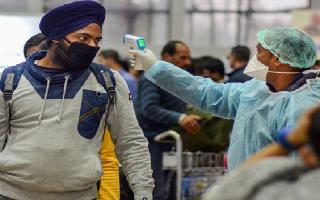
The report which was prepared about a month ago focuses on airports in Delhi, Mumbai, Kolkata and Bengaluru as the virus was initially spread via air passengers who came back to India from coronavirus-infected countries. India's Heath Ministry has said it has screened over 1.5 lakh people at the airport.
"We may expect eight to ten severe and 40-50 non-severe COVID-19 cases for every death. In a closed setting of similar nature as that on the cruise ship ‘Diamond Princess,’ we may expect 26 per cent of the entire population to get infected and one in 450 infected individuals to die," reads the mathematical study by the ICMR.
The research body also said that the data used was only from "airport arrivals and in particular from China", adding that "assumptions are likely to be underestimates in the current situation where people are travelling from many other countries that are now reporting COVID-19 cases".
The analysis was based on a simple Susceptible-Exposed-Infectious-Recovered (SEIR) model to capture the natural history of Covid-19 and its transmission dynamics.
The study was jointly done by Translational Global Health Policy Research Cell (Department of Health Research), ICMR’s Division of Epidemiology & Communicable Diseases, School of Public Health, National Institute of Epidemiology, Chennai and Department of Infectious Disease Epidemiology, School of Public Health, Imperial College, St Mary’s Hospital, London.
So far, nearly 500 confirmed cases have been reported in the country which include nine deaths. The alarming spike in cases has prompted the central and state governments to resort to unprecedented steps to curb the apread of the virus.
Click Here For Complete Coverage on Coronavirus
Prime Minister Narendra Modi announced a complete nationwide lockdown for 21 days from Tuesday midnight, asserting in an emotional appeal "with folded hands" that unless India's 130 crore people practice social distancing, the country will lose the war against coronavirus outbreak and slide back 21 years.
The Centre and state governments have taken measures to ensure that the supply of all essential items continue smoothly, he said, seeking to allay apprehensions among people about availability of food and other essential provisions.