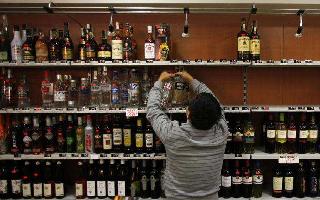
New Delhi | Jagran News Desk: The Ministry of Home Affairs (MHA) has ordered that there will be a strict ban on the sale of liquor during the extended lockdown till May 3.
A strict ban has been enforced on the sale of liquor, gutka, tobacco etc. under the updated central guidelines that came a day after Prime Minister Narendra Modi announced extension of the nationwide lockdown till May 3 to check the spread of COVID-19 infection.
"States/Union Territory cannot dilute restrictions imposed vide the aforesaid guidelines issued by MHA. States/UTs may, however, impose stricter measures than these guidelines as per requirement of local areas," Union Home Secretary Ajay Bhalla wrote to all chief secretaries during the day.
With the coronavirus pandemic and the subsequent lockdown in the country leaving the economy railing, the Delhi government was looking for some revival by exploring the possibility of opening liquor shops in the city-state, according to a Times of India report.
The Arvind kejriwal-led AAP government had asked the excise department to submit a report to suggest measures on opening the liquor shops in a way that the lockdown restrictions are not affected, said the report.
Delhi has over 850 liquor shops which have remained shut since March 25, when the 12-day nationwide lockdown started. The lockdown, which was scheduled to end on April 14, has now been extended till May 3 in wake of the spike in coronavirus cases across the country.
According to the TOI report, Delhi earns Rs 5,000 crore annually from liquor sale and closing the shops for over a month (from March 25 to April 3) will result in a revenue loss of over Rs 500 crore. Moreover, the closure of shops may lead to rise in sale of illicit liquor.
The report quoted sources saying that Delhi government does not the Centre’s approval to open liquor shops since alcoholic beverages fall under the definition of Food as per the Food Safety and Standards Act, 2006 and is an exempted item under the lockdown.
Delhi has so far reported over 1,500 positive cases of coronavirus, second highest after Maharashtra which has over 2,300 cases. The national capital has seen deaths of 28 people due to the novel virus.
Earlier this month, the Confederation of Indian Alcoholic Beverage Companies (CIABC) had urged 10 states, including Delhi, to allow sale of alcoholic beverages saying that a blanket ban during the lockdown to contain coronavirus has resulted in sale of illicit and spurious liquor while causing burden on exchequer.
The CIABC said that alcohol is one of the most important sources of revenue for state governments and by shutting down retail shops, states are depriving themselves of the tax revenues that are so vitally required in fighting the coronavirus pandemic.
The CIABC, which includes most major Indian companies that manufacture and market their product range in India and abroad, pleaded for permitting sale of alcoholic beverages from off-shops (retail outlets) in the state during the lockdown period.
It suggested that the state governments may do so by placing reasonable control measures such as curtailed shop timings, and directing outlets to strictly follow social distancing norms.
The body also asked for issue of online permits and permissions enabling wholesalers in a state to receive and supply stocks to off-shops during prescribed hours.
Notably, liquor shops have already been reopened in Assam and Meghalaya. In Assam, the shops are being opened for seven hours daily while liquor shops in Meghalaya are remaining open from 9 am to 4 pm.
Assam has reported 31 cases of coronavirus infection and one death, whereas Meghalaya hasn’t recorded any COVID-19 case so-far.
Kerala was the first state, which despite the rising COVID-19 cases, had sought to ease alcohol availability during the lockdown. A decision to home-deliver alcohol prescribed by doctors, announced state’s Excise department, was later slammed by Kerala High Court and hence struck down, earlier in the April.
Industrial units located in rural areas will be allowed to function from April 20 under fresh government guidelines issued on Wednesday for enforcing the second phase of the coronavirus lockdown, while all kinds of public transport has been barred and opening of public places prohibited till May 3.
Prime Minister Narendra Modi, in his address to nation on April 14, said that the some relaxations may be allowed after April 20 in places where there are no hotspots.