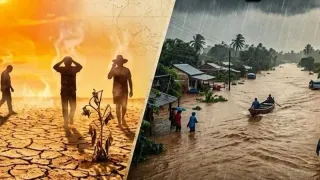
Weather Update: The World Meteorological Organisation (WMO) on Thursday warned that El Nino is firmly established and is likely to strengthen into a very strong event in the coming months. The unusually warm tropical Pacific Ocean is expected to push the event towards its peak around the end of 2026, with its effects continuing into early 2027.
In its report, the WMO stated that there is an exceptionally high, nearly 100 per cent likelihood that El Nino will persist through February 2027. The event is predicted to have big impacts on rainfall and temperature patterns and increase risks of floods, drought, and extreme heat across the world.
“El Nino is being supersized before our eyes. The science leaves no room for doubt: the planet is in uncharted waters, and those waters are heating up. Sea surface temperatures are rising, temperatures keep climbing, and the world is in the danger zone of extreme weather. The race now is between rising risks and our commitment to take climate action and protect people. We must win that race,” said UN Secretary-General Antonio Guterres.
Why Is El Nino Getting Stronger?
El Nino is linked to unusually warm sea-surface temperatures in the central and eastern tropical Pacific Ocean. These waters are already much warmer than normal and continue to heat up. During July and early August, temperatures in some parts of the Pacific were more than 8 degrees Celsius above average. According to the WMO, these ocean conditions, combined with strong atmospheric signals and agreements among different climate prediction systems, indicate that El Nino will continue to strengthen.
ALSO READ: Super El Nino Could Trigger Global Heat, Drought, Food Crisis; What Does It Mean For India?
What Changes Could Be There?
Notably, a strong El Nino does not produce the same weather everywhere. Its effects depend on the region, season, and interaction with other climate patterns. The WMO expects the event to increase the chances of higher temperatures during September-November. The event can add to global warming and increase the risk of unusually hot conditions in many parts of the world.
Meanwhile, some regions may receive much more rain than normal, while others could face significantly drier conditions. Areas that experience enhanced rainfall may see heavier downpours, flooding, and related hazards.
What Does It Mean For India?
For India, the stronger El Nino means that authorities will need to watch several risks at the same time. It doesn’t directly mean the occurrence of either drought or floods. However, India may note changes in rainfall patterns and regional differences in heat. Also, El Nino during the winter months usually brings warmer-than-normal winter temperatures and disrupted winter precipitation across India.
ALSO READ: From Cold Waves To Western Disturbances: How El Nino’s Pacific Heat Could Reshape India’s Winter