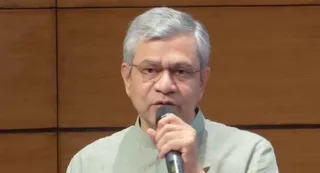
Union Railway Minister Ashwini Vaishnaw has on Thursday said that a new version of the IRCTC website would be rolled out on July 15 following issues raised by students of delays in OTP and captcha verification for tickets, with the minister stating he has asked railways officials to address these "recurring problems".
The statement comes during an interaction the students from Malaviya National Institute of Technology (MNIT), Jaipur had with Vaishnaw, a video of which is going viral online as it shows the minister personally calling a railway official following a student's concerns regarding the platform's CAPTCHA system.
A student, Labisha Meena from the Department of Humanities and Social Sciences, pointed out passengers' struggle with booking tickets on the IRCTC website. "Sir, please solve the problem of the IRCTC captcha," a student requested during the session.
Responding on the spot, Vaishnaw called a senior official and conveyed the students' demand. "All the students have demanded that there should be a new IRCTC website," he said, before asking whether the upgraded platform could be made operational within 30 days.
After receiving a response, the minister informed the gathering that the new website would be launched by July 15, drawing applause from the students.
The Railway Minister also encouraged students to use the RailOne app developed by Indian Railways for ticket bookings and other railway-related services.
During the interaction, another student, Naaz Bano, pointed out the challenges women face while breastfeeding on train journeys and suggested creating dedicated breastfeeding spaces in every coach.
To curb misuse of the Tatkal system, Indian Railways last year made Aadhaar authentication mandatory for booking Tatkal tickets through the IRCTC website and mobile application. During 2025, authorities deactivated 3.04 crore user accounts and temporarily suspended another 2.94 crore accounts, allowing them to be restored through a revalidation process.
More than 800 IRCTC kitchens have been connected to 2,394 AI-enabled cameras, all monitored from a central control room in New Delhi. The system is designed to identify nine categories of hygiene-related irregularities and ensure better food safety standards for passengers travelling on Indian Railways.