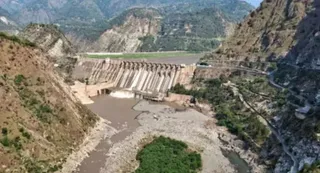
India is advancing a major water infrastructure initiative that involves diverting river resources within its territory. Under the approved Chenab-Beas Link Tunnel project, water from the Chenab River will be transferred through an underground tunnel system into the Beas River. The project comes months after the centre placed the Indus Waters Treaty with Pakistan in abeyance.
A significant engineering development is expected in the snow-covered region of Lahaul-Spiti in Himachal Pradesh. The National Hydroelectric Power Corporation (NHPC) has undertaken this large project for Rs 2,352.17 crore, and it is being observed as a huge project that can potentially alter the water management and inter-basin river connectivity of India.
ALSO READ: Tamil Nadu CM Vijay Writes To PM Modi Opposing Karnataka’s Mekedatu Project; What’s The Cauvery Row?
Koksar, which is situated in an elevated area, has extreme winter conditions wherein temperatures reach approximately -20 degrees. Engineering this infrastructure in freezing conditions near the Chandra (Chenab) River and tunnelling through mountain terrain would be an extremely difficult endeavour for engineers and workers.
Pakistan And Diversion Of River Waters
The geopolitical dimension of this project stands out the most. Under the Indus Water Treaty, Chenab water, despite belonging to India, used to flow to Pakistan. However, India, using its diplomatic and technical expertise, would divert these waters through the tunnels toward other states in India instead of permitting them to reach Pakistan.
The move that is fully compliant with international rules and regulations would, however, send out a stern message to Pakistan on the water front.
In winter, the Chandra River completely freezes in Lahaul and life in the region comes to a halt. However, in summer, when glaciers are melted by the sun's heat, the flow in the river is immensely augmented. This process takes place from May to September.
Summer Diversion Plan
The project aims to leverage the seasonal flow. In the 5-month summer period when the Indian plains face extreme heat and drought, waters from the Chenab will be diverted through the tunnels to the Beas River. It is a common fact that the Beas River can sometimes be the cause of floods in the Kullu and Mandi region in monsoon months. The modern water diversion system and barrage developed in the project are aimed at managing the waters of the Beas River effectively.
Power generation and water management effects
The water flow will be managed to prevent any excessive flooding in low-lying regions and also be retained for dry days. Electricity generation at the 126-megawatt Larji dam of the State Electricity Board, along with Dahar, Pong and Bhakra dams of BBMB, is expected to be boosted.
Positive outcomes for Rajasthan and Haryana
The project has the potential to impact India's agriculture in a significant way. The waters diverted to the Beas would flow eventually to the Harike Barrage in Punjab, which is the headworks of the Indira Gandhi Canal system, the longest in India. The mountain waters will be diverted to fight water deficiency in summer for irrigation and crops in Rajasthan (Thar Desert) and Haryana regions.
In general, the tunnel is being viewed as a step ahead for self-sufficient water management in India.