A massive controversy erupted after the Gujarat government on Independence Day (Aug 15) allowed the release of all the eleven convicts sentenced to life imprisonment for the 2002 post-Godhra Bilkis Bano gang rape and murder of seven members of her family. The release was allowed under the remission policy of the Gujarat government.
The 11 convicts who were granted premature release are Jaswantbhai Nai, Govindbhai Nai, Shailesh Bhatt, Radhesham Shah, Bipin Chandra Joshi, Kesarbhai Vohania, Pradeep Mordhiya, Bakabhai Vohania, Rajubhai Soni, Mitesh Bhatt, and Ramesh Chandana.
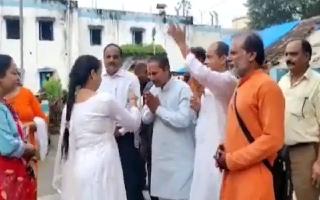
The major row over their release erupted after a video showed the convicts greeted with sweets and garlands outside the Godhra jail. The critics of the move by the Gujarat government also raised questions over the differences between the approach of the Centre and the BJP-led Gujarat government in treating the rape convicts.
Earlier in June, the Centre, in wake of the Azadi Ka Amrit Mahotsav (75 years of Independence), issued guidelines proposing a special release for convicted prisoners. However, in the guidelines, rape convicts are listed among those who are "not to be granted special release" under the policy. In fact, one of the points, of the Centre's special policy, stated that "no one with life sentence be released".
However, the Gujarat government followed its own guidelines as per the directions of the Supreme Court, after one of the 11 convicts approached the top court for remission. The apex court had directed the Gujarat government to look into the issue of remission of his sentence following which the government formed a committee. The committee then took a unanimous decision in favour of remission of all the 11 convicts in the case.
The release of the 11 convicts has grabbed the attention of several social activists and anti-rape organisations and their members. The founder of People Against Rape In India (PARI) Yogita Bhayana flagged the welcoming of the convicts. Posting the video on her Twitter handle, she asked, "What kind of message is going to the potential rapist? Is this not openly supporting rapists?".
Human rights lawyer Shamshad Pathan said that a large number of convicts who have committed a less heinous crime than the Bilkis case continue to languish in jails without any remission. Pathan said when a government takes such a decision the hope of the victim in the system diminishes.
"When a government takes such a decision the hope of the victim in the system diminishes. Even when the Supreme Court directed the Gujarat government to consider their remission, it should have considered against the remission rather than allowing it," Shamshad Pathan as quoted by PTI said.
All India Majlis-e-Ittehadul Muslimeen (AIMIM) chief Asaduddin Owaisi slammed Prime Minister Narendra Modi over their release. In his Independence Day speech, Modi had asked Indians to take a pledge not to do anything that lowers the dignity of women, Owaisi said. “He said something about supporting “Nari Shakti”. Gujarat BJP govt released criminals convicted of gang rape on the same day. The message is clear,” Owaisi tweeted.
Meanwhile, Bilkis Bano's husband said he came to know of their release from the media. "We were surprised to know that the convicts have been released,” Bilkis Bano's husband Yakub Rasul said as quoted by PTI. "We don't know when the convicts processed their application and which ruling the state government took into consideration. We never received any kind of notice,” Rasul added.
What was the case:
After the violence erupted following the burning of a Sabarmati Express coach that killed 59 'karsevaks 'on February 27, 2002, Bilkis Bano, who was five-month pregnant at that time, fled her village with her toddler daughter and 15 others. On March 3, they took shelter in a field when a mob of 20-30 people armed with sickles, swords and sticks attacked them and Bilkis Bano was gang raped, while seven members of her family were killed.
Given the outrage over the incident, the Supreme Court ordered a CBI probe. The accused in the case were arrested in 2004 and the trial began in Ahmedabad. Later, the Supreme Court transferred the case to Mumbai in August 2004. The special CBI court on January 21, 2008, sentenced the eleven accused to life imprisonment on the charge of gang rape and murder of seven members of Bilkis Bano's family.
One of the convicts, Radheshyam Shah, had approached the Gujarat High Court seeking remission of the sentence under sections 432 and 433 of the Code of Criminal Procedure. The high court dismissed his plea while observing that the "appropriate government" to decide about his remission is Maharashtra and not Gujarat.
Shah then filed a plea in the Supreme Court pleading that he had been in jail for 15 years and 4 months without remission as of April 1, 2022. In its order dated May 13, the top court stated that since the crime was committed in Gujarat, the state of Gujarat was the appropriate government to examine Shah's application. The SC directed the Gujarat government to consider the application for premature release in terms of the policy dated July 9, 1992, and may decide within two months.
(With Agency Inputs)