Nepal Flash Floods: The glacial lake outburst flood (GLOF) which occurred at Nepal-Tibet border on Wednesday has once again raised concerns in India about the risks from dangerous glacial lakes in the Himalayan region. The disaster has highlighted the need for stronger monitoring, early warnings, and better disaster preparedness.
Thousands Of Glacial Lakes In Himalayas
According to government surveys, there are around 7,500 glacial lakes across the Himalayan range. Nearly 200 of them are considered highly dangerous and need urgent attention. About 10 per cent of all these lakes are in Sikkim, where 25 lakes have been placed in the highly dangerous category.
Around 4,700 glacial lakes are in the Ganga river basin, covering a catchment area of more than 2.5 lakh square kilometres. This raises the possibility that any sudden breach of even one of these natural dams can cause severe flooding in downstream and low-lying areas.
ALSO READ: Nepal Floods: Video Captures Glacier Collapse At 5000-Metre Height Causing Deadly Floods | Watch
Sikkim GLOF Disaster 2023
India has already witnessed one of its worst GLOF disasters in recent years. Around midnight on October 3, 2023, a massive 14.7 million cubic metre section of glacial rock had collapsed into Sikkim's South Lhonak Lake, triggering a massive flash flood down the Teesta river basin. Waves as high as 20 metres were recorded, which swept through several hydropower projects and settlements along the way.
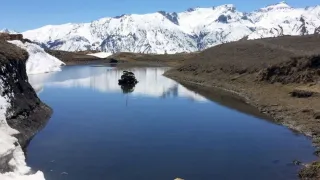
Experts carrying out Comprehensive Hazard Assessment of High-Risk Glacial Lakes in Sikkim. (Image: ANI)
Experts Warn Of Chain Reaction
According to National Disaster Management Authority (NDMA) member Krishna Vatsa, the Nepal incident shows a new and complex aspect of Himalayan disasters. While the exact scientific reasons behind the latest incident are still being studied, experts explain that such disasters can happen like a chain reaction.
This means falling ice or rocks can send huge amounts of debris into a river, creating a temporary lake. If the natural barrier breaks, the lake can suddenly release a large amount of water, leaving very little time to warn people living downstream. Former NDMA member Syed Safi Ahsan Rizvi stated that India’s National GLOF Risk Mitigation Programme (NGRMP) has identified 195 high-risk lakes.
Focus On Monitoring And Early Warning
According to Rizvi, five key areas that need urgent attention are risk assessment, monitoring, early warning, risk reduction, and community awareness. He stressed the need to work on these areas on a large scale to reduce the threat posed by glacial lakes.
High-Level Panel Set Up After Sikkim Disaster
After the Sikkim disaster, the central government had formed a high-level coordination committee headed by PK Mishra, Principal Secretary to the Prime Minister, to deal with GLOF risks. The committee was tasked with coordinating with different agencies to survey vulnerable lakes and identify those posing the highest risk.
Rs 150 Crore Approved For 4 Himalayan States
As part of these efforts, the government has also approved Rs 150 crore under the NGRMP for four Himalayan states facing a high risk from glacial lakes. At the first meeting of the Disaster Risk Reduction (DRR) Coordination Committee in November 2024, officials agreed on a three-part approach focused on assessment, monitoring, and risk reduction.
Agencies Conduct Joint Surveys
The government had earlier said that several agencies had jointly carried out surveys of all Category-A lakes. The teams included officials and scientists from the NDMA, Central Water Commission, Geological Survey of India, C-DAC, ITBP and the Army. The committees have also been holding regular meetings and collecting feedback to build a joint strategy between the Centre and the states to mitigate the risks.
ALSO READ: Nepal Floods: Soldiers Crawl Through Mud, Choppers Pluck Survivors From Rooftops | WATCH