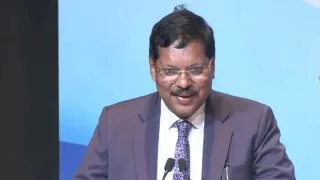
Former Chief Justice of India BR Gavai has written to President Droupadi Murmu expressing concern over what he described as a growing disregard for the principles of merit, diversity and inclusivity in appointments and transfers in the higher judiciary, alleging that recommendations are increasingly favouring a particular community at the cost of other sections of society.
In a letter dated November 27, Gavai urged the President to acknowledge the issue and intervene as deemed appropriate to ensure that the constitutional duty of equal representation is upheld in one of the most significant pillars of Indian democracy.
Gavai, who was a member of the Supreme Court Collegium and later headed it as Chief Justice of India, said he was writing as a concerned citizen and former CJI to highlight a worrying trend that required immediate remedial measures by all stakeholders.
Recalling his tenure in the Collegium, Gavai said he had always followed the principles of diversity and inclusion and ensured adequate representation of different sections of society, including Scheduled Castes, Scheduled Tribes, Other Backward Classes, minorities, women and other marginalised communities, while recommending candidates for elevation to the High Courts and the Supreme Court.
However, he said disturbing developments in the recent past indicated a complete disregard for these principles, with candidates belonging to one particular section of society allegedly being favoured for recommendations and elevation to the exclusion of others.
“I am increasingly becoming concerned that recommendations are being made with a focus on appeasing and rewarding a single community,” he said.
ALSO READ: Karthigai Row: SC Orders Vijay Govt To Light Deepam At Deepathoon Tomorrow, Suspends Temple Board
Clarifying that he was not opposed to candidates belonging to forward communities being considered for judicial appointments, Gavai said his endeavour had always been to strike a balance between all sections of society.
Citing parliamentary data, the former CJI said that, as per information provided by the Union Law Minister in March 2025, of the 715 High Court judges appointed since 2018, only 22 belonged to Scheduled Castes, 16 to Scheduled Tribes, 89 to Other Backward Classes and 37 to minority communities.
He said the Law Ministry had informed a parliamentary committee that there was an “inequitable representation of backward and minority communities” in the higher judiciary.
Gavai further pointed out that between January 2021 and January 2026, the reported share of forward communities among judicial appointments was close to 80 per cent, while the representation of Other Backwards Classes was around 14 per cent.
He also raised concerns over the representation of a particular community in appointments to the Supreme Court, stating that a community constituting less than five per cent of the country’s population had secured over 40 per cent representation in the apex court in the recent past.
He said caste was not recorded for Supreme Court appointments and described the absence of such data as part of the problem.
Referring to Professor George Gadbois’s study of the Supreme Court’s first four decades, Gavai said one community, constituting about one-nineteenth of the population, had held over one-third of all Supreme Court judgeships between 1950 and 1989.
He observed that despite seven decades of the Republic, the profile of the Supreme Court had barely changed, adding that familiarity, networks and unexamined notions of who “looks like” a Supreme Court judge continued to perpetuate such patterns.
The former CJI also raised concerns over certain recent recommendations involving the transfer and elevation of High Court judges, citing two instances to illustrate what he described as inconsistencies in the treatment of judges.
In the first instance, he referred to a Chief Justice transferred from one High Court to a smaller High Court, who was subsequently transferred to a prominent High Court. Gavai said the development gave rise to a perception that the judge had been rewarded for belonging to a particular community.
At the same time, he said a meritorious and hard-working Chief Justice of a High Court was transferred to a smaller High Court to make way for the other judge.
He said such decisions were demoralising for meritorious judges and could have a chilling effect on other hard-working judges, including those belonging to marginalised sections of society.
Gavai said he had cited the incident only as an illustration, as he himself was part of the Collegium that had recommended the transfer of the first judge from a High Court to a smaller High Court. He said the decision had been taken after considering various factors.
In the second instance, he said the Collegium headed by him had unanimously recommended the appointment of the same judge as Chief Justice of a prestigious High Court, taking his merits into consideration.
He questioned how a judge who had been transferred multiple times on what he described as punitive considerations was now being recommended as Chief Justice of a much bigger and prominent High Court.
Gavai also referred to another instance in which a judge was transferred from his parent High Court to another High Court on punitive considerations and was subsequently appointed as Chief Justice of a large and prominent High Court.
He said he was aware of the circumstances that prevailed when the Collegium recommended such appointments and transfers but refrained from disclosing the reasons on grounds of propriety and judicial discipline.
Questioning the accountability of the Collegium system, Gavai said the Constitution vests the appointment of Supreme Court judges in the President under Article 124(2), while the Collegium’s recommendations had acquired a decisive role over the past several decades.
He said the system had neither made the Collegium accountable nor relieved the President of the Republic of India of the duty to preserve, protect and defend the Constitution.
“Therefore, I am constrained to voice my dissent and disappointment as evidently appointments and transfers are being done in complete disregard to ethos of diversity, inclusion and merits taking into consideration other irrelevant factors,” he wrote.
Gavai also acknowledged that the executive was an equal stakeholder in the appointment and transfer of judges in constitutional courts.
He said Parliament and the executive had, on several occasions, proactively requested the Supreme Court Collegium and various High Courts to include names from marginalised sections of society to restore the balance of representation in constitutional courts.
Describing the responsibility as a shared one, he said all stakeholders must continue to discharge their constitutional duties.
In his concluding appeal, Gavai requested President Murmu to acknowledge the issue and intervene in the matter as she deemed appropriate to ensure that all stakeholders were reminded of their constitutional duty of equal representation.
The letter was also marked to Prime Minister Narendra Modi and Union Law Minister Arjun Ram Meghwal.
(Disclaimer: Except for the headline, this article has not been edited by The Daily Jagran staff and has been published through syndicated feed by ANI.)