The central government has mobilised two companies of the Rapid Action Force (RAF) of the Central Reserve Police Force (CRPF) for Arunachal Pradesh, following violence that broke out during protests against the proposed 11,200 MW Siang Upper Multipurpose Project in Pasighat.
The Union Home Ministry has issued necessary instructions to deploy around 250 CRPF personnel, who will be airlifted from Navi Mumbai to Pasighat by a special Indian Air Force aircraft.
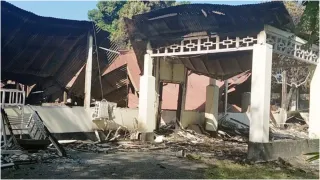
On Friday night, the protests suddenly turned violent in Pasighat in East Siang district after a mob of demonstrators set fire to the NHPC office and a police station. In addition, the residences of the state BJP president and two MLAs were also vandalised and looted.
Over 40 police and security personnel were injured in the intermittent violence and stone pelting that lasted for nearly nine hours. One protester was also injured by a tear gas shell and was hospitalised for treatment.
Amid escalation in violence, the East Siang district administration banned public meetings, rallies and processions in Pasighat, Mebo and Ruksin with immediate effect to maintain law and order.
Already deployed in sensitive areas, troops of the CRPF, along with local police, conducted flag marches to control the situation.
Why is this project being opposed?
Arunachal Pradesh Chief Minister Pema Khandu has termed the incidents in Pasighat as extremely unfortunate and appealed to the people to maintain peace.
He said that in a democracy, everyone has the right to peaceful protest, but it must be within the bounds of the law. Damaging public and private property and disrupting law and order are absolutely unacceptable.
The proposed 11,200-megawatt Siang project is seen as a response to the massive dam being built by China in Tibet. However, local tribal communities continue to oppose it.
They believe the dam's massive reservoir will submerge many villages, inundate fertile lands, and destroy centuries-old natural and cultural connections. Originating in Tibet, the Siang River joins the Dibang and Lohit rivers in Assam to form the Brahmaputra.