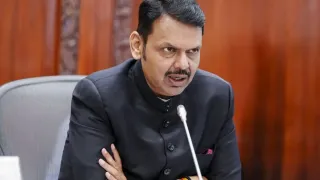
Mumbai: Maharashtra Chief Minister Devendra Fadnavis on Sunday said that Mumbai will undergo a major transformation over the next five years. Speaking to industrialists at an event organised by the Avaada Group in Nagpur, Fadnavis outlined the state government's focus on connectivity, infrastructure expansion, and wider urban development across the metropolitan region.
"Mumbai is transforming, and every year one can find a different Mumbai. Five years from now, Mumbai will change significantly as the government is not only working on infrastructure but also on the overall redevelopment," news agency PTI quoted Fadnavis as saying.
High-Speed Coastal And Tunnel Connectivity
To decongest the city's heavily burdened routes, the state is constructing signal-free coastal corridors along with key east-west link tunnels.
- Coastal Highway: Following the Coastal Road completion, the government will push for the Bandra-Versova extension by 2028, while the Versova-Bhayandar stretch is planned for March 2029.
- Thane-Borivali Twin Tunnels: The current 23-kilometre stretch between Thane and Borivali takes up to 1.5 hours. The new twin tunnels will reduce travel time to 15-17 minutes once completed in three to four years.
"Mumbai's current problem is that around 60 per cent of traffic moves along the Western Express Highway. A parallel road without signals is being constructed. Life in Mumbai will change dramatically in future," he said.
BKC Loop Project
The state government is planning a new loop originating at the end of the Bandra-Worli Sea Link to streamline traffic across Mumbai.
Under the proposal, a tunnel will be carved out up to Bandra Kurla Complex (BKC), emerging near the High-Speed Rail (bullet train) terminal. From BKC, separate arms will connect to Kurla, Terminal 2 (T2) of the airport, and the North Coastal Road.
Once fully operational, one can travel across Mumbai in 45 minutes, reducing the current travel time by 14 minutes.
Expansion Of 'Mumbai 3' And 'Mumbai 4'
Fadnavis urged industrialists to focus on 'Mumbai Three' and 'Mumbai Four' to decongest the existing metropolitan region.
- Mumbai Three (Mumbai 3.0): Includes regions within the influence zones of the Mumbai Trans Harbour Link (MTHL / Atal Setu) and the Navi Mumbai Airport Influence Notified Area (NAINA) to serve as a next-generation urban ecosystem.
- Mumbai Four (Mumbai 4.0): Planned as an urban and economic hub located in Palghar district near Vadhavan, featuring an upcoming offshore airport near Kore Beach in Virar.
"Mumbai Three will be an urban ecosystem for the next generation. The urbanisation-driven part of India's economy will be created in 'Mumbai Three'," he added.
(With Inputs From PTI)