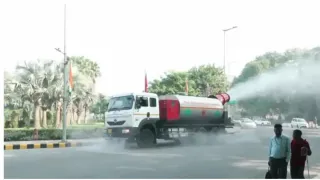
Delhi Air Pollution: Amid increasing pollution in Delhi and surrounding areas ahead of Diwali, the Commission for Air Quality Management (CAQM) has imposed stage 2 of the Graded Response Action Plan, commonly known as GRAP II, on Monday. The AQI in Delhi has crossed 300 for the first time this season, taking it to the 'very poor category' today.
While GRAP I was already in place, the very poor AQI today has prompted the GRAP sub-committee to review the air quality along with IMD and the Institute of Tropical Meteorology (IITM) forecasts to take this decision. Having said that, here are the key restrictions citizens and motorists have to follow under GRAP II.
Key Restrictions Under GRAP II
More Frequent Mechanised Road Cleaning: Authorities should put mechanical and vacuum sweepers on designated roads every day. Cleaning should preferably be done at night or early in the morning, and extra shifts can be added wherever needed. The dust collected must be taken only to authorised disposal sites.
Regular Water Sprinkling: Municipal teams should increase the use of water sprinklers and dust-control chemicals on roads, busy stretches and crowded junctions. This work should be finished before peak traffic hours so that dust does not get kicked up into the air.
Action at Pollution Hotspots: Special focus is needed on areas that consistently show high pollution levels. Officials should first identify the main sources of pollution in each of these spots and then take targeted steps to control them.
Strict Monitoring Of Construction Sites: Inspection drives at construction and demolition sites should be stepped up. Authorities must make sure builders follow the prescribed dust-control rules and take firm action wherever violations are found.
Increased Parking Charges: Parking fees should be raised to discourage the use of private vehicles and push more people towards public transport and other options.
Stop Waste Burning: Resident Welfare Associations should provide electric heaters and proper power connections for security guards, sanitation workers, gardeners and other staff. This will help stop the burning of leaves, biomass and other waste during the winter months.
Changes In Office Hours: Government departments have been advised to stagger their opening and closing times so that everyone does not hit the roads at the same hour. This applies to public offices and municipal bodies in Delhi, Gurugram, Faridabad, Ghaziabad and Gautam Buddha Nagar. Other NCR districts may follow a similar pattern, while the Centre will decide separately about timings at its own offices.
No Stay On BS-VI Curbs On Outstation Vehicles
Meanwhile, the Delhi High Court on Monday refused to put an immediate stay on outstation vehicles on entering the city, which do not have Bharat Stage-VI (BS-VI) emission standards. The decision comes after a petition challenging the curbs was filed by Faridabad-based lawyer Gurumukh Das Kohli. A hearing on the matter has been scheduled for November 27.