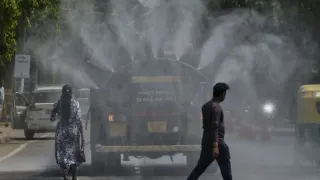
A day after Diwali, Delhi recorded a very poor (368) Air Quality Index at 7 am on Monday. Major parts of the capital recorded severe AQIs in the morning. In the early hours on Monday, around 4:20 am, the air quality station at ITO recorded an alarming AQI of 406, according to data shared by the Central Pollution Control Board (CPCB). At 7 am, Anand Vihar recorded an AQI of 335, while Bawana stood at 424 (severe), and Burari recorded an AQI of 441 (severe). Chandni Chowk at the heart of the city recorded an AQI of 481 (severe). The air quality deteriorated while Stage III of the Graded Response Action Plan (GRAP) is in force across Delhi-NCR.
Worst Affected Areas In Delhi NCR
Tehsil-Loni (Ghaziabad): 463
Sonia Vihar (Delhi): 457
Jahangirpuri (Delhi): 450 Punjabi Bagh (Delhi): 446 – 465
Burari Crossing (Delhi): 449
RK Puram (Delhi): 448 – 450
Vivek Vihar (Delhi): 438 – 445
Sector 62 (Noida): 440
Rohini (Delhi): 438 – 474
North Campus (Delhi): 437
DTU (Delhi): 430 – 454
Bawana (Delhi): 427 – 435
Sector 11 (Faridabad): 408
PM2.5 remained the main pollutant at 54 of Delhi's 59 reporting stations, while PM10 was the dominant pollutant at the remaining five stations, CPCB said.
Air Quality Worsened On Sunday
ALSO READ: Delhi Chokes After Diwali As Air Quality Plunges; AQI At 368, 12 Areas Record 'Severe' Pollution
On the day of Diwali festival, air quality at 20 monitoring stations slipped into the 'severe' category, with the overall Air Quality Index standing at 371 at 10 pm. Despite restrictions over bursting firecrackers, several areas in the capital witnessed their use. The areas include: Pitampura, Burari, Mayur Vihar and parts of Lutyens' Delhi.
Of the 59 monitoring stations that recorded air quality at 10 pm, 20 recorded AQI in the 'severe' category, six in the 'poor' category and the remaining 33 in the 'very poor' category. Sonia Vihar recorded the worst air quality, with an AQI of 463, followed by Jahangirpuri at 450. Burari, Alipur and Punjabi Bagh were among the other areas recording concerning pollution levels.
The District Magistrate (East), in an order, had permitted the bursting of green firecrackers only on November 7 and 8, between 6 am and 7 am and 8 pm and 10 pm.
Vehicle Emissions Major Contributor
According to the Decision Support System (DSS) for Delhi, transport was estimated to contribute 19% of the city's pollution on Sunday, while stubble burning was projected to account for approximately 3.5 per cent. Stubble burning was set to contribute 3.5 per cent, with forecasts suggesting the contribution might remain around 2.99 per cent on Monday.