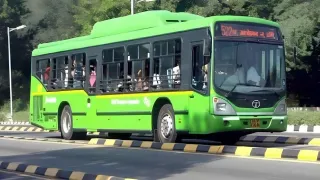
DTC Bus Strike: Delhi's public transport system remained severely disrupted on Wednesday as the strike by Delhi Transport Corporation (DTC) bus drivers entered its second day. The strike has affected bus services across the city, leaving commuters stranded and creating difficulties for students, officegoers and daily wage workers.
Several commuters took to social media to share their experiences, reporting long waiting times and overcrowding at metro stations and bus stops. The disruption has also contributed to traffic problems in several parts of the city.
Buses were not run from several major DTC depots, including Burari, Nangloi, Rewla Khanpur, GTK, Nehru Place and Shadipur.
Videos online showed a large number of buses parked inside depots as drivers gathered for demonstrations. In some areas, buses were reportedly halted mid-route and passengers were asked to disembark. Many were forced to rely on alternative modes of transport, including the metro, autos and app-based cabs, reported NDTV.
Commuters said on social media that the reduced number of buses on the roads had made daily travel more difficult. Delhi currently has around 6,500 DTC buses.
Why are the drivers protesting?
Drivers of the new electric buses are mainly demanding higher daily wages, medical facilities and overtime payments.
"We back the demand of drivers; currently no government representatives have reached out to us. Our strike is peaceful and we have decided not to drive buses," said Lalit Chaudhary, president of the DTC Karamchari Ekta Union.
The protesting drivers have also raised concerns over penalties imposed on them when buses are damaged. They are demanding that such penalties be removed.
The drivers participating in the strike are employed by private operators contracted by the DTC. According to reports, the drivers have claimed that they are underpaid and do not receive social security benefits, medical insurance, paid leave or an annual bonus.
Union leaders have further claimed that even drivers with decades of experience are treated as unskilled labourers for pay purposes, while permanent DTC drivers receive higher monthly salaries for similar work.
In a post on X, DTC Karamchari Ekta Union wrote, "We appeal to the Government of India to immediately increase the BASIC DA GRADE PAY salary for DTC contract workers; for 20 to 25 years, DTC contract workers have had just this one demand—that the jobs of DTC contract drivers and conductors be made permanent and secure." We trust only you; we DTC contract workers will remain indebted to you for life."
Union representatives have described the demands as genuine, arguing that drivers and conductors are expected to work for low wages without medical benefits, insurance or even a weekly day off. They have also raised concerns over the lack of pay when drivers fall ill, saying this could have implications for passenger safety if unwell employees are compelled to operate buses.
In another post on X, DTC Karamchari Ekta Union wrote, "The Delhi government must take immediate note of the issue and promptly implement facilities and benefits for drivers and conductors, including equal pay for equal work, medical benefits, all applicable holidays, casual leave (CL), earned leave (EL), bonuses, employee insurance, and other essential benefits."
ALSO READ: Delhi Free Bus Travel: Pink Saheli Smart Card Deadline Extended To September 1; How To Apply
he DTC Karmachari Ekta Union has said the strike will continue into Wednesday, prolonging disruptions for commuters across the city. The Delhi government and transport department have yet to issue a public statement on the matter. The union, however, has said it is open to dialogue if its key demands relating to wages, medical coverage and social security are addressed.
How to Navigate Delhi During the DTC Bus Strike
With DTC bus services disrupted, commuters can rely on the Delhi Metro and other modes of public transport to complete their journeys.
The Delhi Metro can be used for longer-distance travel, helping commuters avoid traffic jams and offering a pocket-friendly travel option. However, commuters should expect more crowds and longer waiting times at Metro stations amid the bus strike, especially during peak hours.
Commuters can also check whether buses on their routes are running and find the nearest Metro station by searching for their bus number on DTC Bus Routes or visit https://www.dtcbusroutes.in/. This can help them plan an alternative route if their bus service is affected by the strike.
Moreover, autos and e-rickshaws can be used to reach the nearest Metro station or travel shorter distances from a Metro station to the final destination. These options can be helpful for areas that are not directly connected to the Metro.