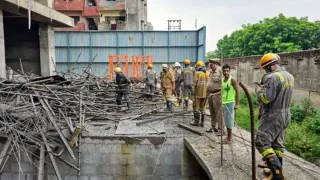
Delhi Lieutenant Governor Taranjit Singh Sandhu has approved the Delhi Building Workers Health Scheme for registered building and other construction workers and their eligible dependent family members, according to a statement issued on Saturday. The scheme was earlier approved by Chief Minister Rekha Gupta and the Delhi Cabinet.
"Under the scheme, every registered construction worker and their eligible spouse will receive an annual health check-up, along with cashless outpatient consultation, diagnostics, medicines and inpatient treatment through a network of empanelled hospitals functioning at CGHS rates," the statement said.
The scheme will cover emergency treatment, occupational diseases, chronic illnesses, specialised care, maternal healthcare and rehabilitation, with treatment available up to Rs 2 lakh per beneficiary annually, subject to an overall family limit of Rs 10 lakh a year, it said.
"In the event of a worksite accident or medical emergency, beneficiaries may also avail treatment at the nearest non-empanelled hospital, which will be deemed provisionally empanelled for the limited duration of such treatment," the statement said.
The Delhi Building and Other Construction Workers Welfare (DBOCWW) Board, an autonomous statutory body set up in 2002, registers construction workers and administers welfare schemes for them from the cess collected from construction employers.
More than 2.7 lakh building and construction workers are currently registered as live members with the board. Given the technical and specialised nature of the scheme, it will be implemented through a Project Implementing Agency to be engaged initially for three years, extendable by another year subject to a performance review, officials said.
ALSO READ: 'UNSC Reform Cannot Be Delayed; Global South Must Become Rule-Shaper: PM Modi At BRICS Summit
Mobile Medical Units will also be provided to transport workers from worksites to empanelled hospitals, coordinate health screenings and spread awareness, the statement said. A dedicated software system will digitally manage beneficiary records, treatment history and claims processing, it said.
To ensure transparency and financial discipline, every claim submitted by the Project Implementing Agency will undergo third-party verification and other checks deemed necessary by the board before payment is released. Periodic reports will also be submitted to the board to track the scheme's progress.
(Note: Except for the headline, this story has not been edited by The Daily Jagran staff. Credit:I)