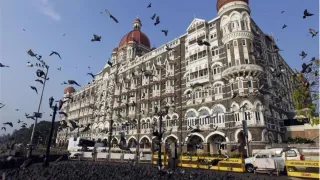
Eighteen years ago, on November 26, 2008, the iconic dome of Mumbai’s Taj Mahal Palace Hotel became the epicenter of the 26/11 Mumbai terror attacks. Heavily armed terrorists held guests and staff hostage inside the hotel for nearly 60 hours amid continuous gunfire and grenade explosions. The attack finally ceased on November 29, 2008, after security personnel killed nine of the ten terrorists and captured Ajmal Kasab alive. Later, he was hanged on November 21, 2012, at the Yerawada Central Jail in Pune.
As the nation marks the 18th anniversary of the Mumbai 26/11 attacks, the resilience of the Taj Hotel stands tall as a symbol of the city’s unbreakable spirit. Almost 21 months after the 2008 attacks, the hotel was fully restored and opened on August 15, 2010.
Hotel Taj Born Out Of Defiance
Allegedly, the Taj Mahal Palace Hotel was born from a moment of racial discrimination when the British ruled India in the late 19th century. Reportedly, Jamsetji Tata was denied entry into an upscale hotel following its strict, "whites-only" policy. Determined to create everything that the British had built, Tata resolved to build a world-class hotel that welcomes everyone. On December 16, 1903, his vision came to life as Taj opened the doors to the public.
Became India’s First 5-Star Hotel
Laid in 1898, the hotel’s foundation was dug 40 feet deep along the Apollo Bunder waterfront in Mumbai. It took five years to finally open the hotel in December 1903 for the public. The hotel instantly became India’s first 5-star hotel owing to its architecture and grandeur. Located right on the Arabian Sea waterfront directly opposite the Gateway of India, the Taj Hotel exuded modern luxuries that were unfamiliar in India.
Setting global standards, the hotel was Bombay’s first electrified building and introduced the German elevators. Turkish baths and English butlers further added to its appeal. Built for approximately Rs 4 crore, the hotel became the pride of India for its world-class hospitality.
Single Rooms Cost Rs 6 Per Night
For four decades, the hotel kitchen was run by French chefs. Almost 80% of the menus were printed in French, featuring multi-course continental menus alongside selected Anglo-Indian dishes.
Single rooms started at Rs 6 to 10 per night, while rooms with attached fans and bathrooms cost Rs 13. At the time when the basic meal in Bombay was around 1/6th of a rupee, full board rooms including all meals were for Rs 20 to 30 at Taj. By the early 1930s, a full-course lunch was around Rs 3.
How The Taj Mahal Got Its Name?
Since its establishment, the hotel has undergone many name changes. After the addition of the new modern wing in 1972-73, under the franchise partnership with Pan Am, the hotel was renamed Taj Mahal Inter-Continental. It held the name until 1995 before reverting to Taj Mahal Hotel.
On its 100th anniversary, celebrated in 2003, the hotel became The Taj Mahal Palace & Tower, honoring both its historic and modern wings. Finally, after its restoration in 2010, following the Mumbai terrorist attacks, the hotel dropped "& Tower" from its flagship title and returned to its classic old name, The Taj Mahal Palace, Mumbai.
Indian Hotels Company Limited (IHCL), the parent company of Taj Hotels, is India's largest domestic hospitality company by revenue and market value.
It Took Almost 21 Months To Rebuild The Icon
Following the harrowing 26/11 attack, the Taj Mahal Hotel underwent Rs 175 crore architectural restoration. It took almost 21 months to restore the severely damaged 1903 Heritage wing. Since the original blueprints for the damaged dome and timber roofs did not exist, engineers used laser measurements from the damaged sections and built full-scale wooden prototypes recreating the intricate curved Burma teak structures.
With much hard work, art conservators restored almost 90% of the damaged priceless artworks, including pieces by S.H. Raza, V.S. Gaitonde, and Jehangir Sabavala. After the attacks, the security was also upgraded with modern technology without compromising the historic Indo-Saracenic grandeur. The fully restored heritage hotel officially reopened on Independence Day in 2010, welcoming visitors from all over the world.