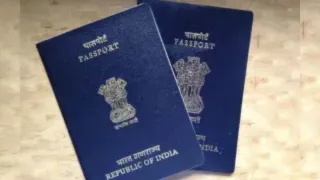
The Government of India has further streamlined its visa regime, reducing the number of main visa categories from 13 to nine and sub-categories from 49 to 23. The Ministry of Home Affairs (MHA) has also reduced the number of fields in visa application forms by 65 per cent to 70 per cent, making the process simpler for foreign nationals visiting the country.
Announced on November 11, the changes aim to make it easier for international visitors travelling to India for tourism, medical treatment, education, research, investment and business. The revised framework also aims to eliminate duplication of visa categories and introduce a more transparent set of visa options based on the basis for the visit.
ALSO READ: After Mother Dairy, Amul Raises Milk Prices By Rs 2-4 Per Litre From November 12; Check New Rates
The latest changes come after an earlier rationalisation in October 2025, when the government cut down main categories of visas from 22 to 13 and sub-categories from 63 to 49. The recent changes were implemented on August 27, 2026.
What Has Changed In India's Visa Rules?
One of the major changes is the renaming of the Tourist Visa as the Visitor Visa. The government has also reorganised Medical, Student and Business Visa categories to accommodate different travel purposes.
Here are the key changes:
1. Tourist Visa renamed Visitor Visa
The new Visitor Visa covers tourism as well as short-term activities such as business meetings, medical consultations, wellness retreats, short-duration medical treatment and courses in Indian languages, music, art and craft.
It has two sub-categories:
- V-1 Visa: Granted for 30 days with multiple entries. It covers eligible short-term visitor activities, including business meetings, medical consultations and wellness retreats.
- V-2 Visa: Available for longer visits, with validity of one, five or 10 years, depending on eligibility. It also covers mountaineering. A separate six-month multiple-entry visa will be granted for mountaineering.
2. Medical Visa gets one-year multiple-entry validity
The Medical Visa framework retains separate categories for conventional and AYUSH treatment.
- M-1 Visa: For medical treatment other than AYUSH systems.
- M-3 Visa: For treatment under AYUSH systems.
- M-2 and M-4 Visas: For attendants accompanying M-1 and M-3 visa holders, respectively.
M-1 and M-3 visas, including their e-Visa variants, will have a default validity of one year with multiple entries.
3. Student Visa divided into S-1 and S-2
The Student Visa category has been consolidated into two sub-categories:
- S-1 Visa: Covers school, graduate and postgraduate education.
- S-2 Visa: Covers PhD and research scholars, visiting faculty, research students, scientific and anthropological expeditions, internships and exchange programmes, among other academic activities.
Foreign students admitted to Indian institutions through the Study in India portal may receive an e-S1 Visa for up to five years or the duration of their academic course, whichever is shorter, with multiple entries.
4. Business Visa reorganised into B-1 and B-2
The Business Visa category has been divided into two groups:
- B-1 Visa: Covers long-term, licence-based business activities, including establishing industrial or business ventures in India.
- B-2 Visa: Covers short-term, contract-based activities, including production investment business, conferences, sports, cultural performances and film shoots.
A specific provision has also been introduced for foreign engineers, technical personnel and subject-matter experts working with Indian companies. They may receive a Production Investment Business Visa under the B-2 category through the e-Visa platform. This was earlier covered under the e-B4 visa nomenclature.
What Are The Nine Main Visa Categories?
Following the rationalisation, India's visa framework comprises these nine main categories:
1. Business Visa
2. Diplomatic Visa
3. Work Visa
4. Journalist Visa
5. Medical Visa
6. Official Visa
7. Student Visa
8. Visitor Visa
9. Miscellaneous Visa
The Miscellaneous Visa category covers people of Indian origin and their spouses and children, dependants of foreign nationals holding long-duration visas, and people visiting specified institutions such as the Auroville Foundation. It also includes stay visas for Afghan nationals and certain long-term visa provisions for nationals of neighbouring countries.
Visa Application Forms To Have 65 per cent-70 per cent Fewer Fields
In addition to streamlining the visa categories, the MHA has also made application forms clearer for all 23 sub-categories. Applicants will now complete 65 per cent to 70 per cent fewer fields.
The ministry said the reduction in the info that foreign nationals have to submit is expected to ease the burden of administrative work and decrease processing time. The reduced requirement will not compromise the application process.
India currently offers e-Visas to nationals of 172 countries through 13 sub-categories. The MHA is updating its IT systems to implement the revised framework, with visas under the new system expected to be issued by the end of 2026.